
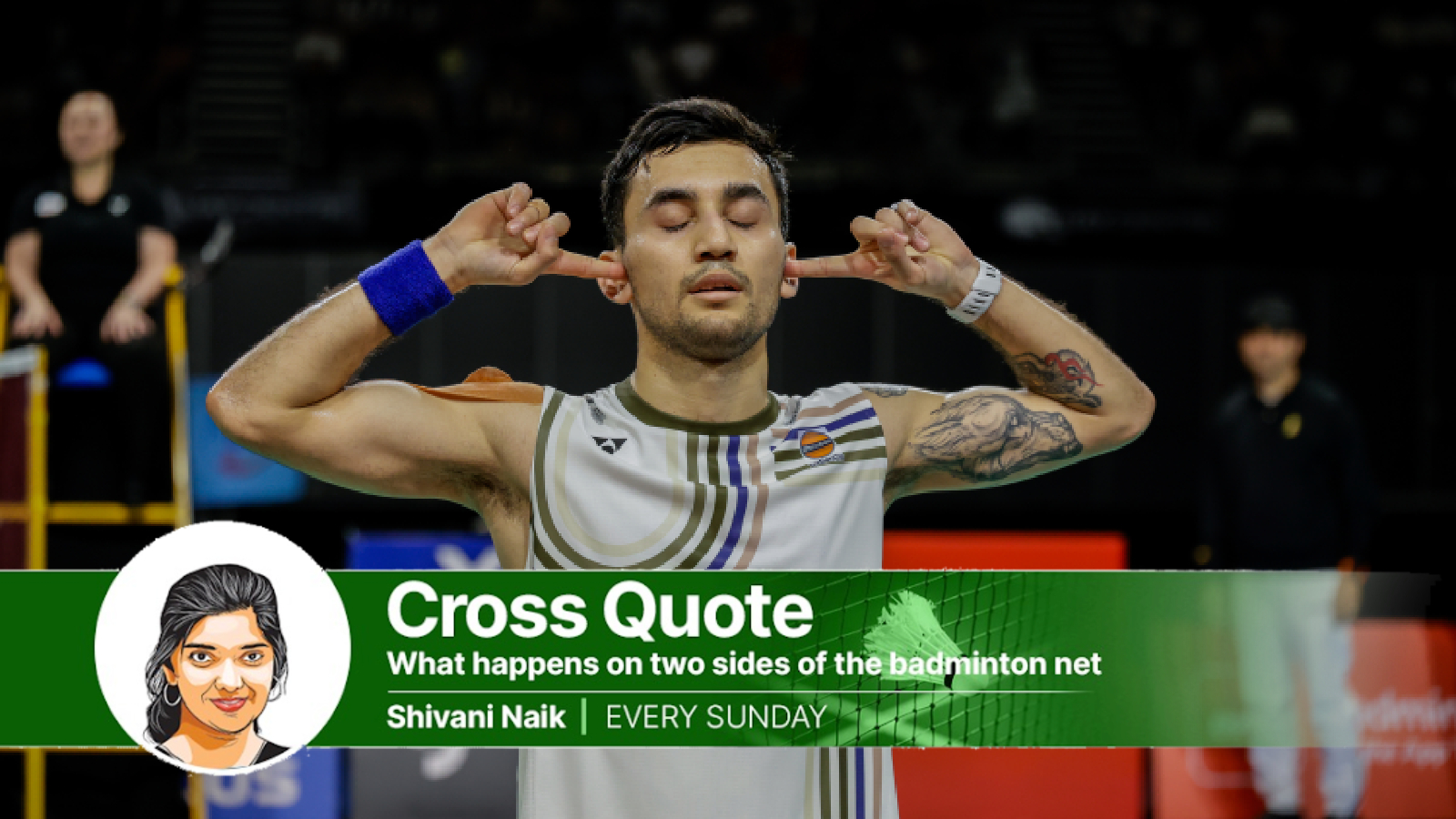
The Sports Authority of India withheld funds for four major badminton tournaments, forcing players like Lakshya Sen to self-fund their trips. Coach Vimal Kumar told Sen, "Accept right now that you didn't medal at the Asian Games, fund yourself, go out there and prove you can win titles." Sen won.
SAI withheld funds for four Super 500-plus events, and a coach told his best player to suck it up.
When the funding issue for the European tournaments emerged, coach Vimal Kumar told Lakshya Sen, however arbitrary it felt, that the champion athlete needed to suck it up. "Accept right now that you didn't medal at the Asian Games, fund yourself, go out there and prove you can win titles," was the blunt advice after the Sports Authority of India (SAI) withheld funds for four tournaments: the Arctic, Denmark, French and Hylo Opens, all Super 500-plus events, and hence crucial. Badminton needs financial input to compete with China, Japan, Korea and Indonesia on the Tour, given the prize money is a fraction of truly pro sports like tennis.
Shuttlers represent India at the Olympics, Asiad, Thomas, Uber and Sudirman Cups, and winning Tour titles pushes their rankings, which have direct implications on qualification for these 'Team India' events. So government funding is absolutely essential when Treesa Jolly and Gayatri Gopichand clinch a women's doubles World Championships medal at home, or four quarterfinalists line up for the Asian Games, including two whose funding was cut after they fell out of the strict ranking bracket assigned to badminton. Despite all this, it would be inaccurate to say there was no internal reckoning within the sport.
Even Lakshya Sen's father told him he would have to accept the funding cut and keep playing. The Hylo Open was within procedural deadlines, and still not cleared by SAI, but shuttlers were trapped between a rock and a hard place. Had Sen withdrawn, he would have had to pay USD 5,000 as fine to the Badminton World Federation (BWF). He poured all the anger into finding his calm and winning the title instead.
Twenty-five years ago, Pullela Gopichand's funding came through at the last minute before he took off for Birmingham, on the longest air route with weird stopovers to cut down expenses. He then had Star Sports reporter Ashish Chaddha, present at the venue to cover his matches, sit in the coach's chair for the first few rounds. And then he won the All England. Lack of knowledge of how badminton functions, ignorance over why it needs funding and how it has managed to deliver sustained results despite a shockingly low per capita investment per medal for India, pervade the ecosystem. Pull out the amount that went into Sindhu's Rio Olympics silver and compare it with every other sport in a poor 2016 Games for India, and you will see how the sport has always operated on tight budgets.
Badminton is an expensive sport to train in, due to the cost of shuttles: it can go up to 50-60 lakh per day at the Bengaluru academy. Training centres around the country, from Chennai to Chandigarh, have been clamouring for subsidies on imported shuttles but the expenses keep mounting. Upcoming players get limited funding for 6-8 tournaments, so despite the tremendous talent, the transition to seniors is two seasons too slow, as development squads need to play more to get into the rankings that will get them into Super 750-plus draws.
The athletes' own spending is far from efficient too, though the BWF mandate limits their choices on where to train and play. The top athletes will need to reconsider how they spend. A large part of the criticism directed at India's badminton stars is owing to the disproportionate skew of their large(r) support staff. If a star is accompanied by an entourage of four, and 18 others on the squad have to make do with four in all dedicated to them, then questions will arise.
On the European swing, Tanvi Sharma was left without a coach. But ask those who scrambled to ensure Indian shuttlers even made it to Finland, and they will tell you the choice was between sending the player Ashmita Chaliha or coach Park Tae-sang. Two players, or one player and a coach. Ashmita vindicated the backing, defeating Akane Yamaguchi at the French Open in Paris. Her Korea Masters title in August came without funding, as her ranking did not entitle her to it.
After the Paris Olympics, Prakash Padukone had candidly voiced his concerns over top players needing to deliver after getting all the support. Bespoke support teams and personal coaches can eat into others' shared resources, a problem that will only escalate as playing numbers go up. With India's tiny sports budget, the pieces of the pie are many, clarity on real potential is non-existent and lobbying for funds to a limited corpus is a very poor way of deciding who gets what. Badminton was hit hard, despite delivering a promising reset: fresh World Championships medallists in Treesa-Gayatri, a new set of women's singles contenders in Tanvi Sharma, Devika Sihag, Ashmita and Anmol Kharb, Ayush Shetty's breakthrough year, and Dhruv-Tanisha forging forward. Like Sindhu said, the next generation needs all the support she got.