
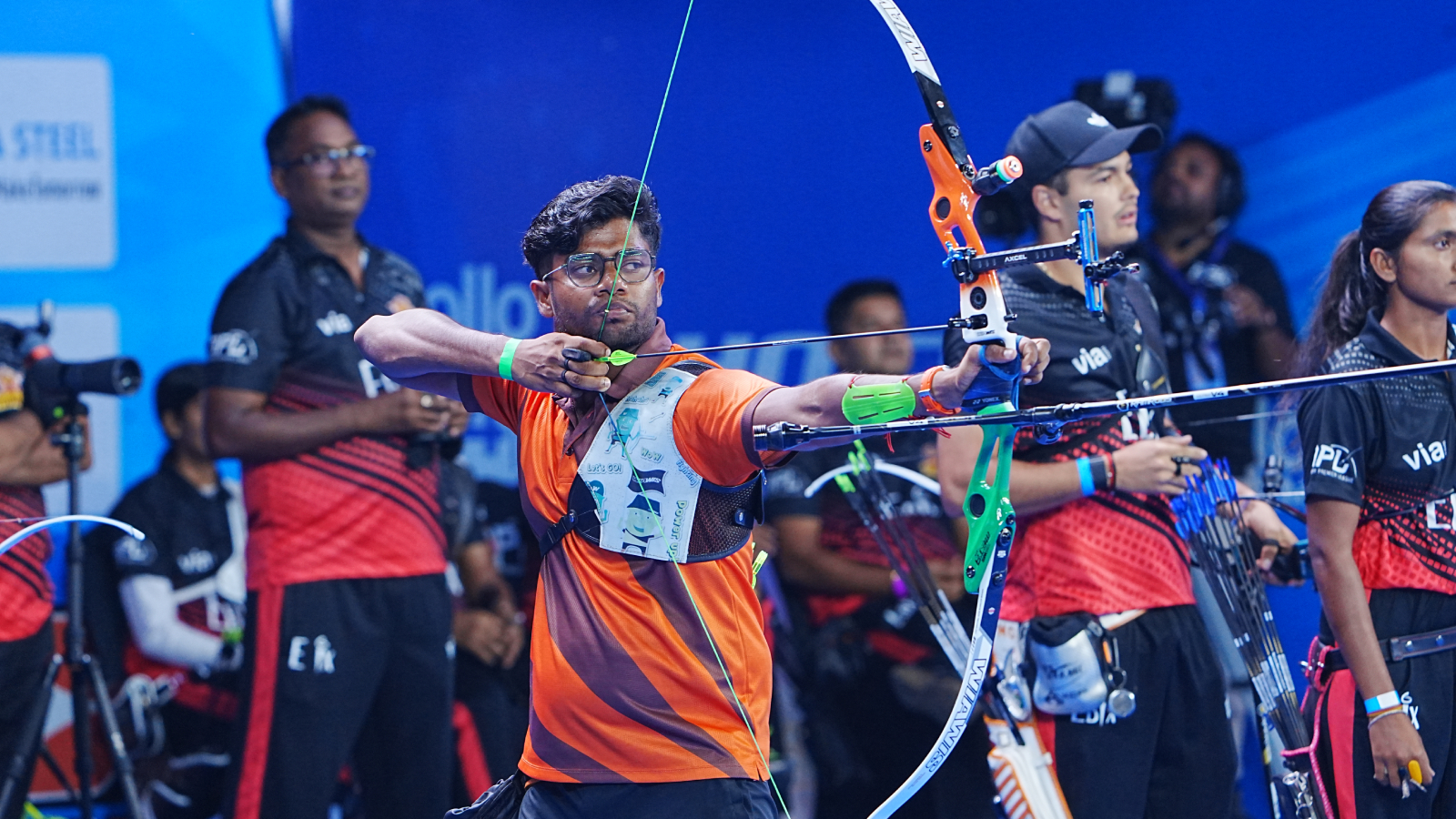
Archer Dhiraj Bommadevara is currently competing for Mighty Marathas at the Archery Premier League in Hyderabad. He said, "Whatever the circumstances, we have to find the best outcome." He trains hard to maintain his rhythm and focus during matches, even when he feels nervous or faces difficult weather conditions.
In this interview with The Indian Express, the armyman who trains at ASI’s cutting-edge training program in Pune and is on fire for Mighty Marathas at the ongoing Archery Premier League in Hyderabad, expands on the emotions that tag efficiency of shooting. While delving into the mental process, Dhiraj speaks of what goes on inside the brain when he bolts the arrow, his happiest moment at the Asiad, his worst nightmare while shooting and the no-regrets silver from Aichi Nagoya.
Would you say you are shooting excellently last few months, and hence in a zone?
No. Of course I’m happy I’m in the zone. But we train to get in that zone. And we train even more to shoot like we are in the zone, even if we are not comfortable. We train to employ the same process, same rhythm, even if weather is different (e.g winds picking up from Hussain Sagar lake pressure currents), or if we are facing acute nervousness. Basically, shoot the same in any given situation.
Describe challenging situations in archery.
Let’s say the Olympics is today, and I’m ill. Or something randomly happens and I still have to compete. Then I need to be prepared for that. Whatever the circumstances, we have to find the best outcome. Challenging situations are good because they make you stronger inside. Best example is the Archery Premier League; when you are shooting in less time but you can win a bonus. But even a fluke arrow to shoot a 10 is an experience. Idea is to take every situation as a challenge.
How do you adapt to shorter time format of 15 seconds?
The process in the brain is very different than my usual (when the time is down from 22 to 15 seconds) rhythm and routine. The brain actually works faster. It’s tricky if I have to ensure each and every process is followed. You become much more nervous.
How does the APL-format translate to international success?
We don’t look at APL as just another competition. The league is actually giving us a lot of confidence. So when we watch Neeraj (Chauhan; Asian Games bronze medallists in Individual Recurve) start to shoot 10s in 11-12 seconds, we know we can all deliver everything. Eventually, India wins.
Could you have done anything different to turn that mixed team silver at Nagoya Asian Games to gold?
No. We tried pretty much everything we could. There’s nothing that we (him and Kumkum Mohod) could have done different that would’ve made it gold. We put in every effort possible. What I do agree is we got to learn a lot. And it gave us much more experience for the future than a gold might have.
What was the significance of the World Cup Final gold in September?
You had best archers from all over the world come down. It was the first time an Indian won a Recurve World Cup Finals, and only the third time for India. It’s significant because it proves that not only me, but my team, coaches, support staff are on the right track. And our hardwork and sacrifices are yielding fruit.
What’s your worst nightmare as an archer — sudden cross winds, nerves, sweaty palms, rains, pressure?
None of the external elements.
My greatest pressure is that something will harm my team bonding. Even if there are just 8-9 seconds left, and a teammate says, ‘You got this’, then I can shoot 10s, knowing my team believes in me. If team starts saying, ‘You need to change this or that’ or if they don’t believe in me, then that’s my nightmare.
A lot of young archers see you as a mentor – for technique and morale. Do you relish your role as team leader of Team Dhiraj?
I do share knowledge. But I think every archer has his own individuality in technique, speed, process. I’m no captain or leader. Each archer carries equal responsibility and can bring important inputs. We have that flexibility in the team.
What’s the craziest exchange of knowledge that’s happened in APL?
With team combinations, the best part of the APL is the conversations that get crazy because there are so many different ways to aim at the same target. Last season I asked Mike Schloesser (first Compound archer to hit 600/600, hence dubbed Mr Perfect), how he stays on top at every tournament. And he said he treats tournaments as training.