
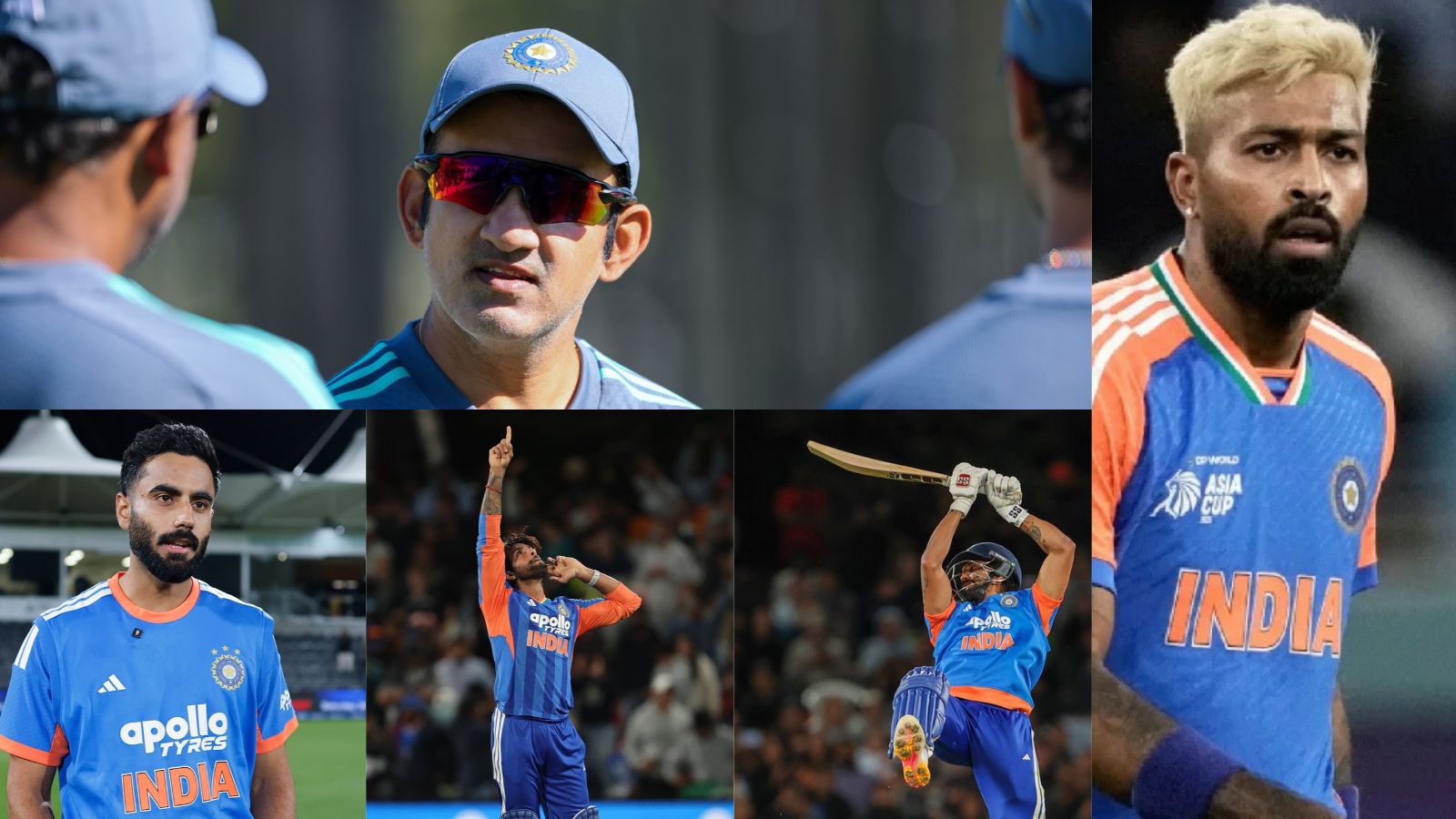
Indian coach Gautam Gambhir is using Naman Dhir, Tilak Varma, and Nitish Reddy to fill the role of Hardik Pandya. Since Pandya often struggles with fitness, Gambhir assembled these three players to perform his duties. They now handle middle-order batting and finishing tasks to keep the team’s balance perfectly intact.
Like for like, the trio don't weigh up to Pandya's veritable gifts but the Indian coach has assembled three wheels that could function, substantially even though not entirely, like the one giant wheel.
Towards the end of his reign at Manchester United, Sir Alex Ferguson struggled to find an all-action midfielder of his ideals. Paul Scholes had aged; Owen Hargreaves was locked on the surgeon's table. A strategist rather than a tactician, he bypassed the flaw by stacking his side with a bunch of versatile forwards who dropped to the midfield like Wayne Rooney or Javier Hernandez, tracked and won the ball and functioned as auxiliary midfielder. He bowed out with a revenge and league crown.
The legendary manager is one of India head coach Gautam Gambhir's idols, and he is navigating a permutational hurdle by adapting to cricket a similar sum-of-the-parts-bigger-than-the-whole theory. He could not get a fully-fit Hardik Pandya, the perfect cricketer trapped in an imperfect body. He couldn't discover or manufacture one either. So he turned to three different men who could by and large perform one man's role. The three-man band of Naman Dhir, Tilak Varma and Nitish Reddy are putting the shifts for the one-man concert that was Pandya. Without distorting the team's equilibrium. They are fulfilling the Pandya acts -- runs down the order; middle-overs shifts; finishing duties.
Like for like, they don't weigh up to Pandya's veritable gifts. He frictionlessly performed difficult and different roles. He seamed the new ball at brisk pace; he stifled batsmen in the middle; he blitzed in death overs with his bat, he killed games with imperturbable rage, and if need arose, he anchored and accumulated. But he has a notoriously fragile body that has repressed gifts from fully blossoming. Gambhir cannot dwell forever on a what-could-have-been story. So he assembled three wheels that could function, substantially even though not entirely, like the one giant wheel.
Strides in Dhir with his explosive power, like Pandya. Few lower-order hitters had this capacity to mow the first ball he faced over the cow corner. Pandya did; so does Dhir. In the second T20 against New Zealand, he clubbed his third ball over fine-leg; in the first he waited for the fourth legal ball for his first maximum, before hitting two more in the next 10. Three of the six balls screamed over the fence in the T20I against West Indies. He is stockier in build and less elastic-limbed than Pandya although with a better reach that his long arms enable. But the bat-speed, power and enterprise were reminiscent of the latter. Like him, he favours the leg-side and the whole set-up is to accentuate this on-side hitting. "He is a power-packed player, he knows what is expected (of him) and he does exactly that, which is a great sign," batting coach Sitanshu Kotak praised him after the Christchurch game.
He bowls too, but off-breaks rather than Pandya's medium pace. If he could chime in with two-three overs consistently, he renders India more flexibility and confidence to squeeze in an extra man depending on the conditions.
Enter Nitish Reddy. His bowling is evolving, but he is only 23 and there are years for him to fully mature into a reliable bowler. Although predominantly a batsman, he seams the new ball when conditions ally. He has added a few yards of pace, has worked on his lengths and is more comfortable hitting the hard lengths like Pandya. The big-hitting prowess manifests occasionally, and he could be Pandya-like in the longer run.
Like with all precious blossoming talents, he has to be carefully nurtured and not be overloaded with multiple tasks before he is fully ready. "He always wants to be the guy that wants to create opportunities. He's got all the talent and all the ability to do that, but for us it's just important to manage him quite well, to give him quite a simple role in terms of what he needs to go and do for the team," bowling coach Morkel would say.
Waltz in Varma. He and Pandya are bound by similar traits, like the delicious balance when they move around the crease, or bend down by the crease. The moving body parts attain stillness when they contact the ball. Yet, fundamentally they are different. Varma has a wider range of strokes, especially through the off-side, he has different gears, and is better at rotating the strike. But he doesn't purchase the riveting power of Pandya; he takes his time before hitting the boundaries and is reliant more on fours than sixes, picking gaps rather than resorting to absolute power.
But thrust them into a crisis, they stand up, weather the storm and often win the match without fuss. They bat differently but think almost similarly, exuding a swagger that concedes the impression that they don't take defeats easily. And both love wild celebrations. Hardik keeps raving about him. "The kind of talent that Tilak has, he really does not need to worry about a lot... you've got to watch the ball and hit the ball irrespective of what it's doing," he once said.
Certainly, the plan is fallible. The careers of Naman and Nitish are still nascent; they could yet bloom or break. Nitish can't duplicate Pandya's death-over vigour with the ball, he doesn't possess his variations and has not developed his street smarts. Gambhir would prefer a full-fit Pandya. But managers can't brood over what they don't have. They have to mix the ingredients so that they find the desired result. Gambhir is displaying a Ferguson-like cleverness in manoeuvring a crisis.