
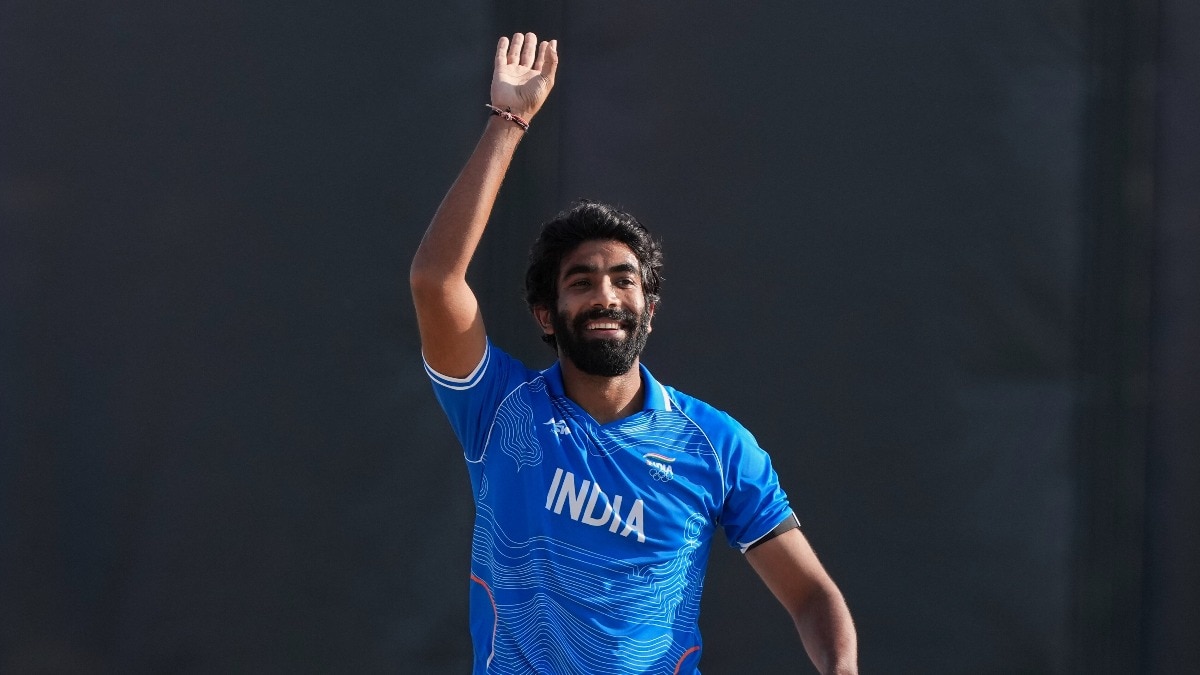
India’s pace attack relies heavily on Jasprit Bumrah, raising concerns about the team's depth. Recent matches against the West Indies showed the bowling unit struggled without him. R Ashwin said, "we don't have enough quality in our bowling." Statistics confirm India performs much better when their premier bowler is playing.
When it comes to Jasprit Bumrah, the Indian cricket team almost has a cheat code at its disposal. On a flat track, with the ball flying around or against a set batter looking to take the attack to the opposition, Bumrah has repeatedly found a way to turn the game on its head. His variations, precision and ability to outthink batters have made him India's ultimate trump card across formats.
But there is a catch. What happens when that trump card is missing?
Bumrah's absence has often left a gaping hole in India's bowling attack, with the team struggling to find the same control and cutting edge without its premier fast bowler. The recent ODI series against the West Indies offered another reminder of that vulnerability, as India's pacers struggled to contain the opposition. Gurnoor Brar, Auqib Nabi and the other seamers found it difficult to keep the scoring in check, exposing the challenge of defending totals without a bowler of Bumrah's calibre.
The problem was equally apparent in the second T20I against the West Indies, when India failed to defend a mammoth total of 250. For all their firepower with the bat, India's bowlers could not deliver when it mattered most.
And the numbers suggest that this is more than just a bad day at the office.
In T20Is this year, Bumrah has picked up 23 wickets in 17 matches, making him India's leading wicket-taker. With him in the line-up, India have claimed 128 wickets in 17 matches at an average of 21.49 and an economy rate of 8.62.
Without him, however, the numbers paint a different picture. Across 16 matches in which he has been absent, India have managed 90 wickets at an average of 27.84 and an economy rate of 9.16.
The ODI numbers are equally concerning. In the 10 matches India have played without Bumrah this year, their bowlers have taken 66 wickets at an average of 44.83 and an economy rate of 6.43.
The contrast raises an uncomfortable question: has India's pace attack become too dependent on one man?
Former India spinner R Ashwin certainly seems concerned. After India's failure to defend 250 against the West Indies in the second T20I, he questioned whether the country had enough quality in its bowling ranks to cope without Bumrah.
"It's not that I'm blaming the bowlers, but we don't have enough quality in our bowling, and we haven't placed enough emphasis on developing it. That is why the chances of producing high-quality bowlers remain quite low. I really hope we spend some time grooming high-quality bowlers because bowling in such conditions requires understanding and game awareness."
Ashwin also pointed to how Bumrah's presence had made life easier for India's previous captains, allowing them to call upon a bowler capable of controlling the game even in the most demanding situations.
"Rohit Sharma and Suryakumar Yadav were both fortunate in a way because, as captains, they had a cheat code in the form of Jasprit Bumrah. He can bowl defensively when required, and he also has a good variety of slower deliveries. But not many bowlers are that gifted, and I am genuinely worried about the future of Indian bowling," said Ashwin.
So, is India's pace department increasingly becoming a one-man show? Is the country struggling to produce bowlers who can shoulder the responsibility when Bumrah is unavailable, or does the problem lie elsewhere?
To understand what is holding India's fast-bowling resources back, IndiaToday.in spoke to former India bowling coach Bharat Arun. His assessment points towards two crucial factors: workload management and the ability to develop and execute skills under pressure.
ISSUE OF WORKLOAD MANAGEMENT
Fast bowling is a demanding craft, and the recent spate of injuries among India's pacers has brought the spotlight firmly on how their workloads are managed. Bumrah himself has endured fitness setbacks, while the handling of younger quicks such as Harshit Rana and Mayank Yadav by the Centre of Excellence has come under scrutiny. Concerns have emerged over whether some players have returned to action before they have fully recovered, only to suffer further setbacks and spend more time on the sidelines.
For Arun, however, workload management is not simply about keeping fast bowlers away from matches. It is about ensuring they are physically prepared to perform when they take the field.
"I think there's a lot of talk on workload management. Sometimes, the understanding on workload management is not as it should be. Workload management is nothing but getting a player, whenever he's playing, to make sure that he's absolutely fit and raring, because being a fast bowler, the physical fitness is of paramount importance. Yes, nobody is 100% fit all the time. Your fitness varies between 90 to 100%, but being 90% fit, I think, is very, very important for, any, fast bowler and It is the team management who does it."
"When I say the team management, it is the work of the physios, it is work of the strength and conditioning coaches and the bowling coaches to make sure that they have enough under their belt so that they are sharp and raring to go in matches," said Arun.
The responsibility, therefore, extends beyond the medical team. Physios, strength and conditioning coaches, bowling coaches and the wider team management must work together to ensure that fast bowlers can sustain the demands of international cricket without compromising their effectiveness.
Arun also stressed that India's fast-bowling struggles should not be mistaken for a lack of talent. The country has produced quality quicks across generations, and the difference between individual talent and a consistently successful attack often comes down to how well that talent is supported and maintained.
"And as far as Indian fast bowling attack goes, there have always been very good fast bowlers in the country. Even prior to this era when we were there, I think there was Zaheer Khan, there was Ashish Nehra, there was Venkatesh Prasad, there was Javagal Srinath, there was Irfan Pathan.
"I can name so many bowlers who were there even before that. But collectively, yes, fitness forms a very, very important part of a fast bowler's skill, and working to keep them in prime fitness is one challenge for the team," said Arun.
India, then, may not be short of fast-bowling talent. The bigger challenge is ensuring that the talent is fit, available and capable of delivering consistently when the team needs it most.
WHAT ABOUT SKILL?
Fitness can keep a fast bowler on the park, but it cannot guarantee success. At the highest level, the ability to adapt, read conditions and find solutions against different batters is what separates a good bowler from a match-winner.
This is where Bumrah has consistently stood out. He has built his reputation not just on pace and accuracy, but also on his ability to adjust his plans to suit the conditions and the demands of a particular match.
Arun believes India's other fast bowlers must develop the same clarity about their craft. For him, the challenge is not necessarily a shortage of quality but how effectively bowlers learn to adapt and sharpen their skills.
"The next one is how these fast bowlers have worked enough on their skill so that they are able to adapt to different kind of knowledge about the foreign conditions, and how quickly do I get that into my system so that my bowling is enhanced when I'm bowling in those conditions, is the challenge. I don't see any reason why we do not have the quality fast bowlers. We do have the quality, but the challenge lies elsewhere," said Arun.
India have enjoyed success with the likes of Arshdeep Singh in recent times, but building a reliable attack requires more than having a few promising names in the mix. Bowlers must understand their own strengths, recognise what works for them and have the conviction to execute their plans when the pressure mounts.
For Arun, that understanding is the foundation of a successful bowling career.
"The success of any bowler is how much understanding he has of his own bowling. That, to me, is the key."
It sounds simple, but identifying one's strengths and trusting them under pressure can be the difference between holding one's nerve and losing control of a contest. Not every bowler has the same skill set, and trying to replicate another bowler's methods does not necessarily guarantee results.
"Yes, certain things could work for one bowler, but may not work for the other bowler, because his type can be totally different. So, understanding what works for them- and to me, it is simple; it's not rocket science. It is about understanding your strengths, and going back to your strengths under pressure."
The real test, Arun suggested, comes when the game begins to slip away. With batters attacking, conditions offering little assistance and the pressure mounting, bowlers can be tempted to abandon their plans in search of an immediate breakthrough.
"It is under pressure when a bowler thinks of so many different things, whether this should work, whether this should not work."
That is precisely when clarity becomes critical. Rather than constantly searching for a new solution, bowlers must have the confidence to trust the skills they have developed and execute them with conviction.
"Having a very, very clear mindset under pressure, to back your strengths and work on your strengths so that the execution is spot on, is going to be the biggest key for these bowlers to be successful," said Arun.
Bumrah's value to India is not merely reflected in his wicket tally. It lies in his ability to take control of difficult situations, restrict the opposition when runs are flowing and give his captain a reliable option when the game is on the line. That combination of skill, fitness, adaptability and composure is what makes him so difficult to replace.
But even the best fast bowler cannot carry an entire attack indefinitely. With the next World Cup approaching, India need their other pacers to step up and take some of the burden off Bumrah's shoulders.
India have the talent. The challenge is turning that talent into a dependable bowling unit.
Because while Bumrah may be India's cheat code, the team's long-term success cannot depend on having him available every time.