
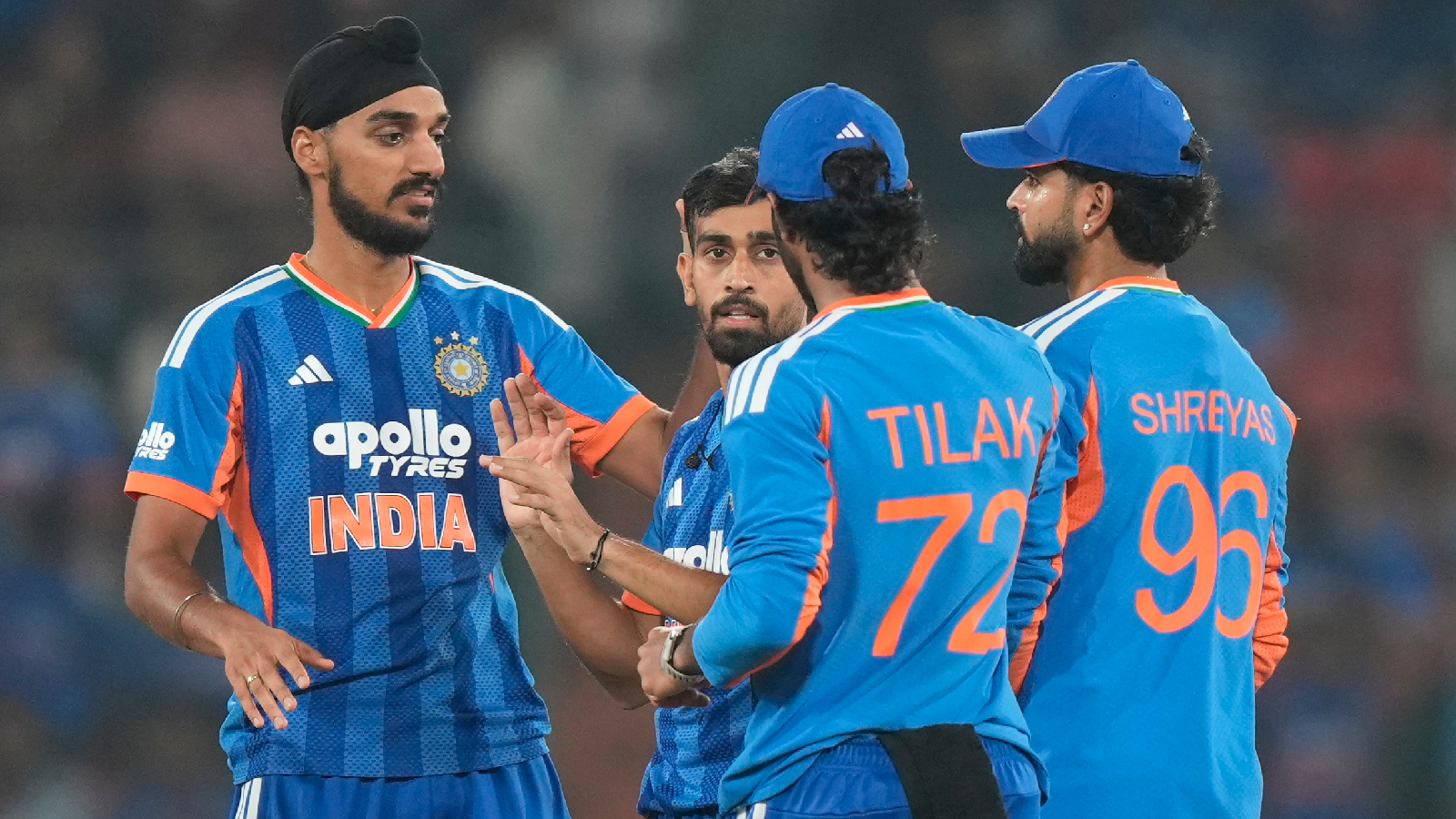
India’s bowling attack struggled against West Indies as totals regularly crossed 200 runs. Captain Shubman Gill said India's attack often struggled in terms of clarity whether to defend or attack. Without Jasprit Bumrah, the team stuck to an aggressive wicket-taking plan, but the bowlers failed to stop the powerful hitters.
मूल अंग्रेजी लेख का निम्न अनुवाद AI द्वारा किया गया है। AI द्वारा अनूदित लेखों में त्रुटि हो सकती है। किसी भी शंका या स्पष्टीकरण के लिए मूल अंग्रेजी लेख देखें।
At the conclusion of the ODI series against the West Indies, which was a high-scoring contest like the T20Is that followed, India captain Shubman Gill made a frank assessment. On flat decks despite bowling first in relatively better conditions, Gill said India's attack often struggled in terms of clarity whether to defend or attack when the West Indies power-hitters used the long levers. Cut to the T20Is, where both teams head to Bengaluru with the series on the line, Shreyas Iyer, the captain in the shortest format may well concur with Gill.
Barring the first T20I, where West Indies managed only 171 batting first, in each of the next three outings, the totals have been above 200. At Ranchi, after piling up 249/5, Iyer watched his attack concede 252/4 with 9 balls remaining. While they did hold their nerve at Indore's Holkar Stadium, where bowlers don't have the luxury of big boundaries, in Hyderabad the hosts paid the price for letting West Indies put up 247/3, which happened to be beyond India's reach. While the flat decks and dew haven't helped their cause, India have seldom relied on defensive lines.
In the IPL, particularly after the Impact Player rule came about, which saw an upswing in the totals beyond 200, most teams preferred a defensive mechanism with the ball. Wide yorkers, short deliveries dug into the surface with pace off, spinners bowling away from the hitting arc, were some of the tactics that bowling units came up with to withstand the power-hitters.
But in a series where Jasprit Bumrah has been rested, India's plans have gone awry at times. To their credit, they have largely stuck to their attacking plan - where they believe taking wickets is the best form of attack. Even during the T20 World Cup, when they played three successive high-scoring fixtures en route to lifting the title, it was their preferred option. But in that team, India had Bumrah to deliver. But in his absence, and Kuldeep Yadav not chosen in the XI because of the not-so-favourable conditions, they have still been brave in sticking to the philosophy and are watching the Windies batsmen muscle their way through.
Not a matter of expertise
It brings the question why India haven't taken the defensive ploy. It is not as if the current lot are not bankable in terms of executing the defensive ploy. Arshdeep Singh, for instance, has been phenomenal at it, delivering not just the wide yorkers, but capable of mixing the slow bouncers and short balls whenever the situation demands. Beyond the left-arm seamer, India have preferred to go in with Mayank Yadav and Prince Yadav - two young seamers who are making their way in and have made into the team on the back of their stint with Lucknow Super Giants.
At LSG, working with bowling coach Bharat Arun, they too have largely embraced the attacking philosophy. It means, at the death, despite their inexperience, the two pacers have relied on what has worked for them - to attack the line of stumps, a formula that they are so used to. Prince, in particular, thanks to the ability to curve the ball back with his slightly round-arm action, has been able to execute the yorkers. In the third T20I in Indore, his yorkers only stopped the West Indies from flexing their muscles in the end. But at the same time, on the occasions he slightly erred in line, he has seen the ball sail over.
While Mayank has been impressive with his raw pace, even rushing the batsmen with his back of the length deliveries, that has even skidded at times, in terms of showing his defensive side, he still looks a novice. The reluctance of the seamers to have a Plan B meant the spinners, in particular Kuldeep during the outing at Ranchi where he leaked 53 in his four overs, tried to deliver outside the hitting arc by bowling wide. Even Axar Patel has resorted to the same tactic and bore the brunt.
Now, as India head to M Chinnaswamy Stadium, they encounter the biggest test of all. The venue is unforgiving for bowlers, where the margin of error is so small that even mishits tend to travel the distance. In successive editions of the IPL, the home team Royal Challengers Bengaluru showed they could turn the venue into a fortress by marrying the attacking bowling options with defensive options. It is the venue where the bowlers are expected to show their creative side, where they need to find ways to keep the batting side to a score that can be chased. It can happen with wickets. Or it can happen merely by slowing the run-rate.
Head coach Gautam Gambhir speaking after the loss at Ranchi, where he came down heavily on the pitches in the series, acknowledged the necessity to find a way. "If you want to keep improving, you don't want to put anything under the carpet. We are a world-champion team so we want to keep improving. These are obviously tough conditions to bowl - we know flat wickets with the dew - obviously it's tough but we need to figure out and find the way," he said.