
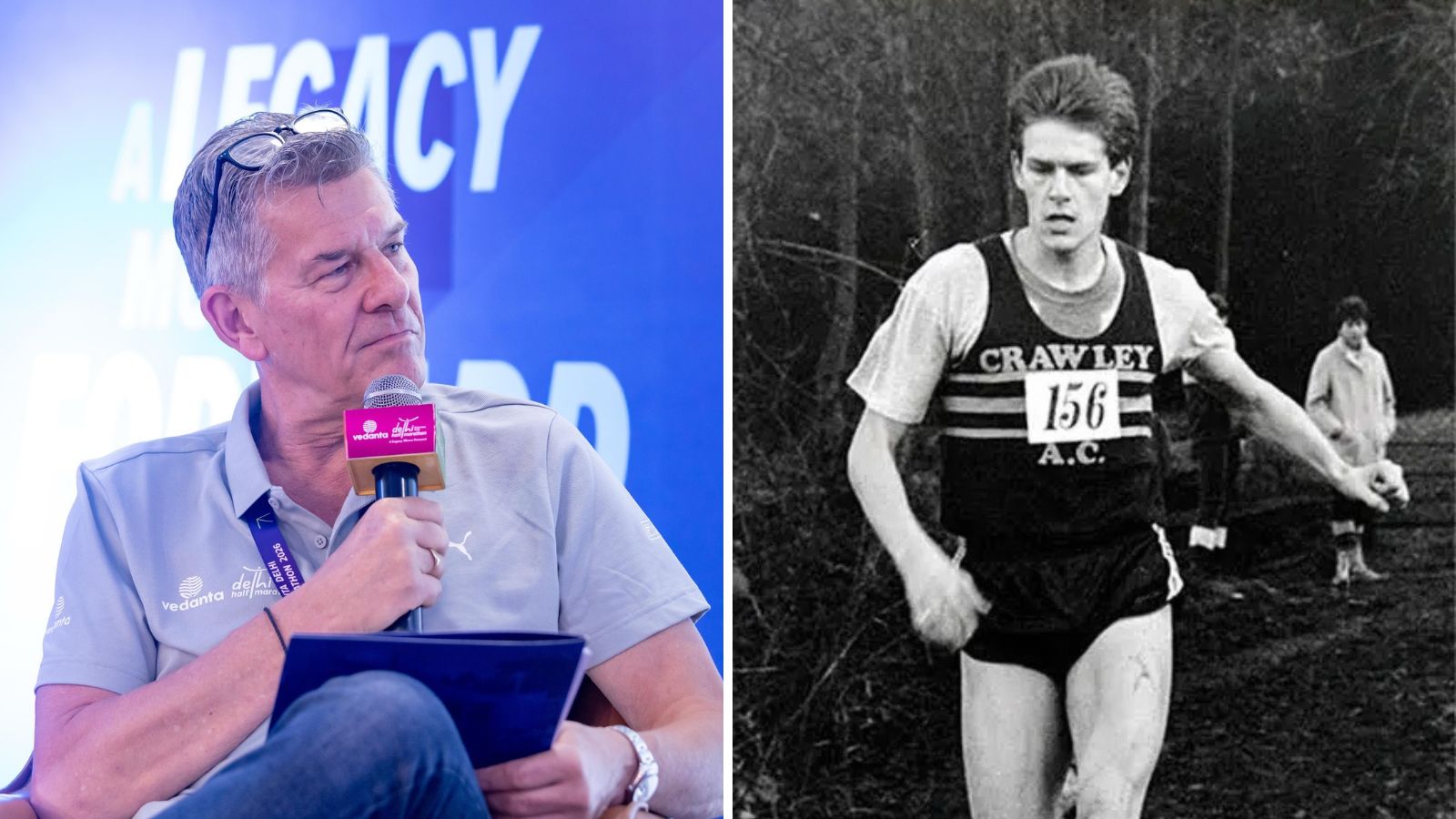
Tim Hutchings has been a track and field commentator for more than 35 years. The 67-year-old started his career in 1991 after injuries ended his time as an athlete. "I just use my common sense," he said. He now balances technical details to help fans understand the sport better.
After a successful career as an athlete, Tim Hutchings picked up the microphone in 1991 and has called numerous iconic races, moments, storylines and wins
Tim Hutchings has been associated with track and field for more than five decades.
And he has donned many roles. Before being dubbed the 'Voice of British Athletics' for his presence as a commentator for more than 35 years, Tim had an athletics career where he won two silver medals at the Cross Country World Championships and finished fourth at the 1984 Olympics in 5000m.
However, the 67-year-old from Middlesex terms his transition to commentary as a lucky move. "It was natural but also very lucky. After my two silver at World Cross Country, I was running and doing commentary also due to injuries," Tim told The Indian Express on the sidelines of the upcoming Vedanta Delhi Half Marathon.
Track to comm box
"I was an underling in my initial years. There were senior BBC commentators who I would observe on how they take notes, their voice modulation techniques, and their picturisation of the action on the track," said Tim. "By the time injuries started getting frequent, I was 32 and that is where I picked up the commentary with Eurosport asking me to do it for them."
In the first three years of his commentary stint, Tim's constant presence in the commentary box quickly made him a fan favourite. "I think I did a lot of commentary in the first three or four years of my career. It was like a crash course of commentary for me and that helped me in getting recognised as people had known me as an athlete," he said.
While the transition for Tim was natural, the 1986 Commonwealth Games medallist had to keep the balance of explaining track and field action to both audiences: the athletics nerds and the ones without any idea of the sport.
"I have run the track events and I know what it is to be there. But as a commentator, it was important for me to maintain that balance. I just use my common sense. I don't go overboard with technical explanations, nor do I simplify it. I just put performances in context and I think that is what works," said Tim.
Tim's experience as an athlete gives him the edge on analysing performances which can sometimes be baffling for a normal fan or a viewer. "I think my athletic experience gives me the licence to be critical or appreciative of certain moments on the track and field. I believe those are the moments which I put out for my viewers in the best way," Tim said.
Conveying emotions
Over the years, there have been iconic races, moments, storylines and wins for athletes across the globe. With sprints ending in seconds to marathons witnessing photo finishes, Tim labels emotions as a crucial part of the commentary business.
"Let's be honest, commentary is not about reading reports. It is about connecting the viewer to what is happening on the field. Emotions are part of the sport and as commentators, our job is to bring those emotions to our viewers," said Tim. "I have had my moments where emotions came out really well and I think that is the key, to bring out the right amount of emotions for your viewer to connect."
Tim describes commentary as a 400m race. "If it's 400 metres, you don't start off the race screaming when the gun goes, you want to go through the gear and save your crescendo for that last straight," he said.
In a long career of 35 years, Tim has witnessed many great moments but his favourite one remains the 2000 Sydney Olympics 10000m final between Ethiopian long-distance legend Haile Gebrselassie and Kenyan great Paul Tergat.
"It was one hell of a race. If you go back and look at it, both guys are killing each other in the last few moments and that is the beauty of long-distance running. You can lead all the while and then someone comes and pips you on the finish line like Haile did that day," said Tim.
Tergat was leading the race throughout but in the last 100m, Gebrselassie found an extra gear to win the title by 0.09 seconds. Tim's description of the moment is hailed as one of the best pieces of athletics commentary. "They were knocking chunks out of each other over the last lap... the most astonishing battle side by side of two guys who refuse to lose," Tim had called 26 years ago in Sydney and still remembered it by heart.
35 years since his commentary debut, it is clear that Tim never had a second career; he only traded spikes for the microphone to call the greatest athletics moments.