
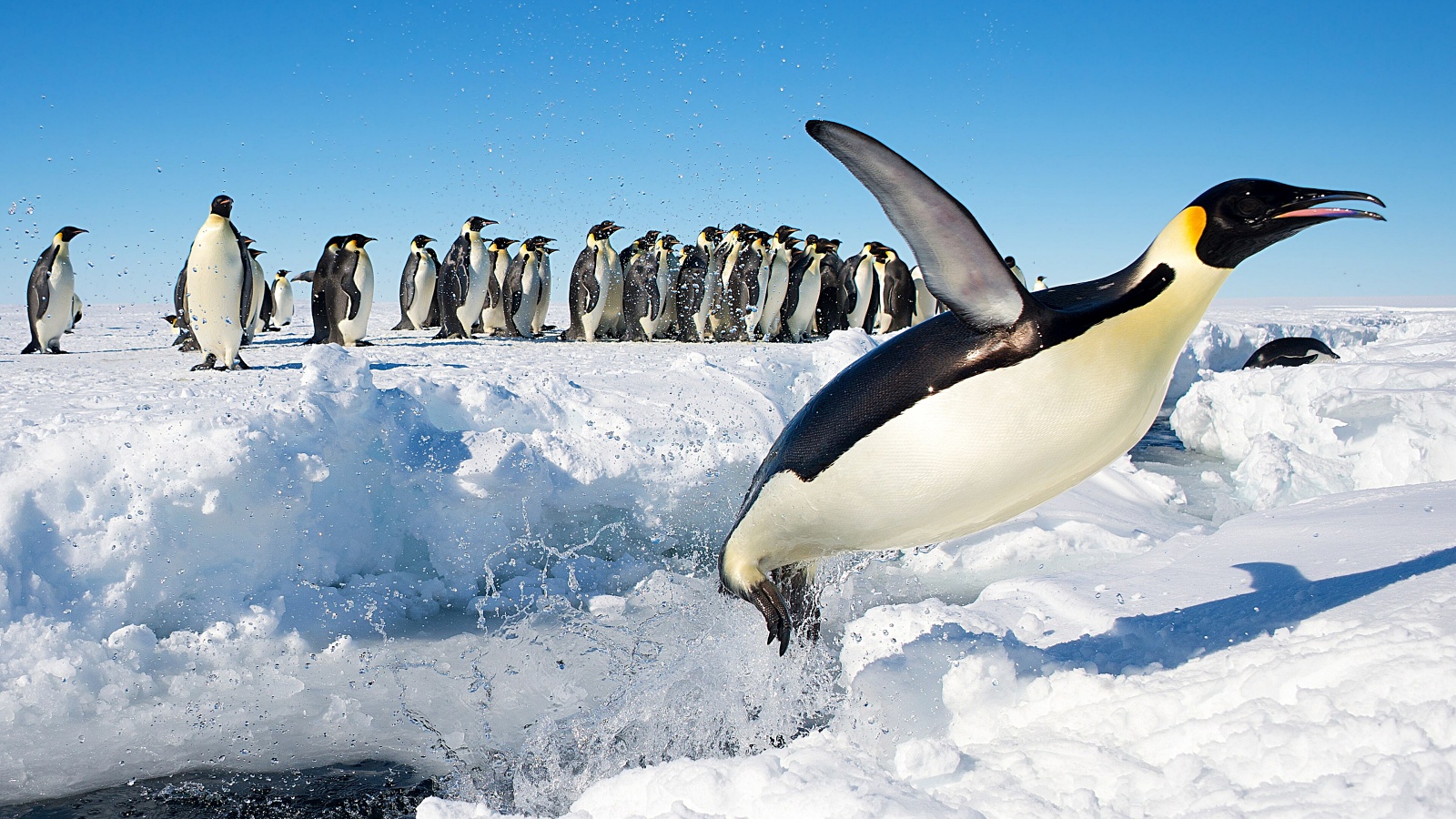
The world’s largest chinstrap penguin colony on Zavodovski Island saw a 63% decline over 14 years. Breeding numbers fell from 1.09 million in January 2011 to 402,000 in 2025. Researchers said, "We think that climate change operating through food webs is probably the main driver," as krill move away.
Antarctica's largest penguin colony has lost nearly 63% of its breeding population. Researchers suspect climate change is disrupting food supplies.
Imagine a remote island so crowded with penguins that they cover its rocky shores. Now, imagine nearly two-thirds of its chinstrap penguin population disappearing over just 14 years.
That is what has happened on Zavodovski Island in the South Sandwich Islands, Antarctica. Once home to the world's largest penguin colony, the island has seen its chinstrap penguin numbers plummet, with researchers pointing to climate change and its effects on the birds' food supply as the most likely explanation.
According to research by the British Antarctic Survey (BAS), the number of breeding chinstrap penguins on the island fell from around 1.09 million in January 2011 to just 402,000 in 2025. That amounts to a decline of nearly 63%, or more than 680,000 breeding individuals.
Lead study author Norman Ratcliffe described the decline as "very rapid".
The collapse has also cost Zavodovski Island its long-held title as the world's largest penguin colony. That distinction now belongs to the Adélie penguin colony at Cape Adare, on the opposite side of Antarctica, which was estimated to have more than one million birds in 2018.
Why are chinstrap penguins struggling to find food?
The problem may come down to something simple: their food is moving, and the penguins are struggling to follow it.
Chinstrap penguins mainly feed on Antarctic krill, tiny, shrimp-like creatures that live in the ocean and form an important part of the Antarctic food chain.
As ocean temperatures rise, krill have been moving farther south into colder waters. This creates a difficult situation for chinstrap penguins, which do not readily tolerate the same colder habitats.
The birds are left with two unappealing options: follow their food into waters that may not suit them or remain in their usual habitat and risk going hungry.
Researchers believe climate change is likely driving this disruption to the food chain.
"We think that climate change operating through food webs is probably the main driver," Ratcliffe said.
The wider region is also experiencing significant warming. Winter temperatures around the Antarctic Peninsula have risen by 5 degrees Celsius above pre-industrial levels, according to the report.
Did a volcanic eruption cause the decline?
Zavodovski Island is home to Mount Curry, an active volcano. Researchers therefore investigated whether its eruption in 2016 could have harmed the penguin colony.
However, they ruled out the eruption as the main cause of the decline. Satellite images and field measurements showed that the main ash cloud travelled northeast, away from the penguins' core nesting grounds.
The decline had also begun before the eruption and continued at a similar rate afterwards.
"The decline in chinstrap colony area was in progress before the eruption and continued at a constant rate thereafter," the study noted.
Interestingly, the island's macaroni penguin population increased during the same period. Their numbers rose from around 338,000 in 2011 to 433,000 in 2025.
Together, chinstrap and macaroni penguins still number more than 835,000 on Zavodovski Island. Their contrasting fortunes suggest that environmental changes can affect different penguin species in different ways.
What does this mean for chinstrap penguins?
Studying the colony is no easy task. BAS researchers travelled for 15 days to reach the remote island and used drones to survey the penguins and assess the scale of the decline.
The findings have raised concerns about the species' future, with researchers suggesting that chinstrap penguins may now qualify as endangered. This does not, by itself, establish that they have been officially classified as endangered.
The stakes are significant because the South Sandwich Islands are home to around 38% of the world's chinstrap penguin population.
Although researchers consider climate change and its effects on the food chain the most plausible explanation for the decline, the findings highlight how warming oceans can disrupt the relationships between animals and their food sources.
For the chinstrap penguins of Zavodovski Island, finding their next meal may be becoming an increasingly difficult task.
Explore more captivating stories about pets and animals here, and make us your daily stop for the latest from the animal kingdom.