
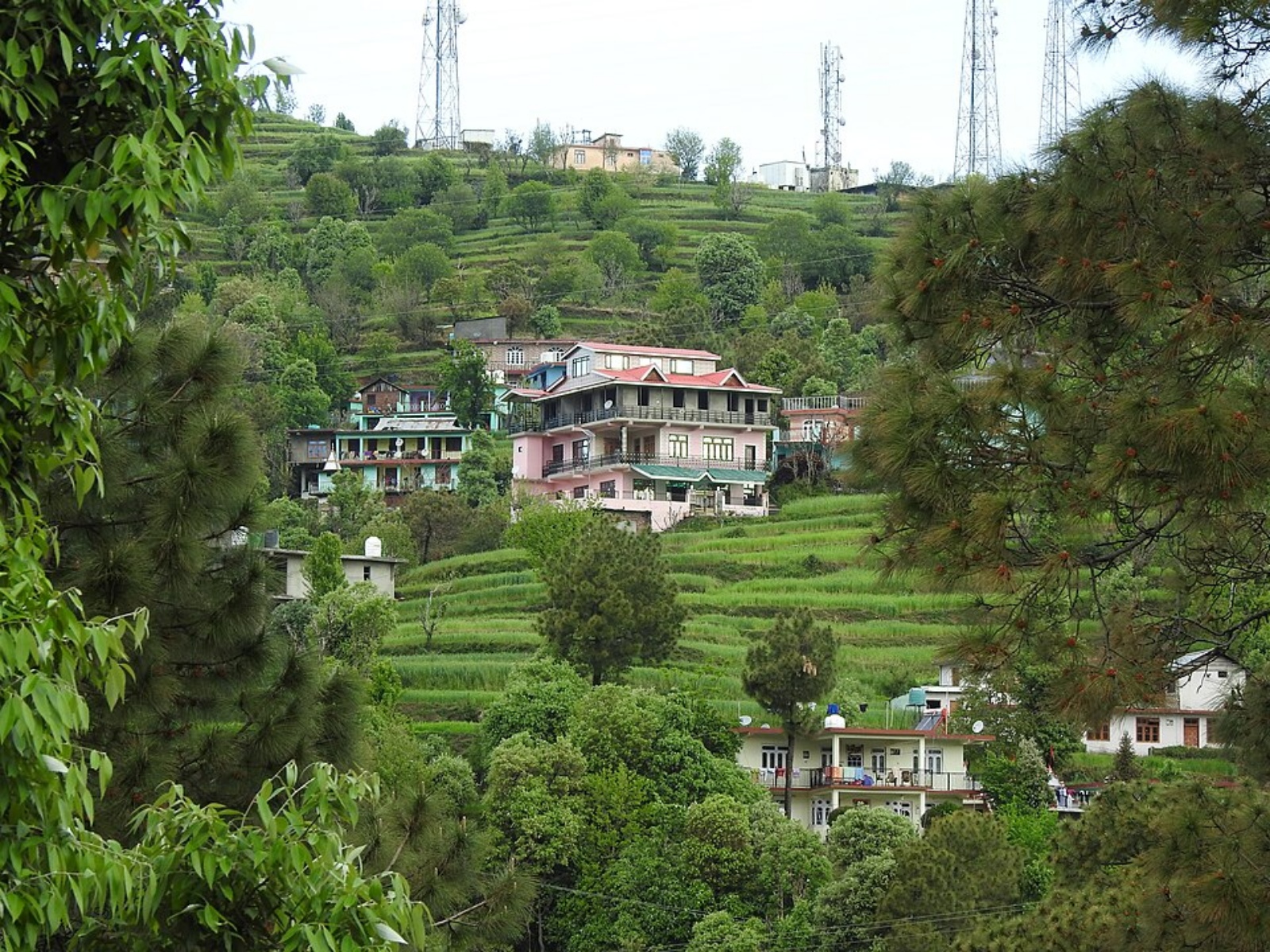
Himachal is turning into a concrete jungle as hotels grew by 90 per cent between 2016 and 2025. Experts say these heavy buildings trigger landslides and trap heat. Traditional homes made of mud and wood offered better safety, but current rules now push people to use concrete on steep slopes.
Forest laws, building codes, subsidies and social attitudes are pushing Himachal towards concrete, even as traditional mud-and-timber homes offer lessons in climate resilience and earthquake safety
Every summer, lakhs of tourists flee concrete jungles like Delhi and Chandigarh for Himachal. To host them, Himachal is, ironically, turning into the same concrete jungle. According to a CEC report, between 2016 and 2025, registered hotels grew by 90 per cent while homestays exploded by 670 per cent. Because villages fall outside strict municipal rules, people are stacking multi-storey cement boxes on steep slopes without a single "carrying capacity" study to check how many vehicles or heavy buildings these fragile hills can safely hold.
In 2018, NITI Aayog warned that replacing indigenous homes with concrete blocks creates urban "heat islands" and spikes electricity demand. Studies by IIT Roorkee and INTACH explain why: Thick mud, wood, and slate walls act as natural thermal batteries, whereas concrete freezes in winter and bakes in summer. To power the resulting heaters and ACs, the state builds more dams. The CEC reveals over 1,000 hydroelectric projects are planned across Himachal, accounting for 31.9 per cent of all forest land diverted and choking river valleys.
The young, moving Himalaya places Himachal in India's highest earthquake-risk categories (Seismic Zones IV and V). To survive, our ancestors built structures that bend without breaking: Interlocking Deodar cedar and dry stone. Kath-Kuni homes in Kullu and Shimla, timber-and-mud Dhajji-Dewari and mud bricks in Kangra and Chamba, and rammed earth in Spiti. During the 7.8-magnitude Kangra earthquake of 1905, which flattened over a lakh buildings, ancient Kath-Kuni marvels like the 500-year-old Naggar Castle and 12th-century Chehni Kothi tower stood intact because mortar-free walls flex like a woven basket.
Traditional stone foundations also let underground monsoon rainwater seep safely through tiny gaps between dry stones. Solid concrete acts like an underground dam, trapping subsurface water until pressure explodes the slope. Geological Survey of India (GSI) surveys after the 2023 monsoon disasters confirmed that landslides in Kullu, Mandi, and Shimla were triggered directly by blocked drainage and the dead weight of multi-storey concrete buildings. Moreover, flat concrete boxes require slicing hills at 90-degree angles across over half of Himachal's highways, while diesel trucks hauling cement and sand compound the damage. The CEC had flagged this.
The 30-Year-Old Textbook Lie
I wanted to build with natural materials and realised our system is rigged against traditional building. First, consider our forest laws. The state allowed corporations to clear 17,598 hectares of forest for dams and highways and left Rs 273 crore (31 per cent) of its Rs 865 crore tree-planting fund unspent between 2021 and 2026. After the 1980 Forest Conservation Act and 1996 tree-felling bans, villagers' customary Bartandari timber rights were strangled in red tape. Denied two legal Devdar trees to repair an ancestral home, a villager's only easy option is buying 100 bags of cement with zero paperwork.
Second, colleges only teach engineers concrete and steel formulas, and municipal offices reject mud-and-stone blueprints because the National Building Code, Public Works Department (PWD) price lists, and fire bylaws only recognise cement and brick.
Worse is childhood conditioning. Thirty years ago, my school textbooks taught us that a brick-and-cement pucca house meant dignity, while a mud-and-slate Kutcha house meant poverty. Today, under schemes like the Pradhan Mantri Awas Yojana (PMAY, formerly Indira Awaas Yojana), inspectors only release subsidies for cement and brick, while banks deny loans and insurance for mud homes.
Why I Failed
Even without bank loans, village realities defeated me. In Kangra, traditional Thawi artisans are vanishing, and young mason helpers refuse to touch mud, calling it a "dirty, lowly job" compared to "modern" cement. Meanwhile, architects reviving mud and Kath-Kuni mostly cater to wealthy city clients building luxury resorts; finding one for a modest budget was impossible. If someone determined to avoid concrete is forced to surrender, what chance does an ordinary family have?
Pioneers like the late Didi Contractor in Bir, heritage restorers in Naggar, Sonam Wangchuk in Ladakh, Hunnarshala in Kutch, and Bhutan's national laws prove natural materials belong in the modern world. Four reforms are urgent:
End the "kutcha" stigma: Update the National Building Code, PWD schedules, bank rules, and PMAY guidelines to recognise engineered mud, Kath-Kuni, and Dhajji-Dewari as Pucca, insurable, and loan-eligible.
Dignify earth construction: Train youth at state ITIs using mechanised mud-block presses and pay master Thawis to teach.
Offer free village blueprints: Provide pre-approved mud-and-stone designs at the Panchayat level.
you may like
Reward green homestays and timber banks: Tax concrete hotels, incentivise natural homestays, and use the unspent Rs 273 crore to grow community Devdar and bamboo forests.
Concrete doesn't bend. When monsoon clouds burst, or fault lines shift, the Himalaya shake off what doesn't belong. Himachal's survival isn't inside a cement bag; it is still breathing inside that quiet mud kitchen in Kangra.
The writer is a National Tourism Award-winning travel content creator, researcher, and host of the YouTube channel Mountain Trekker, promoting sustainable tourism