
Skywatchers in Chennai can see two celestial events this week. The Beaver Supermoon appears near the Pleiades star cluster on Tuesday. On Thursday, Uranus reaches opposition, making it look bright. Srilakshmi N said, "Uranus is at the edge of naked-eye visibility." Use binoculars or a telescope to spot these wonders.
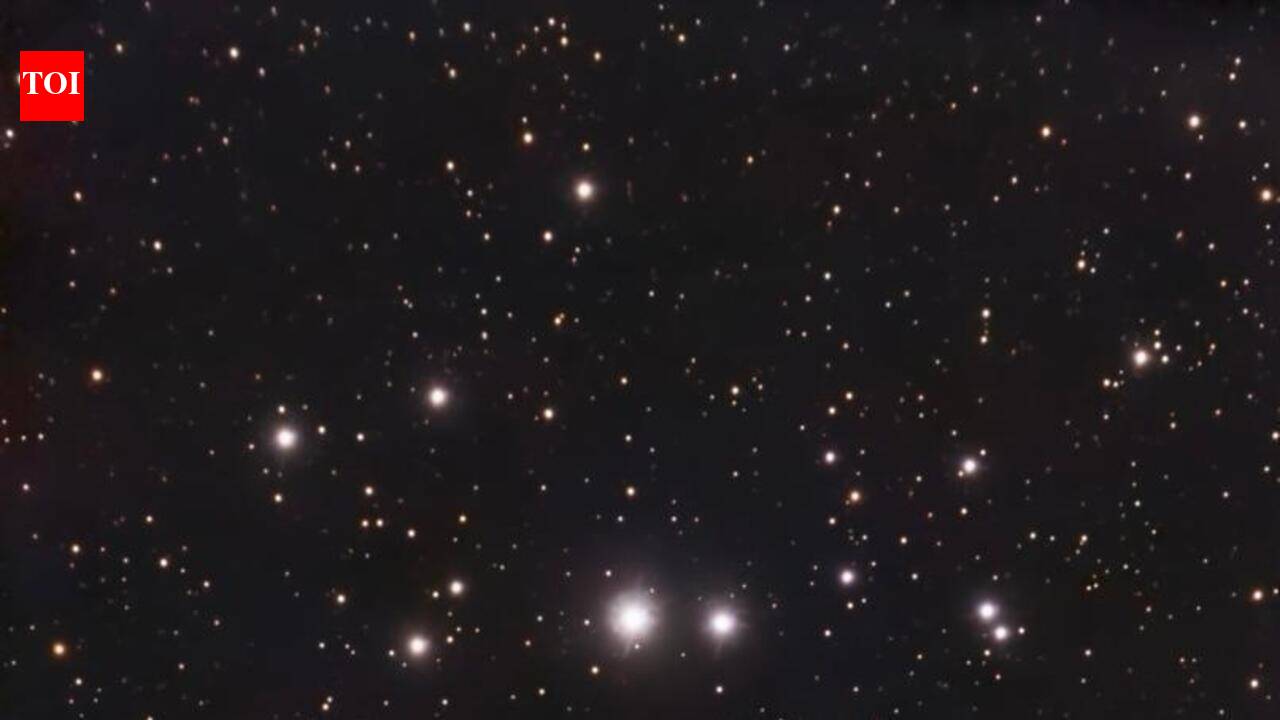
Chennai: Skywatchers in the city can look forward to two celestial events this week. The Beaver Supermoon will appear close to the Pleiades star cluster on Tuesday, coinciding with Karthigai Deepam, and Uranus will reach opposition (when Earth comes between the planet and the Sun) on Thursday. While the Moon and star cluster can be viewed with the naked eye, binoculars, a telescope or even a smartphone camera can help spot Uranus.Nov's full Moon is traditionally called the Beaver Moon, after the time of year when beavers prepare their winter shelters. It is also a supermoon, when a full Moon coincides with its closest approach to Earth, making it appear slightly larger and brighter than usual."On Nov 24, the evening sky will be lit by a supermoon. This kicks off a series of three consecutive supermoons in Nov, Dec and Jan," NASA said in its Nov skywatching guide, advising observers to look east around sunset.The Moon will appear close to the Pleiades, also known as the Seven Sisters, an open cluster of more than 1,000 stars in Taurus. Its brightness could, however, make the cluster's fainter stars difficult to spot."The Pleiades is a group of stars born from the same raw material. They are like cosmic siblings, sharing the same material and gravitationally bound to each other. The cluster is about 440 light-years away and a few hundred million years old.
It appears bluish through a telescope because its stars are very hot," said astrophotographer and astronomy educator Srilakshmi N.
Skywatchers can look east around 7.30pm, when the cluster will appear near the Moon's one o'clock position, she said.Meanwhile, Uranus will reach opposition, making it appear at its brightest for the year. About 2.7 billion km away, it will remain visible through the night, though binoculars or a low-power telescope are recommended in city's light-polluted skies.
"Uranus is at the edge of naked-eye visibility. But a smartphone camera can capture it with a 10- to 30-second exposure, provided it is mounted on a tripod. You can also make out its distinct bluish hue," Srilakshmi said.