
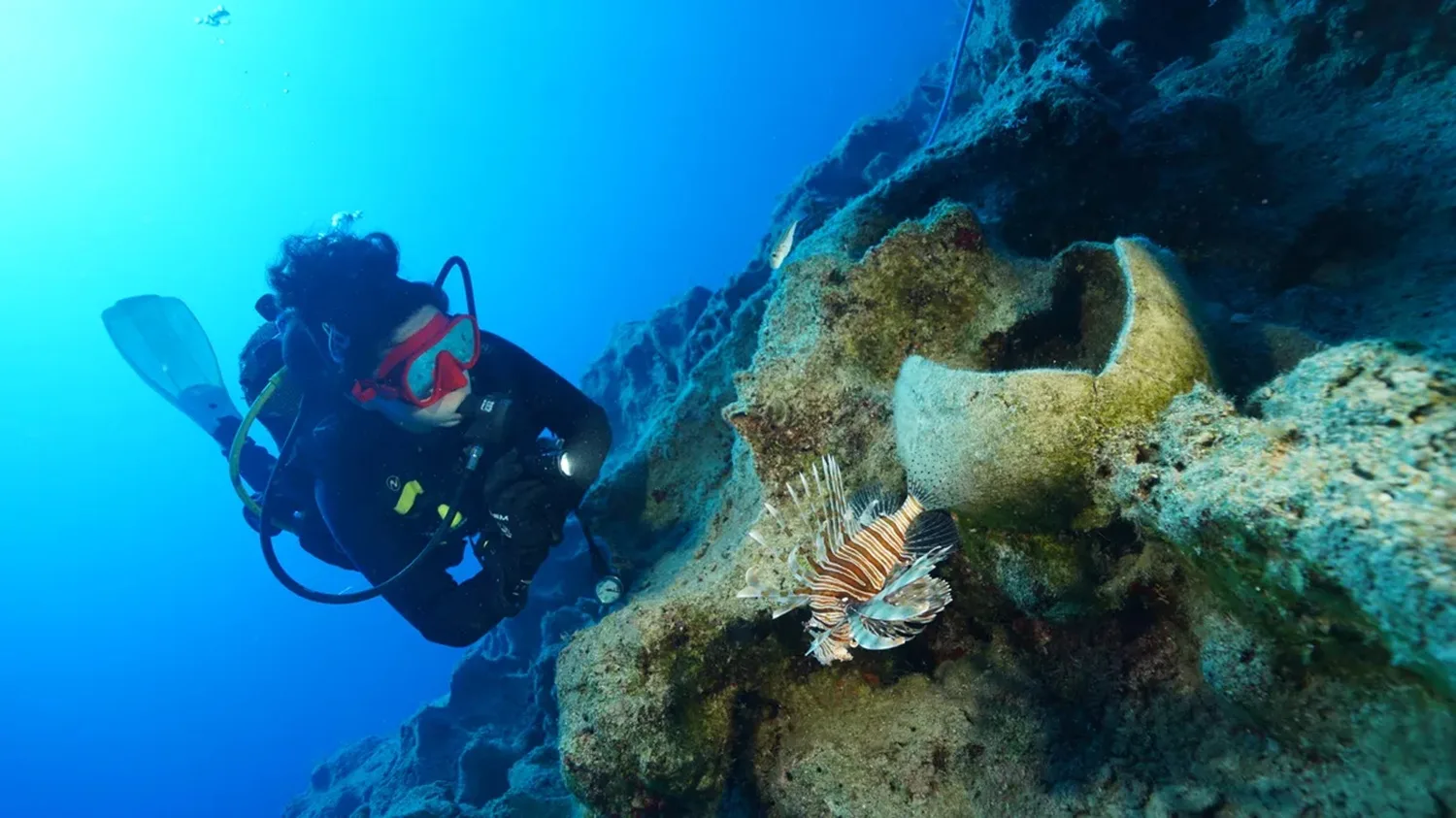
Archaeologists in Turkey discovered the world’s oldest shipwreck near Kekova Island, dating back nearly 4,700 years. Divers found three anchors and 30 ceramic jars at the site. Professor Hakan Öniz said, "When we first found the wreck... we didn't immediately grasp its true significance." This find reveals ancient Mediterranean trade routes.
Archaeologists in Turkey have uncovered what may be the world's oldest known shipwreck, dating back nearly 4,700 years, to the same era when the pyramids of Giza were rising in Egypt.
The Mediterranean Archaeology Association discovered it near Kekova Island in Antalya. Although the wooden hull has long since vanished, divers found three anchors and at least 30 ceramic storage jars (amphorae), suggesting a 10-meter cargo vessel sank while crossing the Mediterranean during the Early Bronze Age.
The divers who first found the site of the wreckage in 2022 thought the amphoras were fairly modern. But after examining them further, they realized that the shapes of the amphoras were similar to those used by Egyptians during the Early Bronze Age, when there were many changes occurring within society in the area.
Professor Hakan Öniz of Akdeniz University told IFLScience:
"When we first found the wreck... we didn't immediately grasp its true significance. Later, we saw the same amphora forms in a publication on Egyptian archaeology... Indeed, they resembled those found at the Giza pyramids. We were incredibly excited."
The amphorae, likely from the Jordan Valley and filled with olive oil or wine, were on their way to major trade centers like Troy and Minoan Crete. These findings support a larger picture of the Early Bronze Age Mediterranean as a vibrant trade system of metals, volcanic glass, ivory, textiles, and pottery.
Turkey's waters are rich in maritime history. Professor Öniz notes that the Ministry of Culture has permitted the Documentation of 434 archaeological shipwrecks. Before this find, the oldest known wreck dated to about 4,200 years ago off Greece.
Most wrecks lie in shallow coastal waters, but archaeologists have even found deep-sea wrecks at depths of 1,800 meters, dating to around 3,300 years ago.
This discovery pushes back the timeline of seafaring archaeology and offers a rare glimpse into the earliest long-distance trade routes of the Mediterranean. It shows that even 4,700 years ago, people were already moving goods, ideas, and cultures across the sea, laying the foundations for the interconnected world we know today.
It's a reminder that beneath the waves, history is still waiting to be uncovered. And with hundreds more wrecks likely undiscovered, the Mediterranean may yet reveal even older secrets.