
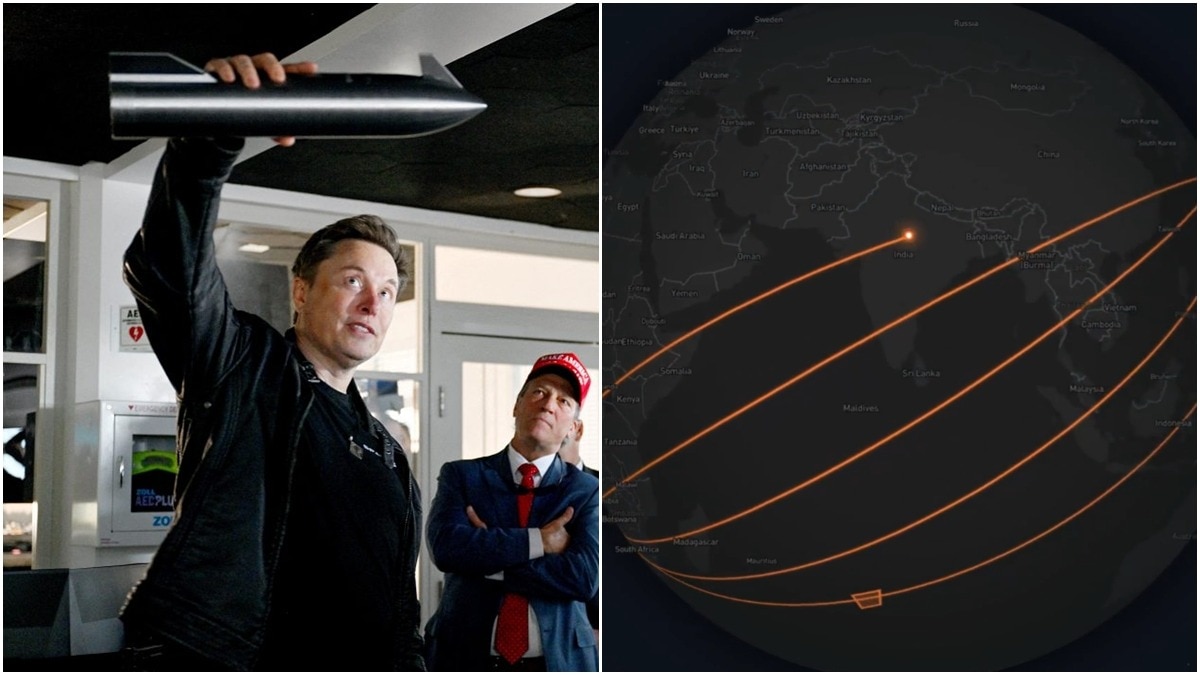
SpaceX’s Starship Flight 15 is targeted for November 14, with the giant spacecraft expected to circle Earth for more than 22 hours. The rocket will pass over India multiple times during this test. SpaceX hopes to catch both stages of the vehicle, which could make future space travel much cheaper.
SpaceX's Starship Flight 15 is targeted for November 14, with the giant spacecraft expected to circle Earth for more than 22 hours.
SpaceX's megarocket Starship is set to pass over parts of India multiple times during its upcoming test flight, potentially giving skywatchers across the country a rare opportunity to spot the giant vehicle as it circles Earth.
Starship's 15th test flight, called Starship Flight 15, is targeted for a launch window opening early on November 14 in IST, from the company's Starbase site in Texas, US.
The spacecraft is expected to spend more than 22 hours in space, completing about 14 orbits before attempting a return to Earth.
A FIRST-OF-ITS-KIND SPACECRAFT RECOVERY ATTEMPT
Starship is SpaceX's tallest and most powerful rocket system, designed to carry people and cargo into space, to the Moon and eventually Mars. It consists of two stages; the Super Heavy booster and the upper-stage Starship spacecraft, and both are designed to be reusable.
What makes this mission different from its predecessors is the plan to catch both stages using the giant mechanical arms, nicknamed chopsticks, on the launch tower.
The booster is expected to return just minutes after liftoff.
The upper stage, after deploying 26 Starlink V3 internet satellites and spending nearly a full day in orbit, will attempt to fly back and be caught in the same way.
SpaceX has caught Super Heavy boosters on earlier flights, but has never caught the Starship upper stage.
A successful recovery would therefore mark a major milestone in the company's effort to make its entire orbital rocket system reusable.
The booster has already been moved to the launch pad following successful engine tests. Both the booster and spacecraft have also completed their respective static-fire tests.
The mission remains subject to final regulatory clearance, with a backup launch opportunity planned for the following day.
WHY THE LAUNCH COULD REDEFINE SPACE TRAVEL
SpaceX believes recovering both stages could make space travel cheaper and more frequent.
Bringing the vehicles back intact would allow the company to inspect, refuel and launch them again instead of building replacements for every mission.
The upper-stage catch will only proceed if flight controllers confirm that the spacecraft is healthy and conditions are safe.
If not, Starship has designated ocean splashdown options.
These include a contingency re-entry over a cleared area of the Indian Ocean if the mission does not proceed to orbital insertion.
Live coverage is expected to begin about 30 minutes before liftoff and may continue through the spacecraft's return.
For space enthusiasts in India, the early morning launch and the prospect of repeated overhead passes could make this an especially interesting test flight to follow.