
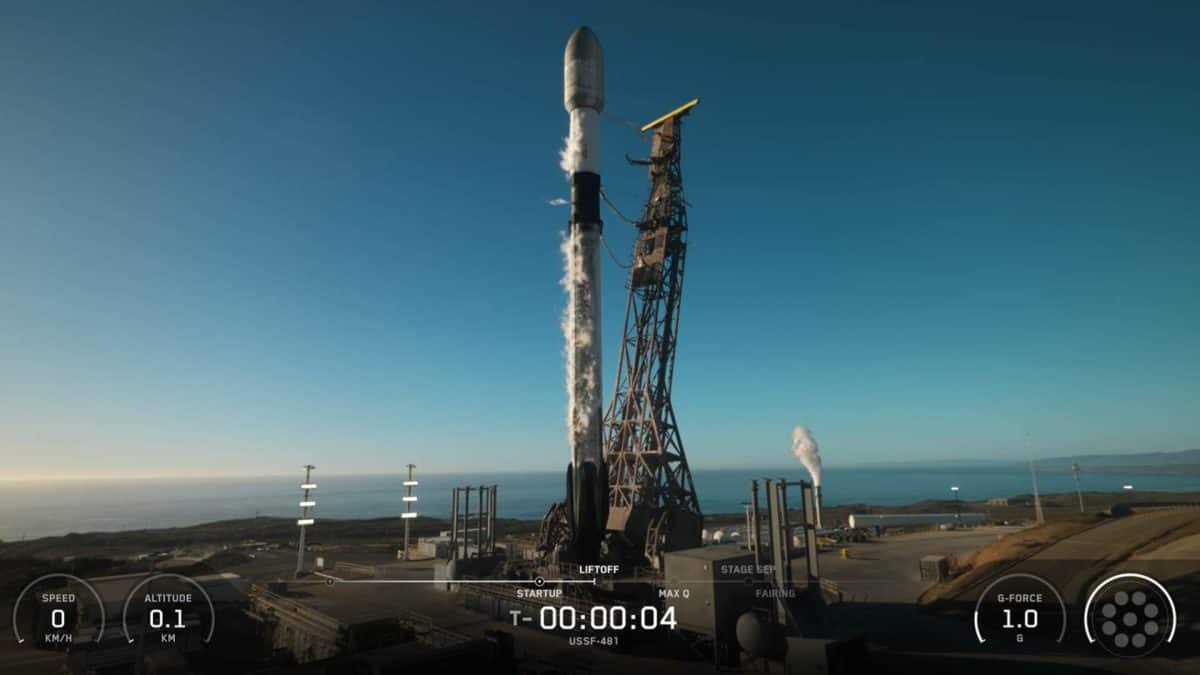
SpaceX launched the classified USSF-481 mission for the US Space Force on Thursday, October 15. A Falcon 9 rocket lifted off from California at 5:01 PM Pacific Daylight Time. The first-stage booster successfully landed on a droneship, marking its 28th flight and showing the continued use of reusable rocket technology.
SpaceX has launched the USSF-481 (TH-2) mission aboard a Falcon 9 rocket from California, with its first-stage booster successfully landing on the Of Course I Still Love You droneship. The mission highlights the US military's focus on assured access to space and SpaceX's continued use of reusable rocket technology.
SpaceX has launched a Falcon 9 rocket carrying a classified payload for the US Space Force, with the rocket's first-stage booster successfully returning to Earth and landing on a droneship in the Pacific Ocean.
The launch took place on Thursday, October 15, from Space Launch Complex 4 East at Vandenberg Space Force Base in California. The rocket lifted off at 5:01 PM Pacific Daylight Time (5:31 AM IST on Friday, October 16), carrying the mission designated USSF-481, also publicly referred to as TH-2.
SpaceX shared a video of the booster landing on its official X account, showing the first stage touching down on the autonomous droneship Of Course I Still Love You following its return from space.
The mission was launched amid a formal ceremony at Vandenberg Space Force Base, where the bugle call and the US National Anthem sounded before liftoff. After leaving the launch pad, the Falcon 9 followed a southerly trajectory. Public hazard notices indicated that the rocket was expected to reach a low Earth orbit inclined at approximately 80 degrees to the Equator.
Falcon 9 booster completes 28th flight
SpaceX used its Falcon 9 first-stage booster B1081 for the USSF-481 mission. The booster completed its 28th flight, adding another launch to a record that includes missions for NASA, national security operations, European customers and SpaceX's own Starlink satellite network.
Its previous flights included four NASA missions, three national security missions, two Transporter rideshare missions, two missions for European customers and 16 Starlink launches.
A little over eight minutes after liftoff, B1081 completed its landing on Of Course I Still Love You, which was stationed in the Pacific Ocean to recover the returning rocket stage.
The landing marked the 228th booster recovery on the droneship and brought the total number of Falcon booster landings to 671, according to the mission details reported by Spaceflight Now.
The recovery highlights SpaceX's continued use of reusable rocket technology, which allows first-stage boosters to fly multiple missions rather than being discarded after a single launch.
What is the USSF-481 mission?
USSF-481 is a classified US Space Force mission, meaning that details about its payload and specific operational objectives have not been publicly disclosed.
It follows another mission carrying the TH designation, USSF-259, also referred to as TH-1, which launched on September 16. The two launches, occurring within roughly a month of each other, reflect the continued pace of US military space operations.
Space Launch Delta 30, which supports launches from Vandenberg, has described regular and dependable access to orbit as a key element of US national security, economic security and international deterrence.
Ahead of the launch, officials also warned that residents of Santa Barbara, San Luis Obispo and Ventura counties could hear one or more sonic booms, depending on weather and other atmospheric conditions.
Spaceflight Now said it had contacted the Department of the Air Force for information about the mission's nature. Further details remain subject to official disclosure.