
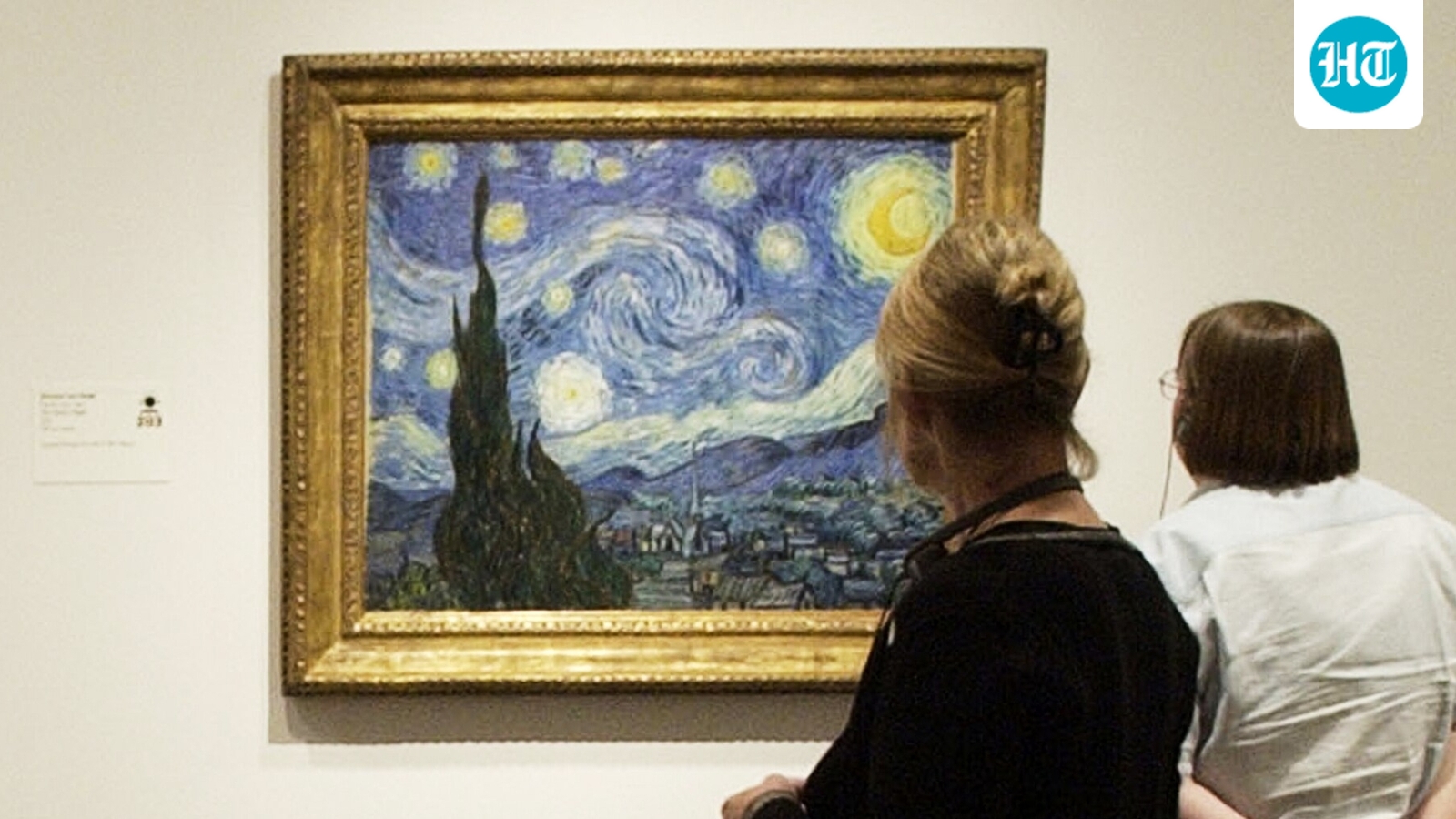
Researchers suggest Vincent van Gogh’s The Starry Night depicts a real sky from 22 July 1889. A South Korean team used astronomy software to match the painting’s stars with actual celestial positions. Lead author Elijah Jeong-hyun Kim said, "I was standing where Vincent had stood 130 years earlier." It challenges old beliefs.
One of the world's most recognisable paintings may have more to do with astronomy than imagination. Researchers have suggested that Vincent van Gogh's The Starry Night, long believed to depict a largely imagined sky, could have been inspired by an actual celestial arrangement witnessed in southern France in July 1889.
According to The Guardian, the findings challenge the widely accepted belief that the Dutch painter created the work in June 1889, while staying at an asylum in Saint-Rémy-de-Provence.
A South Korean research team examined the positions of the crescent moon, Venus and the Hyades star cluster, concluding that their arrangement closely resembled the sky before sunrise on 22 July 1889.
The team first located a ridge south-west of the asylum and compared its landscape with an earlier sketch by Van Gogh. This helped establish the narrow field of view from which he may have observed the scene.
"I was standing where Vincent had stood 130 years earlier," said Elijah Jeong-hyun Kim, the study's lead author and an astronomer at Kyung Hee University in South Korea.
Using astronomy software, the researchers reconstructed the morning skies of June and July 1889. They identified just three dates when the moon and Venus appeared in positions consistent with the painting's composition. Of those, 22 July offered the closest overall match.
"To bring the question into science, which needs quantitative data we had to measure the degree of resemblance between the star patterns in the painting and the real sky, using shape geometry and statistics," Kim said.
The painting has traditionally been dated to June partly because Van Gogh wrote to his brother Theo around 18 June about "a new study of a starry sky". His subsequent mental health crisis was also believed to have prevented him from painting for several weeks.
However, the researchers argue that the July alignment raises the possibility that the artwork draws on direct observation rather than fantasy alone.
The study, published in Scientific Reports on 22 October, does not conclusively establish when the painting was completed. Kim acknowledged that Van Gogh could have combined impressions from several mornings.
The Van Gogh Museum in Amsterdam remains unconvinced. It told The Guardian that documentary evidence, including a drawing sent to Theo on 2 July, supports a June date.