
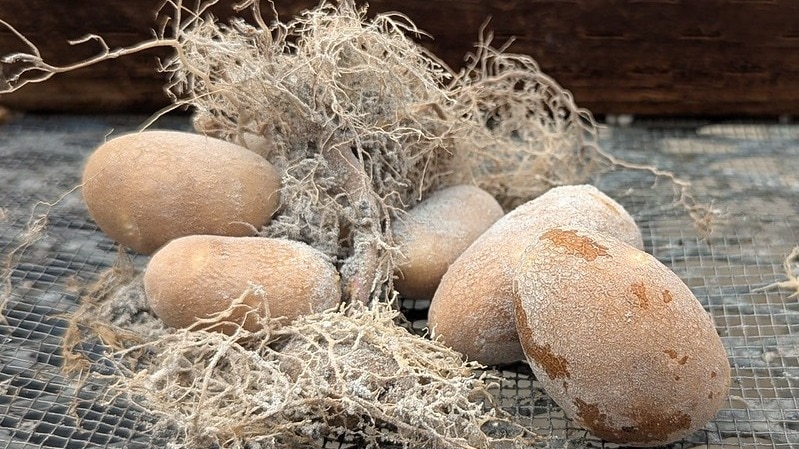
Scientists grew potatoes in material that mimics Moon soil, a step toward feeding astronauts. The study, published Thursday, showed that adding organic matter helped plants grow. Lead researcher Aymeric Goyer said, "Lunar regolith does not contain any nitrogen, so no crop would grow without supplementing it." This helps future missions.
Scientists have successfully grown potatoes in material designed to mimic the Moon's surface, a development that could help future astronauts produce food during long stays on the lunar surface.
The Nasa-supported experiment found that potatoes could grow in simulated lunar soil when mixed with organic matter.
The study, published Thursday in the journal Npj Microgravity, was led by researchers at Oregon State University, that grew an early-maturing variety called Modoc in five types of lunar soil simulant.
WHY IT'S HARD TO GROW IN LUNAR SOIL
The Moon's surface is covered with crushed rock and dust called regolith.
Unlike Earth soil, it contains no organic matter and lacks nitrogen, a nutrient plants need to grow. Not only that, lunar soil can also contain heavy metals, including copper, that can harm crops.
To tackle that very issue, researchers mixed the material with vermicompost, a nutrient-rich substance produced when earthworms break down organic waste.
Potatoes grown without compost produced almost no roots or tubers.
Turns out, adding just 5% vermicompost helped the plants develop roots and potatoes. With 30% vermicompost, yields were comparable to those from plants grown in Earth soil under the same conditions.
"Lunar regolith does not contain any nitrogen, so no crop would grow without supplementing it," Aymeric Goyer, the study's lead researcher, told news agency Reuters.
GROWING FOOD ON THE MOON
Potatoes are promising for space missions because they provide substantial calories in a small growing area and contain nutrients such as potassium and vitamin C.
Growing such foods on the Moon could reduce the supplies future crews need to bring from Earth.
Researchers also found that the potatoes retained much of their nutritional quality after being grown in such an environment.
Tests showed no significant increase in two naturally occurring potato toxins. However, some heavy metals were slightly higher in certain samples and need further monitoring.
The experiment, though potentially evolutionary, also has its limits.
Plants were grown in a greenhouse on Earth, using simulated rather than actual lunar soil. These plants were raised in small pots, producing potatoes generally weighing less than 10 grams.
Researchers said that a separate trial using larger pots produced potatoes closer to supermarket size is something that needs to be executed to confirm the viability of this experiment.
The team has not tasted the harvested potatoes yet, but they were used for laboratory tests.