
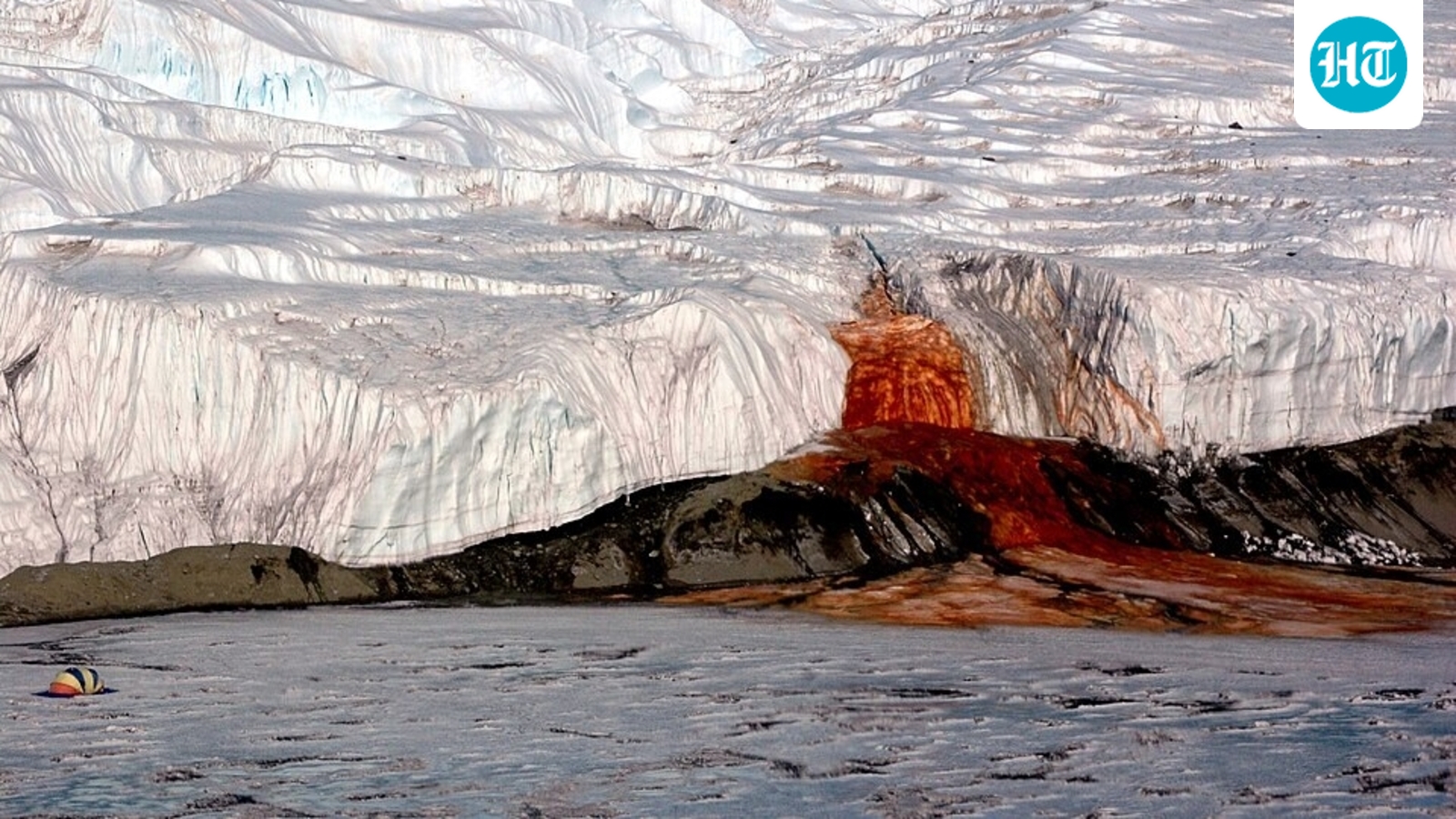
A 2026 Nature Geoscience study found a marine microbial community living beneath Antarctica’s Taylor Glacier. Researchers used RNA from the red Blood Falls to link these tiny organisms to ancient seawater. The team showed that many diatoms in the salty, iron-rich water match those found in the nearby McMurdo Sound.
A red stain flowing down a white glacier might look like a movie scene, but it is real. It is called Blood Falls, and it is in Antarctica. According toa 2026 Nature Geoscience study, genetic clues from this site led researchers to a marine microbial community associated with the brine below Taylor Glacier. The community appears to have survived for a long time after being cut off from the ocean.
The red brine and the ancient sea beneath it
Blood Falls pours out from the end of the Taylor Glacier in the McMurdo Dry Valleys. The water is red and salty, and it is full of iron. It runs down the slope and flows into Lake Bonney. Previous studies provided some clues to the origin of this brine. They suggest it formed when seawater flooded Taylor Valley during warm periods, before the advancing glacier trapped it. In a 2019 paper in the Journal of Geophysical Research: Biogeosciences, Lyons and colleagues presented evidence that the dissolved material in the brine came from ancient seawater. The team took samples of brine from a channel within the glacier in 2014.
In the 2026 paper, the team analyzed 167 water, sediment, and wind-blown samples from the Dry Valleys and from marine sites. The marine samples included sea ice and seawater from McMurdo Sound that were collected earlier, in 2015. At the end of the glacier, they found a distinct community of marine microorganisms living only in the red ice, mud, and sediment. Many of them were diatoms, minute algae. Others were haptophytes, dinoflagellates, and ciliates.
What the genetic evidence indicates
The numbers were striking. More than 60 percent of the diatoms in the red mud and sediment were sea types. Sea diatoms from McMurdo Sound matched 20.4 percent of the diatom sequence types at Blood Falls, compared with only 1.5 percent of those in other Dry Valleys streams and lakes. Those streams and lakes held mostly freshwater and land diatoms. The team extracted RNA from the samples, converted it into complementary DNA, and sequenced it. This showed activity of organisms at the time of sampling in late Antarctic summer. Genetic analysis revealed photosynthesis, salt stress response, and cell repair. The authors say this fits with life in a salty setting, though it does not prove it.
Another possible explanation is wind, because the Dry Valleys are very windy. Nevertheless, wind-blown samples contained almost no sea signals. The authors say the wind alone today is unlikely to explain the pattern. Another group of diatoms, Chaetoceros, also created its own lineage at Blood Falls. Its genetic types were unique to that location. The authors suggest that the community is likely composed of long-term survivors from ancient seawater flooding, possible ancient wind transport, and very limited modern wind input.
What scientists still do not know
The study has definite limitations. Previous work has found bacteria in the brine that are close relatives of sea bacteria. But no tiny sea organisms with complex cells, called eukaryotes, have been detected in the brine itself. The new findings come from the red ice, mud, and sediment at the glacier’s end, where the brine meets the surface. The method used also cannot ascertain exact species. The team also could not check the shapes of the organisms, as the samples were too small and too poorly preserved.
Ancient wind transport cannot be ruled out entirely. Questions also remain about how far ancient seawater reached and when. Still, the authors describe Blood Falls as a unique refuge for ancient lineages. They say it sets the stage for future work that could show how remnant communities record past change and future polar risk.