
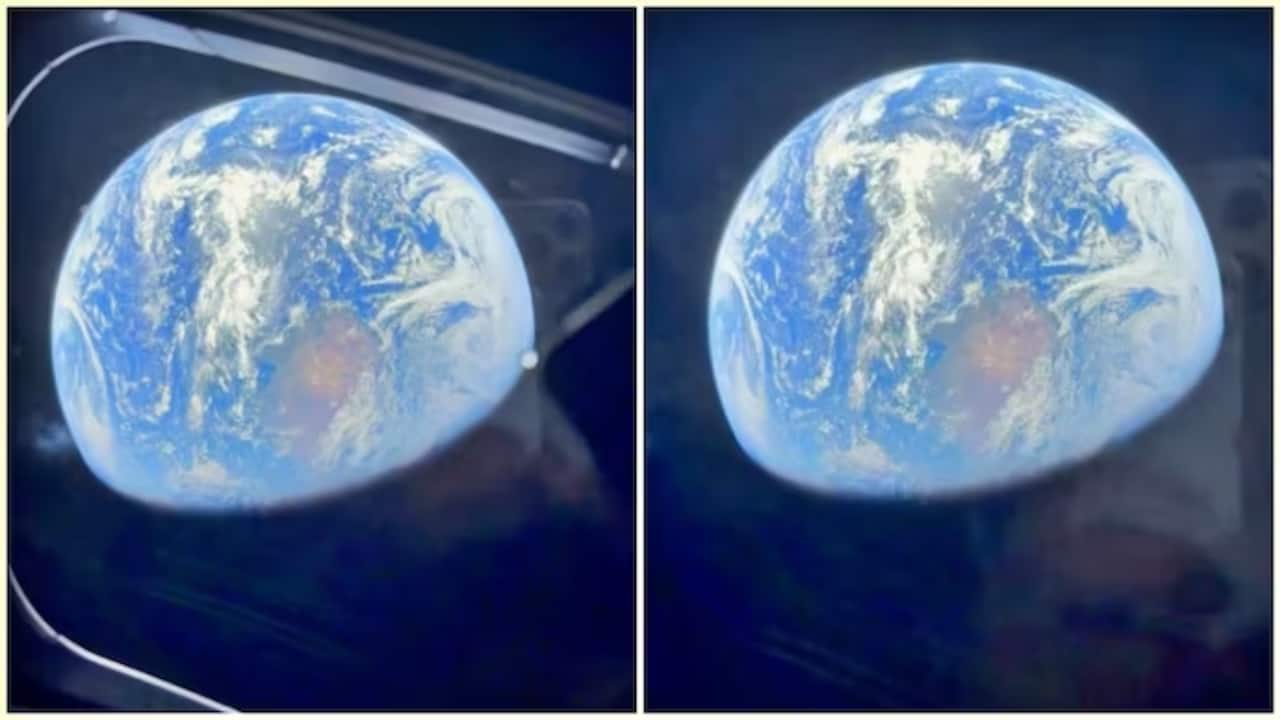
Scientists believe planets better than Earth for life might exist in the universe. These superhabitable worlds could be larger, warmer, and orbit stable K-dwarf stars. Researchers think such planets might support richer ecosystems and more diverse species than our own. This idea challenges how we search for life beyond Earth.
Earth is the only planet known to support life. But what if it isn't the best place for life to exist? Scientists believe there could be planets elsewhere in the universe with conditions even more favourable than those on Earth. These worlds might support richer ecosystems, more diverse species and life that survives for much longer than it can on our planet. Astronomers call them superhabitable planets. Although none has been confirmed to possess these conditions, researchers believe they could be promising places to search for extraterrestrial life. According to a report in the New York Times, the idea challenges a long-standing assumption in astronomy: that finding another Earth is the best way to find life beyond our solar system. What would a planet better than Earth look like? Scientists imagine a superhabitable planet as slightly larger and more massive than Earth, with a warmer, more stable climate and plenty of liquid water. An ideal candidate could be approximately 20 to 30 percent wider than Earth and have twice its mass. Its stronger gravity might help it retain a thicker atmosphere, making temperatures more stable and creating favourable conditions for living organisms. A larger iron core could also generate a stronger magnetic field, providing greater protection against harmful cosmic radiation. The planet's surface might look quite different from Earth's. Rather than enormous oceans separated by vast continents, it could be covered in shallow seas, lakes and thousands of islands. On Earth, tropical islands and shallow coastal waters are among the most biologically diverse environments. Scientists suggest that a planet dominated by such habitats could support extraordinarily rich ecosystems, with sunlight reaching shallow seabeds and encouraging the growth of marine plants and other organisms. Why orange stars could be better than our sun The ideal home for such a planet might not be a star like our sun. Instead, scientists are particularly interested in K-dwarf stars, which are smaller, cooler and more orange than the sun. These stars burn their fuel more slowly and can remain stable for tens of billions of years. That matters because complex life takes an enormous amount of time to develop. Earth's earliest life appeared roughly four billion years ago, but increasingly complex organisms evolved over billions of years. A planet orbiting a K-dwarf could have considerably more time for life to emerge, evolve and diversify. By comparison, scientists estimate that Earth may become too hot to sustain complex life in approximately 500 million years as the sun gradually becomes brighter. Scientists have already tested whether plants could grow under orange light Astrobiologist Iva Vilović conducted an experiment in Berlin using garden cress grown under artificial light designed to imitate a K-dwarf star. The results surprised her. The plants not only grew successfully under the orange-coloured light but also grew faster and taller than those exposed to simulated sunlight. The experiment suggested that photosynthesis, the process through which plants convert light into energy, could function effectively on planets orbiting these stars. That is significant because photosynthesis supports almost the entire food web on Earth. However, the experiment does not establish that life exists on planets around K-dwarfs. It demonstrates that their light could potentially support an important biological process. Why scientists are looking beyond Earth-like planets The idea of superhabitable worlds gained attention in 2014 when astronomers René Heller and John Armstrong published a paper proposing that some planets could offer better conditions for life than Earth. Their argument was straightforward. Earth is habitable, but that does not necessarily make it the most habitable planet possible. Our planet exists within a relatively narrow range of conditions suitable for liquid water. If Earth had been just 2 percent closer to the sun, according to the scenario discussed by the researchers, its water might have evaporated before life could develop. Heller and Armstrong suggested that astronomers should look beyond exact copies of Earth and consider planets with potentially more favourable environments. When could scientists find these worlds? Finding a superhabitable planet is one challenge. Determining whether it supports life is another. Astronomers search for possible signs of life by studying gases in the atmospheres of distant planets. However, current instruments have limited ability to examine the atmospheres of rocky planets orbiting K-dwarf stars. Several upcoming telescopes could change that. The European Space Agency's Plato mission, set to be launched in 2027, is specifically meant to identify habitable planets, among which super-Earths revolving around K-dwarfs. The construction of the Extremely Large Telescope in Chile may be useful in the observation of such planets. The planned Habitable Worlds Observatory of NASA in the 2040s may serve as even better equipment in the search for life. For the time being, superhabitable planets are only a hypothesis and not yet proven discovery. However, the very idea of them creates an interesting question: having succeeded in creating the tremendous biological diversity in a planet far from perfect, what kind of creatures would Earth create if the environmental conditions would be even better?