
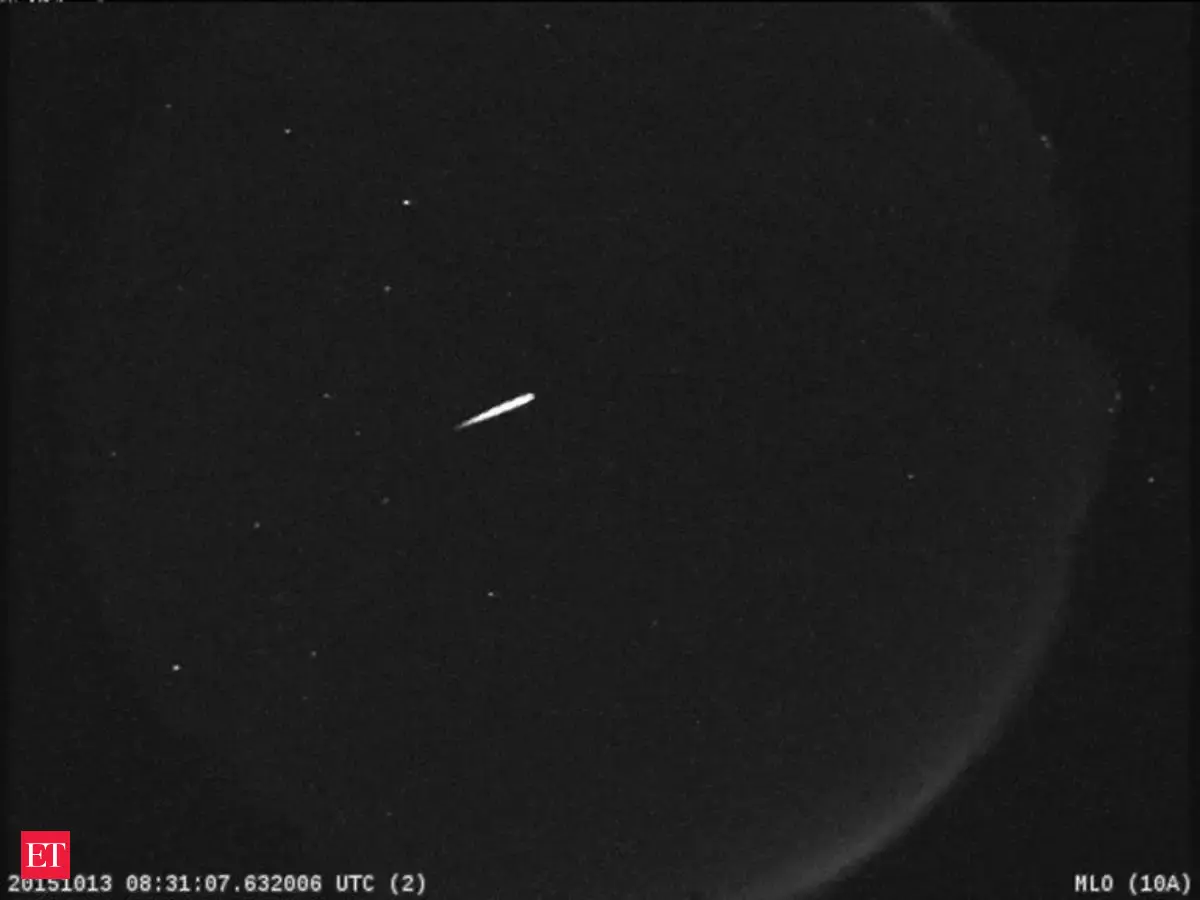
The Orionid meteor shower will peak overnight on October 21-22. These bright meteors come from debris left by Halley’s Comet. To watch them, find a dark spot away from city lights after midnight. You should lie back and look at the sky, giving your eyes time to adjust to darkness.
Orionids meteor shower peaks in mid-October and is known for bright meteors visible in the night sky. The meteors originate from comet 1P/Halley, which sheds debris when it approaches the Sun. Observers are advised to find dark locations away from city lights to view the meteors effectively. The radiant for this shower is located just north of Betelgeuse in the constellation Orion.
The Orionids, which peak during mid-October each year, are considered one of the most beautiful meteor showers of the year. Interestingly, meteors are often referred to as shooting stars, but the bright streaks seen across the night sky are not actually related to stars.
Orionid meteor shower dateThe meteor shower occurs around the same time every year as Earth passes through dust and debris left behind by Halley's Comet. This year, the Orionids are expected to peak overnight on October 21-22.
The display occurs at around the same time each year when the Earth passes through a trail of dust and debris left behind by Halley's Comet. The showers peak overnight from 21 to 22 October.
What is the Orionids meteor shower?The Orionids, which peak during mid-October each year, are considered one of the most beautiful meteor showers of the year. Orionid meteors are known for their brightness and speed, travelling at about 41 miles (66 kilometres) per second as they enter Earth's atmosphere.
These fast-moving meteors can leave glowing trails, known as trains, which are made up of incandescent debris in the meteor's wake. These trails can last from several seconds to minutes. The meteors can also sometimes become fireballs, producing prolonged explosions of light in the sky.
The Orionids are framed by some of the brightest stars in the night sky, providing a spectacular backdrop for the meteor shower.
How to watch the Orionids meteor showerThe Orionids are visible in both the Northern and Southern hemispheres during the hours after midnight.
* Find a location away from city lights and streetlights.
* Carry a sleeping bag, blanket or lawn chair for comfort.
* If you are in the Northern Hemisphere, lie on your back with your feet facing southeast. In the Southern Hemisphere, face northeast.
* Look up and take in as much of the sky as possible.
* Allow your eyes less than 30 minutes to adjust to the darkness.
* Be patient, as the meteor shower can continue until dawn.Skywatchers in India should plan an early morning outing for the best views. Dark surroundings and patience will help, as these meteors are often faint.
Where do meteors come from?Meteors originate from leftover comet particles and fragments of broken asteroids. As comets travel around the Sun, they release dust that gradually spreads along their orbital paths.
Every year, Earth passes through these debris trails. The particles collide with Earth's atmosphere and disintegrate, creating the fiery and colourful streaks of light known as meteors.
Which comet causes the Orionids meteor shower?The space debris responsible for the Orionids originates from comet 1P/Halley. Each time Halley returns to the inner solar system, its nucleus sheds ice and rocky dust into space.
These dust grains eventually produce the Orionids in October and the Eta Aquariids in May when they collide with Earth's atmosphere.
When will Halley's Comet return?Comet Halley takes about 76 years to complete one orbit around the Sun. It was last visible to casual observers in 1986 and is expected to return to the inner solar system in 2061.
The comet is named after Edmond Halley, who discovered in 1705 that three previously observed comets appeared to return at intervals of about 76 years. He proposed that the sightings were of the same comet. It returned as he predicted and was subsequently named in his honour.
Halley's Comet is among the most famous comets and has been observed for millennia. It is also depicted on the Bayeux Tapestry, which chronicles the Battle of Hastings in 1066.
The comet measures approximately 16 × 8 × 8 kilometres. It is one of the darkest, or least reflective, objects in the solar system, with an albedo of 0.03.
Where do the Orionid meteors appear in the sky?The Orionids' radiant -- the point in the sky from which the meteors appear to originate -- lies in the constellation Orion. The meteor shower gets its name from this constellation.
However, Orion is not the actual source of the meteors. The constellation simply helps observers identify the shower.
Viewers should not look only towards Orion to watch the Orionids, as the meteors can appear across the night sky. It is better to observe them from an angle of 45 to 90 degrees away from the radiant, where their trails tend to appear longer and more spectacular.
Looking directly at the radiant makes the meteors appear shorter due to an optical effect known as foreshortening.