
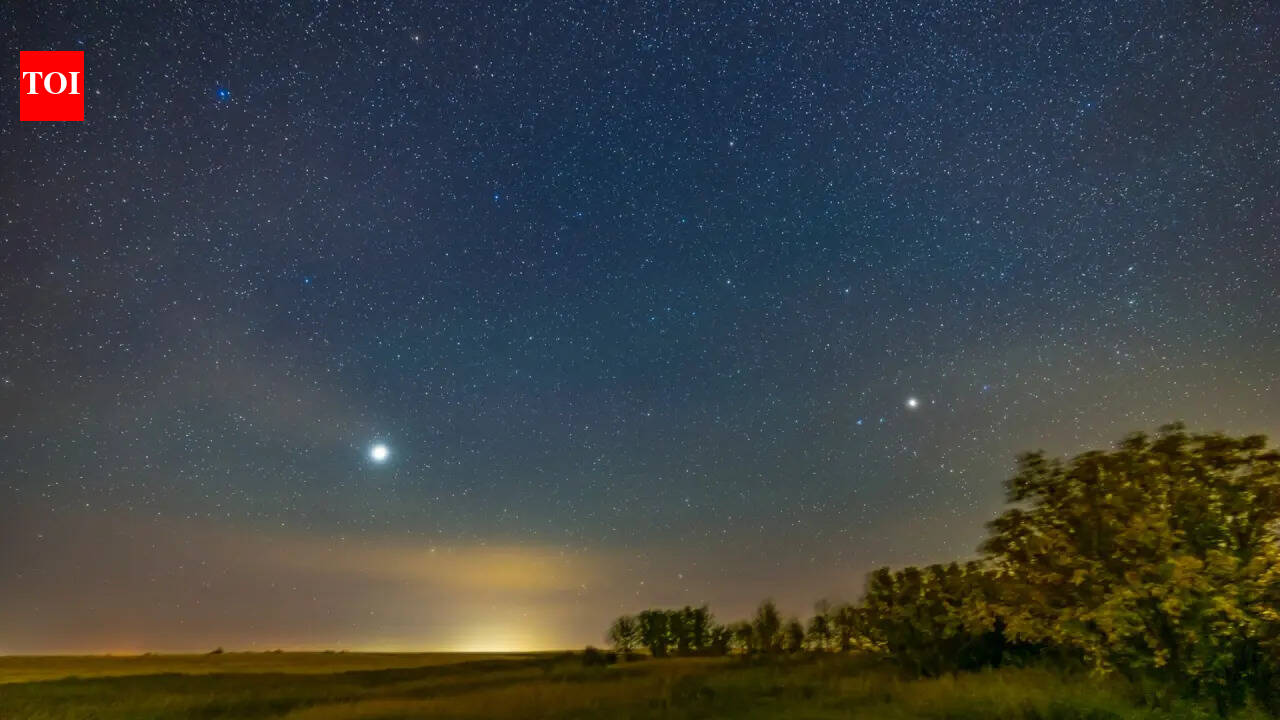
The November 2026 night sky features eight celestial events, including a Super Beaver Moon on November 24. Stargazers can watch meteor showers like the Leonids and a rare Mars-Jupiter conjunction. Many planets will align mid-month, offering a great view. These events show how much beauty the night sky holds for everyone.
Looking ahead to November 2026, there's a whole lineup of awe-inspiring moments in the night sky, and honestly, it's a treasure trove for anyone who loves looking up after dark. November 24 marks the arrival of a Super Beaver Moon, which is the first in a trio as the year wraps up. It's going to shine brighter and look bigger than usual, so even if you miss the others coming up, this one is worth catching. And speaking of drama in the sky, those meteor showers are always crowd-pleasers. The Southern Taurids, Northern Taurids, and Leonids are each set to deliver shooting stars, but how many you'll actually see depends on weather, your location, and how much light pollution you're dealing with.
Then there's the planetary action. Mars and Jupiter get seriously close in the early morning, putting on a rare conjunction that doesn't need fancy gear. The four-planet alignment happening mid-month is one of those "you have to see it to believe it" moments, featuring Mercury, Venus, Mars, and Jupiter spread out across the morning sky. Venus will catch your eye in the southeast, Mars and Jupiter command the east, and Mercury hovers low, so you'll want a clear view with no trees or buildings blocking things. Uranus is around, too, but a pair of binoculars will help you spot it, since it's pretty faint.
Whether you're out there with a telescope or just enjoying a quiet evening, you've got plenty of reasons to head outside. Here's a breakdown of the eight can't-miss events in November 2026:
The month kicks off with a cool formation: the Moon, Mars, and Jupiter cozying up in the eastern sky. Just after midnight, they all seem to hang out together, and the bright star Regulus from Leo joins in. By sunrise, the trio's climbed higher. Under really dark skies, you might spot the Beehive Cluster in Cancer: it's a faint patch, but binoculars make a big difference.
Imagine the Southern Taurids peak overnight, bringing slow, bright meteors and fireballs. Some of them may look like they're crawling across the sky. The fireball-spotting odds are good this year since moonlight won't get in the way much. You'll catch only a handful each hour, but when you see one, it's often spectacular.
November 9 delivers a new moon that wipes out the lunar glare, making it the absolute best window for deep-sky observing. Think galaxies like Andromeda, nebulae, or just a chance to hunt fainter meteors. If you've got binoculars or a telescope, this is your shot to see distant star clusters and galaxies.
This is the kind of event you have to get up early for, but it's worth it. Mercury, Venus, Mars, and Jupiter line up before sunrise, putting on a lovely show across the sky. Mars and Jupiter get especially close, Venus glows in the southeast, and Mercury hangs near the horizon, so you'll need a clear sightline. Don't forget, even though they look close, these planets are still millions of miles apart.
On November 16, Mars and Jupiter appear less than two degrees apart, practically touching as far as your eyes are concerned. They'll be visible from midnight until dawn, and if you stretch out your arm, their separation matches the width of your finger. Both planets are bright enough for naked-eye viewing, but binoculars make it even more stunning. It's just an optical trick, though; they're not really right next to each other.
The Leonids peak overnight, bringing fast-moving meteors that can leave brilliant streaks. The odds are about 10-15 meteors per hour if the sky's dark and clear. The meteors usually burst out from Leo, but you'll see them zipping everywhere. The Leonids have a history of wild storms, but 2026 should be pretty tame. If you can find a dark, open spot and let your eyes adjust, you'll squeeze the most out of this event.
Mercury's usually shy, sticking close to the Sun, but on November 20, it pulls away just enough to become visible in the pre-dawn southeastern sky, right near Venus. If you're up early, you'll spot it just before sunrise, but don't use binoculars or your telescope once the Sun starts creeping up. You really don't want to catch the Sun's glare in your lens.
Here comes the heavyweight of the month: the Super Beaver Moon. This full moon shows up bigger and brighter than usual. Astronomers reckon it'll look about 6.5% larger and 13.5% brighter than your average full moon, which is a real treat. The name comes from North American traditions, when beavers get busy prepping for winter. Watch it rise or set to catch the classic "moon illusion" -- it'll look enormous near the horizon.