
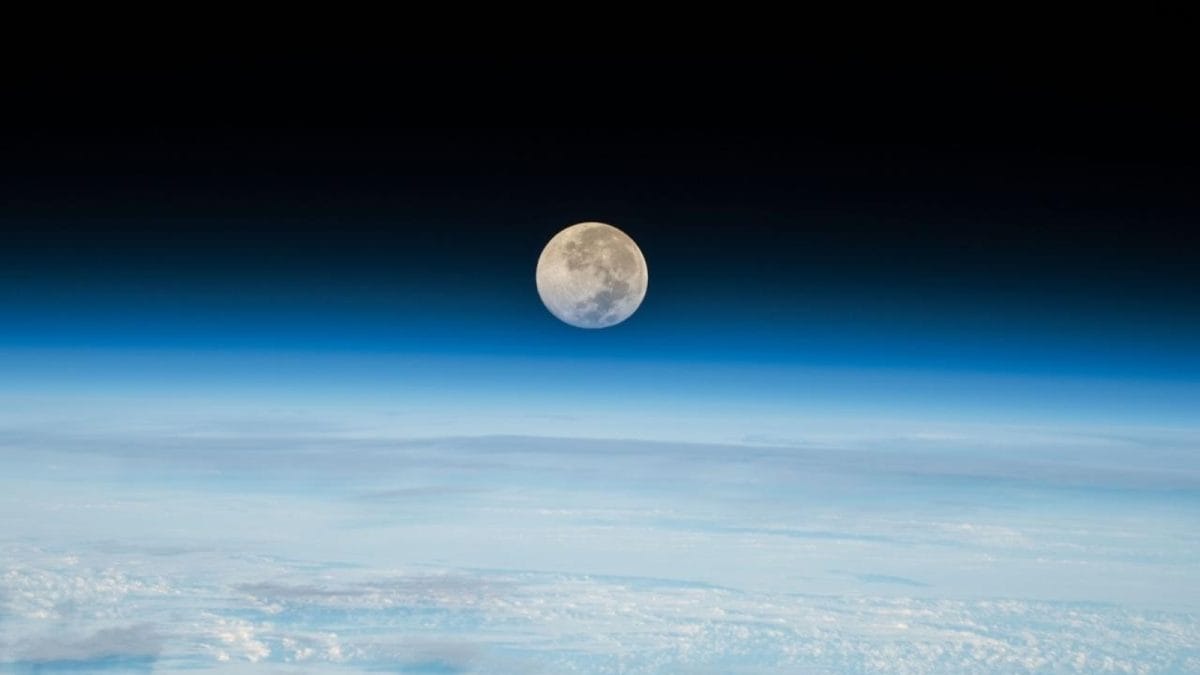
The Beaver Supermoon will reach its peak illumination at 8:23 pm IST on Tuesday, November 24. Stargazers across India can watch the moon appear larger and brighter than usual. This event marks the first of three consecutive supermoons. You do not need a telescope to enjoy this beautiful night sky.
This November Beaver Supermoon will reach its peak illumination today at 8:23 pm IST. It is the first of three consecutive supermoons, with another expected on Christmas Eve.
Stargazers across India have a reason to look up on Tuesday evening, November 24, as the Beaver Supermoon lights up the night sky. November's full moon is particularly special this year because it will appear larger and brighter than an average full moon, as it coincides with the Moon being relatively close to Earth in its orbit. The celestial event also marks the beginning of a sequence of three consecutive supermoons, making it an exciting opportunity for skywatchers before the year ends.
According to Moneycontrol, the November 2026 Beaver Supermoon will reach its peak illumination at 8:23 pm Indian Standard Time (IST) on Tuesday, November 24. The exact full moon phase is also confirmed by Live Science, which identifies November 24 as the date of this year's Beaver Moon.
Beaver Supermoon 2026: Date And Time In India
The Beaver Supermoon will occur on Tuesday, November 24, 2026, with the Moon reaching its exact full phase at 8:23 pm IST. However, skywatchers do not need to wait until this precise moment to see it. The Moon will appear almost completely illuminated on the nights around the peak as well.
For the best viewing experience, look towards the eastern horizon around local moonrise, particularly shortly after sunset. As Live Science explains, the Moon rising against the twilight sky can make for a striking sight, with its apparent size and colour especially noticeable close to the horizon. The exact moonrise time will vary depending on your city and location.
The event can be viewed with the naked eye, provided the sky is clear. Binoculars or a telescope are not necessary to enjoy the sight.
Why Is The November Full Moon Called The Beaver Moon?
November's full moon is traditionally known as the Beaver Moon, a name rooted in seasonal observations in North America. According to Live Science, the name is associated with the time of year when beavers traditionally build dams and prepare their lodges for winter. It was also historically linked to the season when beavers were trapped for their winter pelts.
The November full moon is also known by other traditional names, including the Frost Moon and the Freezing Moon. As reported by Moneycontrol, these names reflect the arrival of colder weather and seasonal changes observed by different communities.
These are traditional names drawn largely from Northern Hemisphere seasonal calendars and are not specific to Indian culture or weather patterns.
What Makes The Beaver Moon A Supermoon?
A supermoon is a full moon that occurs when the Moon is relatively close to Earth in its elliptical orbit. The point at which the Moon comes closest to Earth is known as perigee. When a full moon coincides with this part of its orbit, it can appear slightly larger and brighter than a typical full moon.
According to Live Science, the Moon will be approximately 360,768 kilometres from Earth when it reaches its full phase on November 24. For comparison, the average distance between Earth and the Moon is around 384,472 kilometres.
The difference may be noticeable to keen skywatchers, although it is not a dramatic change in size. The term supermoon is also not a separate lunar phase; it describes the appearance of a full moon occurring relatively close to Earth.
November Supermoon Is The First Of Three Consecutive Supermoons
What makes this event particularly exciting is that November's Beaver Moon is only the beginning of a series. According to Live Science, it will be followed by the Cold Supermoon on December 24, 2026, which falls on Christmas Eve. The sequence will then continue with the Wolf Supermoon on January 22, 2027.
The December full moon is expected to be the closest of the three to Earth, making it the biggest and brightest in this particular sequence. This gives skywatchers more than one opportunity to observe a supermoon over the coming months.