
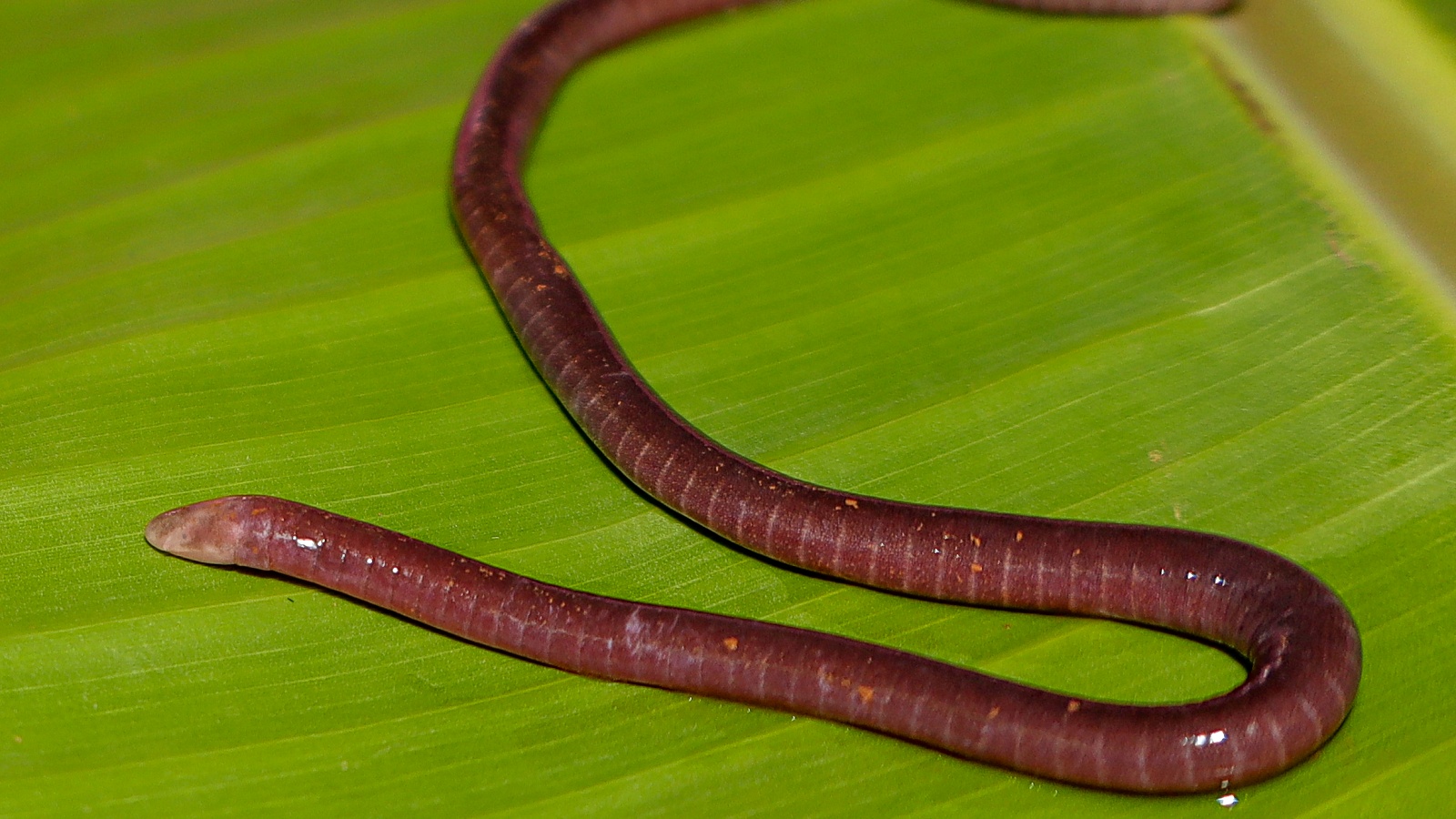
Researchers discovered a new legless amphibian species, Gegeneophis chandgadi, in Buzawade village during August 2025. Named after the local Marathi dialect, this creature lives underground beneath decaying logs. Scientists said, "Gegeneophis is a fascinating yet highly elusive group of amphibians." It often gets mistaken for an earthworm due to its appearance.
Meet Gegeneophis chandgadi: a newly discovered underground caecilian from the Western Ghats named after the local Marathi dialect.
A pile of fallen leaves and decaying wood in a village backyard in Maharashtra has led to an unusual discovery: a new species of legless amphibian that spends most of its life underground.
Researchers found the animal in Buzawade village in Chandgad taluka, Kolhapur district, during the monsoon in August 2025. The Zoological Survey of India published the findings.
The species belongs to a group of amphibians called caecilians. These elusive creatures have no limbs and are often mistaken for earthworms because of their elongated bodies and underground lifestyle.
Why was the new species named Gegeneophis chandgadi?
The species was named after the Chandgadi dialect of Marathi, spoken predominantly in and around the Chandgad region.
The animal was discovered beneath wooden piles, decaying logs, organic waste and bamboo leaf litter in the backyard of Sahil Shikalgar, the study's lead author, who lives in Buzawade village.
Local residents said they sometimes unearth similar creatures during routine gardening and mistake them for large earthworms. Free-ranging domestic chickens also scratch through the soil and feed on young caecilians.
Researchers noted that the species appears capable of surviving in agricultural and residential landscapes, provided there is sufficient organic matter and heavy pesticide use is avoided.
"Gegeneophis is a fascinating yet highly elusive group of amphibians, restricted to peninsular India and showing a remarkable concentration of species in the Northern Western Ghats," said K P Dinesh, senior scientist at the Zoological Survey of India.
What does the newly discovered amphibian look like?
Gegeneophis chandgadi belongs to the family Grandisoniidae. Its cylindrical body has distinctive rings or grooves running around it, a feature characteristic of this group of caecilians.
The animal has a dark flesh-coloured to dark brown upper body, a light pinkish head and a translucent pinkish belly through which its internal organs can be faintly seen. Adults measure between 105 and 185 millimetres in length and have no tail.
Scientists counted between 132 and 135 primary rings, known as annuli, along its body. Smaller secondary rings appear only along the rear half.
Identifying these amphibians can be difficult because they resemble earthworms and blind snakes. Dinesh said that counting the rings on their bodies and considering where they are found can help researchers distinguish between species.
Why is the discovery important?
The Western Ghats are home to a remarkable diversity of amphibians, including many species found nowhere else in the world.
India has documented 41 caecilian species among its 458 amphibian species, including 12 species belonging to the genus Gegeneophis. Eleven of these are endemic to the Western Ghats. With the discovery of G. chandgadi, researchers now report seven species of the genus from the northern Western Ghats.
Genetic analysis also suggests that the region may contain additional, as-yet-undescribed species. Researchers identified four other lineages that could represent species new to science, highlighting the need for more field surveys.
The newly described amphibian is currently known only from the area around Buzawade village. Researchers have recommended classifying it as Data Deficient under the International Union for Conservation of Nature's Red List criteria until more information becomes available about its distribution and population.
"The discovery of Gegeneophis chandgadi highlights the hidden biodiversity beneath our feet and underscores the importance of field exploration and scientific documentation of these elusive, subterranean amphibians," said Dhriti Banerjee, director of the Zoological Survey of India, in a press statement.
The finding also shows that important discoveries need not come from remote forests or protected areas. Sometimes, a village backyard can reveal species that science has yet to document.
Explore more captivating stories about pets and animals here, and make us your daily stop for the latest from the animal kingdom.