
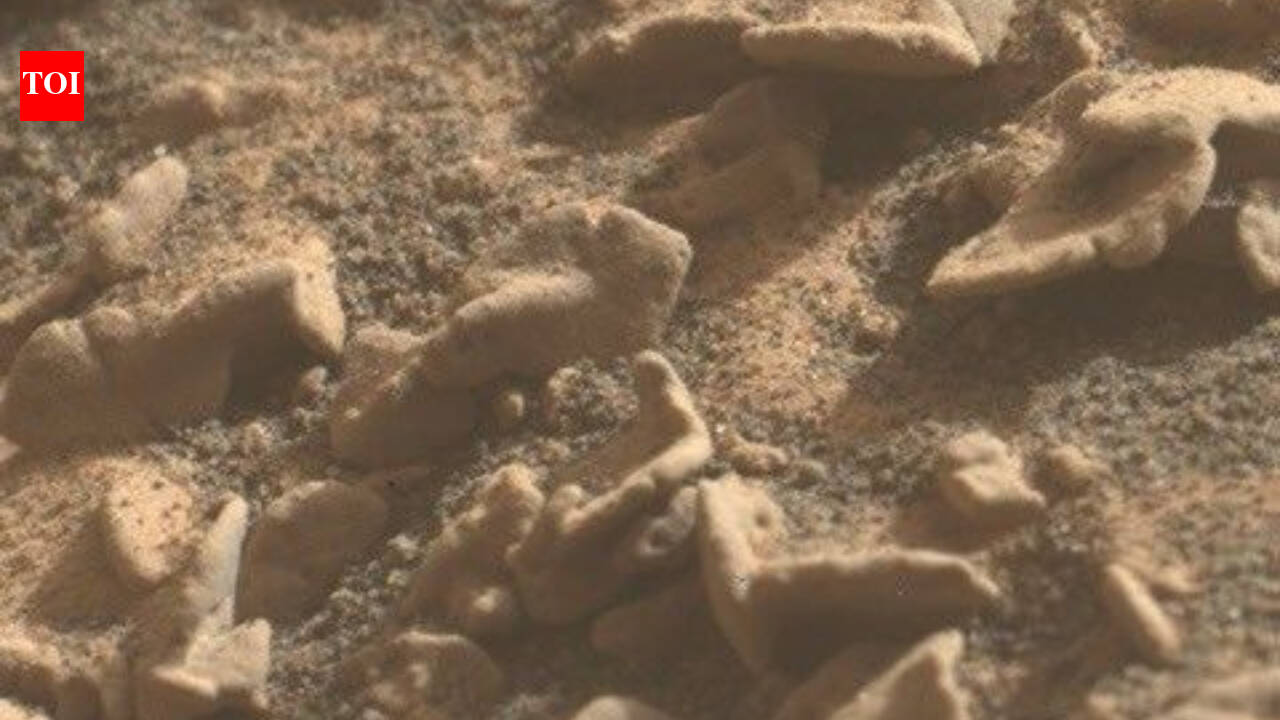
NASA’s Curiosity rover spotted strange, disk-shaped crystal formations on Mars that look like potato chips. The rover found these odd rocks at a site called Nazca. Scientists are now using lasers and lab tools to study them, hoping these shapes show what water conditions existed on Mars long ago.
Mars has tossed another weird surprise our way, and this time it looks like someone dropped a bag of potato chips in the dirt.
NASA's Curiosity rover recently stumbled across a batch of odd, disk-shaped formations embedded right inside Martian rocks. Because several of them have warped, curled-up edges, they look strikingly like ruffled crisps. Naturally, the weird shapes caught the mission team's eye, and researchers are now trying to figure out what these things are made of and how they got there.The rover spotted the formations while running a drilling operation at a site NASA nicknamed Nazca, where the bedrock is packed with these strange, crystal-like structures.In its mission blog, NASA described them as "disk-shaped (or, in a liberal interpretation, potato-chip shaped) crystal forms." Comparing space rocks to snack food is fun, sure, but these little formations could actually hold some solid clues about what Mars used to look like millions of years ago.How Curiosity is inspecting the rocksCuriosity isn't just snapping a quick photo and rolling away. The rover carries a full suite of lab gear designed to tear into Martian geology up close.
At the Nazca site, the team fed powdered rock from a fresh drill hole straight into the rover's Sample Analysis at Mars (SAM) instrument - essentially an onboard chemistry lab that breaks down the exact mineral makeup of the Martian surface.Engineers also lined up ChemCam, which zaps rocks with a laser to read their elemental composition from a distance, targeting one specific chip-shaped formation they named Colca.To get an even better look, the team scheduled nighttime close-ups using the Mars Hand Lens Imager (MAHLI) on the end of Curiosity's robotic arm. By shining white-light and ultraviolet LEDs on the crystals in the dark, scientists can pick up tiny surface textures and mineral details that wash out in daylight. Figuring out the exact chemistry behind these crystals will tell researchers what kind of water or environmental conditions existed when the rocks formed.
Still finding surprises after more than a decadeCuriosity has been grinding across the Martian surface since August 2012, analyzing rocks and soil to figure out whether the Red Planet ever had the right ingredients to support ancient microbial life.The stop at Nazca is just one more piece of that puzzle. Once the rover wraps up its nighttime photo shoot and laser tests, it is slated to pack up and keep heading south.That is really the best part about missions like this. Even after well over a decade of roving around Mars, Curiosity still runs into bizarre features that leave scientists scratching their heads. A rock that looks like a potato chip might get a laugh back on Earth, but up there, it is another breadcrumb leading back to Mars's ancient past.