
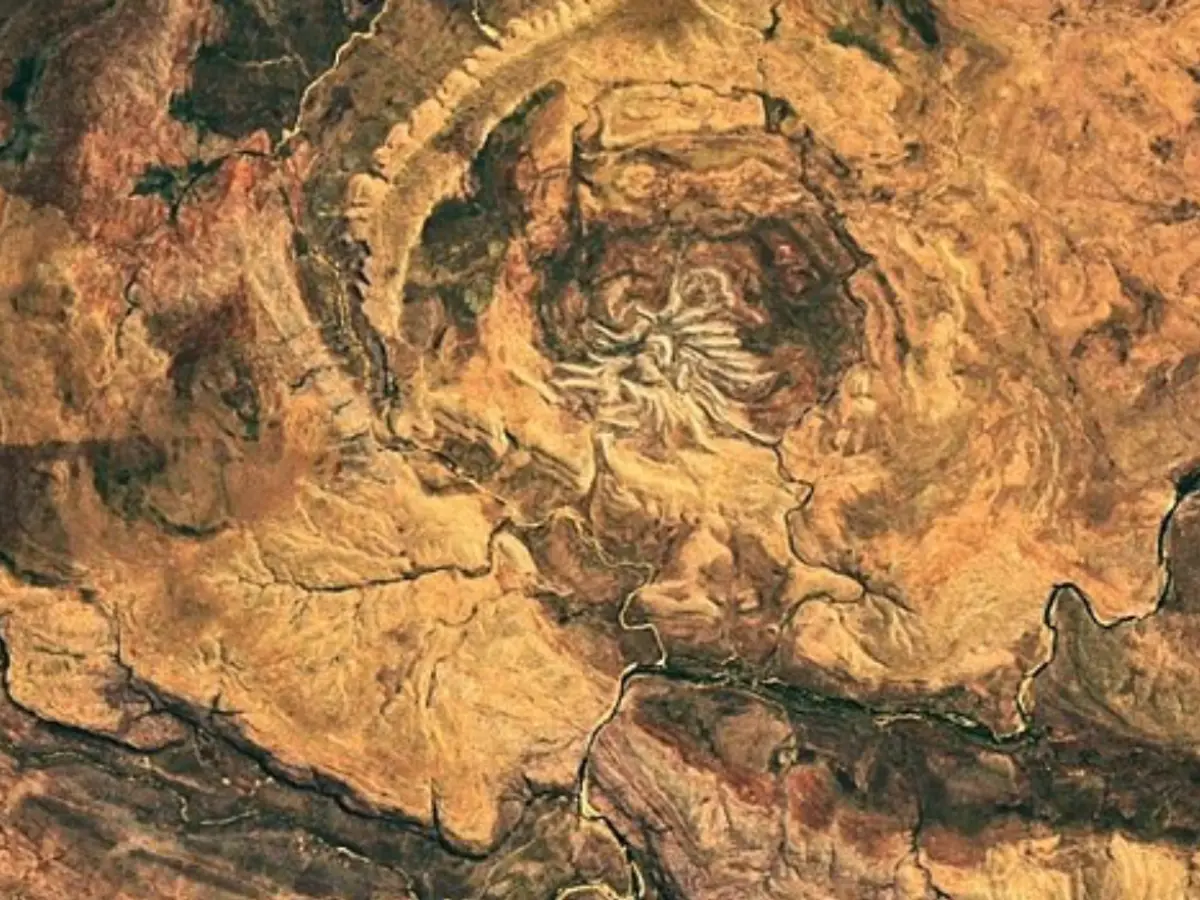
NASA released a photo of an impact structure with legs in the Australian desert. Captured by Landsat 9, the Spider Crater shows a strange shape formed by a meteorite between 600 million and 900 million years ago. Geologists used shatter cones and crystals to confirm this site is a massive impact.
NASA has released a photo of "an impact structure with legs" in the Australian desert. The image was captured by Landsat 9 over the Kimberley region of Western Australia. NASA said that although it looks strange, it is a meteorite impact site which has undergone millions of years of soil erosion. Its bizarre shape led it to be named the Spider Crater.
The oval structure is 13 by 11 kilometres with a central portion resembling a spider and measuring 4 kilometres. This crater was formed when a meteorite struck the region between 600 million and 900 million years ago, although the exact time remains unclear. It was discovered in the 1950s and its unusual shape remained unexplainable.
It is located in a remote region with a rugged terrain that is hard to reach. So satellite images have been the best way to see the crater. Green vegetation and red rocks create a striking contrast in the photo.
After being discovered in the 1950s, the crater's origin remained a mystery until the 1970s. Geologists worked for two decades to unravel the cause of the massive and strange crater. Initial explanations included a volcanic origin. They finally noticed telltale signs of a meteorite or asteroid impact, including grooved, cone-shaped fractures in the rock. The extremely distorted layers of sedimentary rock further strengthened the theory.
The fractures, known as shatter cones, are spread around the structure. They are formed from shock waves that tear through rocks following a high-speed collision. Shocked quartz and zircon crystals in the sandstone hold evidence of the impact, whose exact time is yet to be ascertained.