
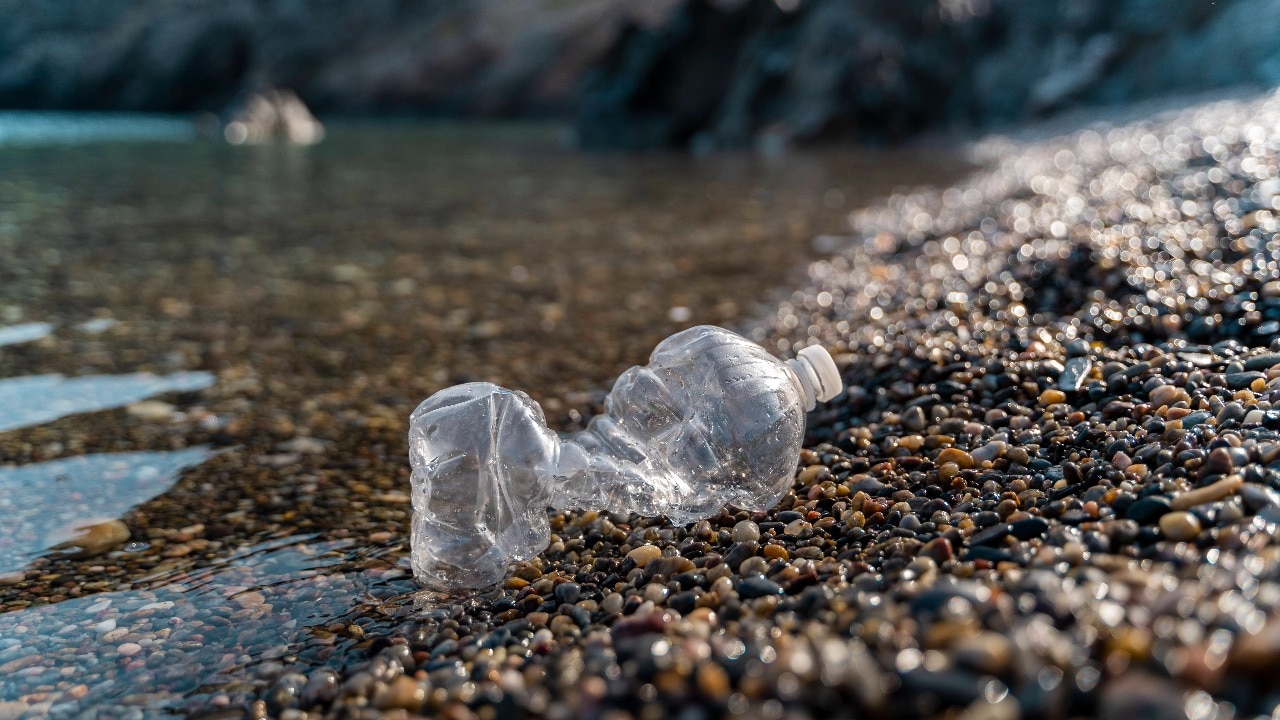
A new study shows microplastics in our bodies can trigger chemical reactions that damage living tissue. Researchers found these particles create reactive molecules when they touch water. “Water is a key active player here, rather than just a spectator,” said Wei Min. These findings explain how plastics affect health.
Microplastics, tiny plastic fragments found in drinking water, food and the environment, may be doing more than simply passing through our surroundings.
A new study has found that when these particles come into contact with water, they can trigger chemical reactions that may damage living tissue.
The research, published in the journal Nature by scientists at Columbia University and the University of California, Berkeley, challenges the widely held view that plastics are largely chemically inactive.
The researchers found that microplastics can generate highly reactive molecules called reactive oxygen species, which are capable of damaging cells and tissues.
The findings gave a possible explanation for how exposure to tiny plastic particles could affect human and environmental health, although they do not establish that microplastics directly cause specific diseases.
WHEN TINY PLASTIC PARTICLES BECOME ACTIVE
Plastics are widely used in food packaging, water bottles and everyday products partly because they are considered chemically stable. But when larger pieces break down into microplastics and even smaller nanoplastics, their exposed surface area increases dramatically relative to their size.
This gives water more surface to interact with, creating conditions that can trigger chemical reactions.
“Water is a key active player here, rather than just a spectator,” said Wei Min, a professor of chemistry and biomedical engineering at Columbia University.
The researchers found that contact between water and plastic surfaces can encourage the formation of reactive molecules. These molecules, known as reactive oxygen species, can damage cells when produced in excessive amounts.
The discovery matters because the human body contains large amounts of water. If microplastics enter the bloodstream or cells, they could potentially remain chemically active in that environment.
However, further research is needed to establish what this means for people exposed to these particles.
IS IT A BIG DEAL FOR HUMAN HEALTH?
Microplastics have become a growing concern because they have been detected across the food system and in drinking water.
In a 2024 study, researchers led by Min found that a litre of bottled water contained an average of around 2,40,000 detectable plastic fragments, most of them nanoplastics.
Scientists have also investigated possible links between microplastic exposure and health problems, including cardiovascular disease. However, the mechanisms behind these associations have remained unclear.
The latest study offers one possible explanation by identifying how plastic surfaces interacting with water can produce potentially harmful molecules.
The findings could also help scientists develop plastics that are less likely to trigger these reactions.
Teresa Head-Gordon, a professor at the University of California, Berkeley, said the research could eventually help engineers redesign commonly used plastics to reduce their potential harm.
For now, the study provides a new direction for investigating microplastics, rather than a final answer on their effects on human health.