
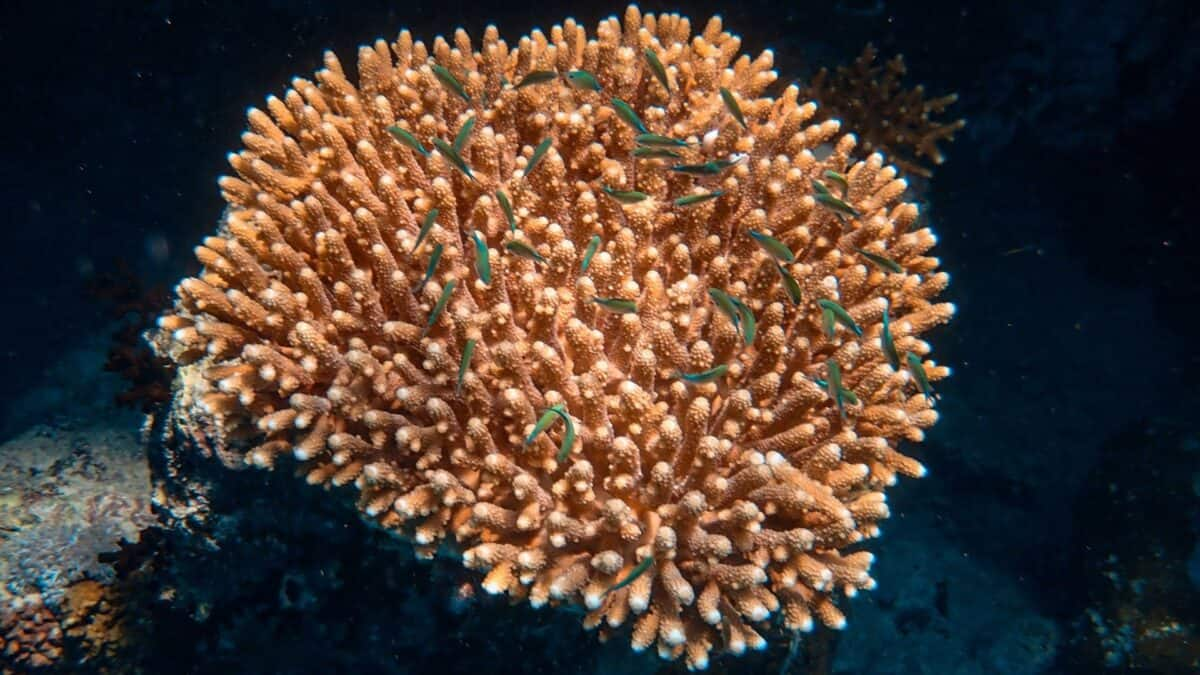
A study of 380 corals near Maui shows that reefs below farms, golf courses, and wastewater plants face pollution stress. Researchers led by Zachary Quinlan sampled corals in March 2018. They found that reefs with stressed chemistry lost the most coral cover after the 2015 bleaching event hit the coast.
A study of nearly 380 corals around Maui finds that reefs below farms, golf courses and wastewater plants carry a different chemistry from reefs on quiet coasts. The corals with the most stressed chemistry lost the most coral cover after the 2015 bleaching.
Corals look like rock, but they are animals, and animals take things in. Researchers led by Zachary Quinlan sampled 380 corals from 16 reef sites along 70 kilometres of Maui's coast. They took two species, the finger-like Montipora capitata and the boulder-shaped Porites lobata, over twelve days in March 2018.
In the lab, the team analysed each coral's metabolome. That is the full set of small molecules in its tissue, a chemical diary of what the animal is eating, burning, storing and fighting off.
Chemistry that follows the coastline
The diaries sorted themselves into three groups. Nobody told the software which sites were clean and which were not. It grouped corals by chemistry alone, and the groups lined up with the land behind each reef.
The cleanest chemistry came from southwest-facing shores with fallow farmland and little development, and from Molokini, the offshore islet. The most affected corals lived near wastewater treatment plants, a residential stream outlet and neighbourhoods that rely on onsite waste disposal. Reefs near golf courses, old sugar plantations and tourist districts landed in the middle. Both species told the same story, with only two sites switching groups between them.
Corals at the worst sites held less nitrogen in their tissue. Nitrogen builds proteins, and the authors suggest stressed corals draw down their stores to cope. In Porites, more of the molecules were the slow-to-break-down kind, which means less usable energy for the animal.
The team also found 25 human-made compounds sitting in coral tissue. They came from farming, cosmetics, industry and medicine. That is a lot of chemistry for a reef to carry, and a snorkeller would see none of it. A coral can look perfectly fine while running on a smaller budget.
A thinner budget when the heat arrives
Five of the 16 sites had 19 to 25 years of coral cover records, which let the team check their chemistry against what happened next. In 2015 and 2016 a strong El Niño drove a global bleaching event, and Hawaiian reefs took a hit. The sites with the most stressed chemistry did worst afterwards.
Kahekili, on Maui's northwest coast, lost the most coral. It sits in the highest-impact group. It is also a site where a protected zone for plant-eating fish had helped corals recover earlier, and that protection is still in force. The decline happened anyway.
A coral already spending energy on local trouble has less in reserve when the water warms. Local pollution and rising sea temperatures do not take turns. They pile up on the same animal.
The study has limits. It is a snapshot of one island in one month, and the long-term cover data covers only five sites. It shows a link and does not prove that any single contaminant caused any single decline. Land use, nutrients and chemistry also move together, which makes them hard to separate, and the paper says so.
The method itself could be useful. Reef managers mostly count coral cover after the damage is done. A tissue sample taken today might flag a struggling reef before it bleaches, and it could show where cleaning up upstream would do the most good. Upgrading a wastewater plant or restoring a stream bank is something a county can decide. Ocean temperature is out of its hands.
The study was published in Nature Communications in July 2026.