
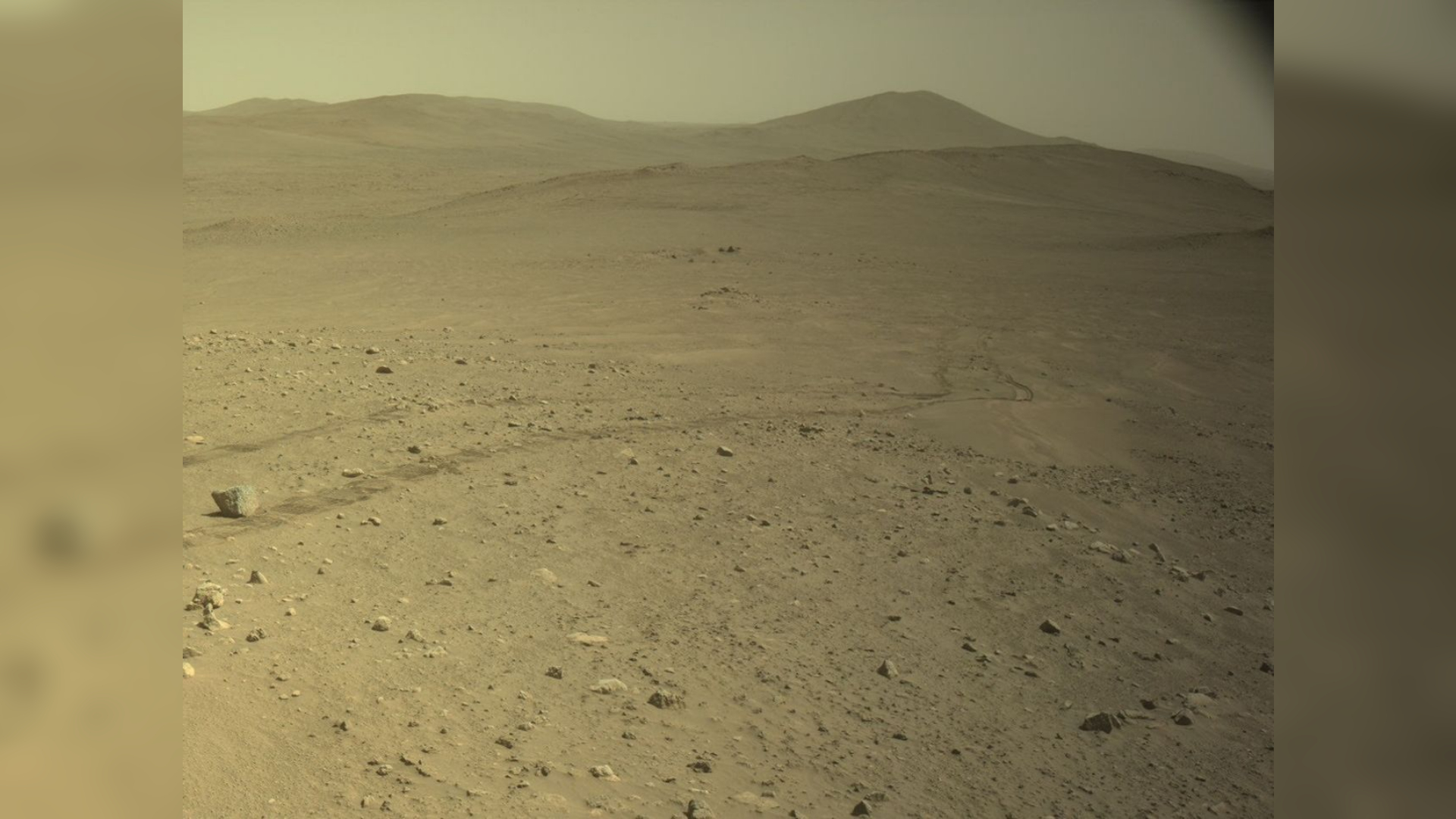
NASA's Perseverance rover set a new interplanetary driving record on Oct. 11, 2026. The rover passed 28.10 miles on Mars, beating the previous record held by Opportunity. Since landing in 2021, the rover has studied many rocks and slopes. It got us closer to finding if life existed on Mars.
NASA's Perseverance Mars rover left a mark on the Martian landscape when it passed a historic milestone driving across the Red Planet.
What is it?
On Oct. 11, Perseverance passed 28.10 miles (45.22 kilometers) driven on Mars. This is farther than anything has ever traveled on the surface of another world, earning the rover the interplanetary driving record.
Previously, this record was set by NASA's Opportunity rover, and it took Opportunity roughly 14 years to drive this far. Perseverance traversed this distance in just over 5 years.
In this snapshot captured by Perseverance, the rover looked back at its progress, capturing its own tracks pressed into the planet's dusty surface. This moment of reflection captures years of achievement on the Red Planet.
Perseverance's driving record comes after many years of different rovers pushing autonomous driving on other worlds to new levels. As Vandi Verma, Chief Engineer for Robotic Operations at NASA's Jet Propulsion Laboratory, shared in a recent mission update, the rover team continues to push the envelope, exploring new and better ways to drive the rovers remotely from another planet.
Why is it incredible?
While Perseverance has traveled nearly 30 miles across the surface of another planet, the rover has accomplished so much more than just this distance record on its enduring mission.
Since landing on Mars back in 2021, Perseverance has observed, sampled and studied a wide variety of rocks, boulder fields, Martian slopes and more. Recently, observations made using Perseverance provided the strongest evidence yet of possible biosignatures on the planet.
While we have not yet found conclusive evidence that life once existed on Mars, as the rover has made its way across the planet's surface, it has gotten us closer to that answer than we have ever been before.