
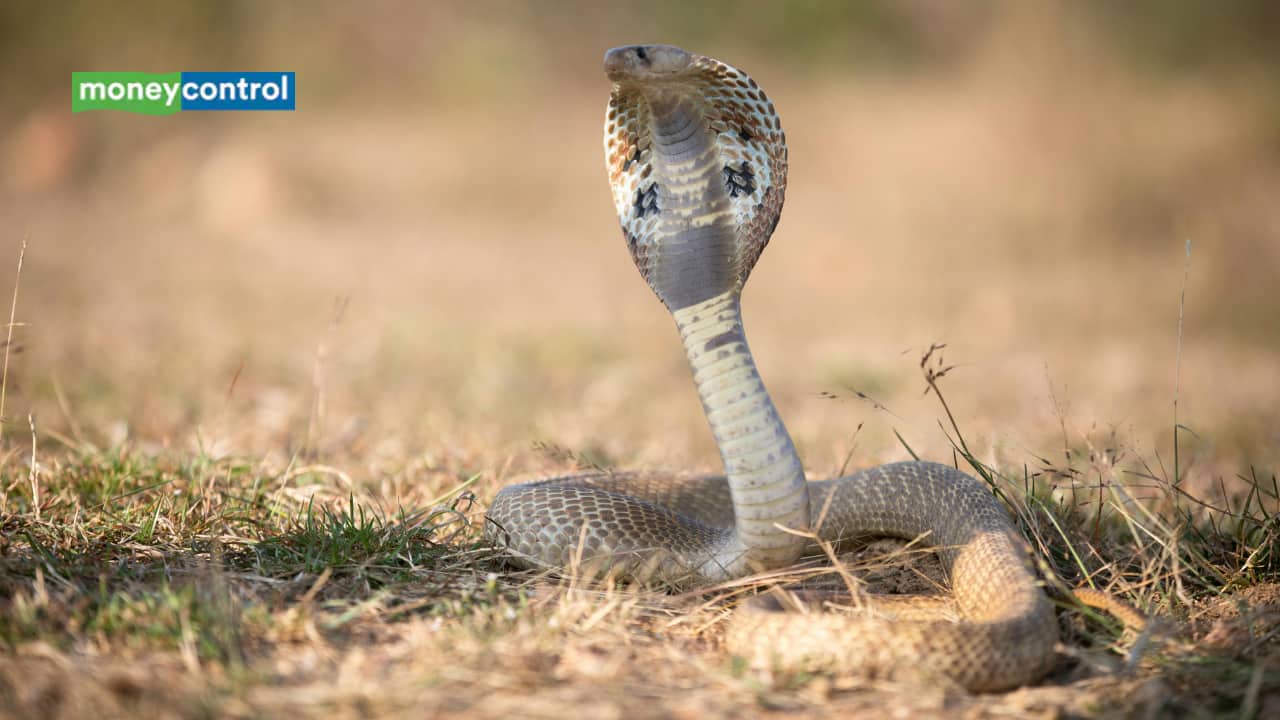
A new study published in Molecular Phylogenetics and Evolution shows that Indian spectacled cobras share one genetic lineage. Researchers analyzed 67 snakes and found that mainland populations mixed often. However, the Sri Lankan population has a distinct evolutionary history. These findings help us understand the past of this venomous snake.
Spectacled cobras across mainland India belong to a largely uniform genetic population, while those in Sri Lanka form a distinct lineage, according to a new study that sheds light on the evolution of one of South Asia's most medically significant snakes. Published in Molecular Phylogenetics and Evolution, the research examines how the two populations are related and what their genetic differences reveal about their past. The spectacled cobra (Naja naja) is among India's "Big Four" venomous snakes, a group responsible for a large share of serious snakebite cases in the country. Although the species occurs across much of South Asia, cobras can vary in colour, hood markings and venom characteristics depending on where they are found. Scientists have long debated how these differences relate to the snakes' evolutionary history and whether some regional populations should be recognised as separate species. The new findings suggest that visible variation across mainland India does not correspond to clear genetic divisions. Sri Lankan cobras, however, show a distinct evolutionary pattern, even though the researchers conclude that the available genetic evidence does not establish them as a separate species. Indian Spectacled Cobras Show Little Genetic Variation Across Regions To investigate the species' genetic relationships, researchers analysed nine DNA markers, including both mitochondrial and nuclear markers, from scale samples collected from 67 spectacled cobras across major regions of India. They combined these data with previously published genetic sequences from India and neighbouring countries to reconstruct evolutionary relationships, estimate when populations diverged and investigate their historical movements. The results revealed extensive genetic sharing among mainland Indian cobras. The researchers found no clear regional evolutionary divisions across the country, a pattern consistent with substantial genetic mixing between populations. This genetic uniformity stands out because spectacled cobras can look different across their range. Variations in hood patterns, colouration and venom composition do not necessarily indicate that populations have evolved into separate lineages. The researchers suggest that the cobra's ability to disperse, its capacity to thrive in different environments and historical movement facilitated by humans may have helped maintain genetic connections across mainland India. The pattern also contrasts with the stronger geographic genetic divisions documented in several other widespread snakes, including banded kraits and king cobras, as well as in related cobra species. Why Sri Lankan Cobras Form a Distinct Genetic Lineage While mainland Indian populations showed extensive genetic connectivity, the study found that Sri Lankan spectacled cobras formed a distinct lineage. The island population displayed moderate mitochondrial genetic divergence from cobras on the mainland, indicating a separate evolutionary history. However, the researchers caution against treating genetic differentiation alone as proof that the Sri Lankan population is a separate species. Genetic lineages can diverge over time without necessarily reaching the level of differentiation required for species recognition. The findings are particularly relevant because the taxonomic status of Sri Lankan spectacled cobras has been debated. A 2022 study proposed recognising the Sri Lankan population as a separate species. A later reassessment challenged that conclusion, pointing to the earlier study's reliance on mitochondrial markers, limited geographic sampling and use of venom characteristics as evidence for taxonomic separation. The new research adds broader genetic data to this debate, including samples from multiple parts of India. Its findings support the existence of a distinct Sri Lankan lineage but do not, by themselves, settle whether it warrants separate species status. How Cobras May Have Reached South Asia The study also offers insights into the deeper evolutionary history of the Naja genus, which includes several cobra species found across Africa and Asia. The researchers' analysis supports an African origin for the genus, followed by dispersal into South Asia, probably through the Middle East, around 10.6 million years ago. They discuss possible links between this movement and geological changes, increasing aridity, and the spread of savanna and grassland habitats. The researchers also note that cobra fossils have not been found in the Arabian Peninsula. This absence does not necessarily mean the snakes never occupied the region, as the fossil record can be incomplete and affected by uneven sampling. The lineage that reached the Indian subcontinent is thought to have given rise to the spectacled cobra, Naja naja. The genetic analysis suggests that the population reached Sri Lanka around two million years ago, during the early Pleistocene. At that time, lower sea levels periodically exposed land connections between the island and the mainland. These connections may have allowed cobras to move into Sri Lanka. Subsequent rises in sea level isolated the island population, reducing genetic exchange with mainland snakes and allowing a distinct lineage to develop. Why the Findings Matter for Snakebite Research The genetic relationships between spectacled cobra populations are relevant beyond evolutionary biology. Understanding how venomous snakes are related and how their populations differ can help researchers investigate variation in venom composition and assess whether current antivenoms work consistently across different geographic regions. The spectacled cobra is one of India's major medically important snakes, making reliable information about its distribution and population structure valuable for snakebite research. However, genetic similarity does not automatically mean that venom composition is identical across all populations, nor does this study alone establish how well a particular antivenom performs against bites from different regions. Further research combining genetics, venom analysis and clinical evidence would help clarify the practical implications of the findings. Overall, the study presents a picture of a species with strong genetic connections across mainland India and a more isolated evolutionary history in Sri Lanka. It also highlights why differences in appearance, venom and DNA must be examined together before scientists revise the classification of a snake.