
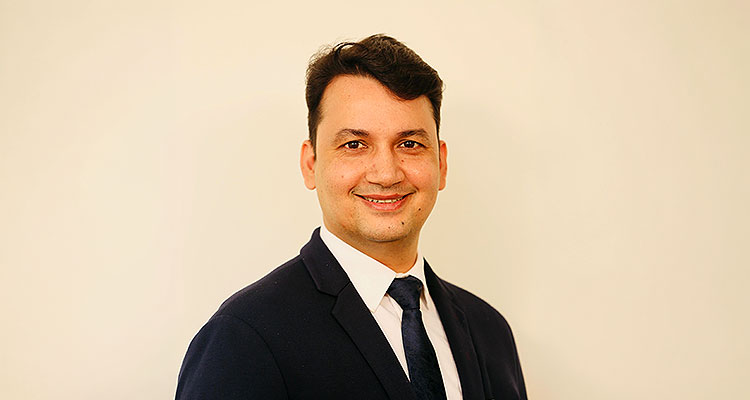
Rajdeep Panwar of Thyrocare Technologies said health check-ups now account for 12-15 per cent of industry testing. Preventive testing grew significantly since 2015, rising 30-40 per cent. The company expanded from one lab in 2020 to 42 labs today, helping bring affordable pathology access to many people in smaller markets.
Rajdeep Panwar, Chief Commercial Officer, Thyrocare Technologies discusses key consumer trends shaping the diagnostics sector, and explains to Viveka Roychowdhury why he believes that predictive diagnostics is the next driver for the sector
India's healthcare consumer is showing signs of shifting to preventive healthcare. Do you see Indian consumers doing diagnostic tests even before they feel ill as a form of preventive healthcare?
The trend towards health check-ups has picked up significantly since around 2015. When I started working in the retail pathology segment, health check-ups were about 3-4 per cent of testing. Today, I would say they account for 12-15 per cent of testing across the industry.
Preventive testing is growing at a much faster pace, around 30-40 per cent, compared with 15-20 per cent for the conventional industry. So, the health check-up market is definitely growing.
Certain conditions such as diabetes and thyroid require regular testing. What other areas are seeing increased regular testing, and how are patients managing the cost?
Healthcare access and affordability vary significantly between metros and smaller markets. The industry is still about 80 per cent unorganised, and sometimes pricing pressures result in compromises, particularly in tier 2 and 3 markets.
The organised sector is expanding into these markets. At Thyrocare, we have grown from one lab in 2020 to 42 labs today, helping bring affordable pathology access to smaller markets.
Apart from thyroid and diabetes, hypertension is seeing increased testing. The post-COVID period has also brought greater awareness of cardiac and other health risks.
Preventive healthcare is growing because people want to know what is happening inside their bodies. I still think it is a myth in tier 1 and metro markets that pathology is necessarily expensive. A health check-up can cost about the same as a monthly Netflix subscription. The thinking around preventive healthcare has to develop further, and the organised sector can make it more affordable and accessible.
You have opened 40 new labs. Are these new facilities or acquisitions?
These are predominantly Thyrocare-operated labs. We ensured that there is a Thyrocare lab for every 150 kilometers, because we wanted to be present across markets and improve turnaround time while expanding our network. Only a few follow a hybrid model, where we work with an existing diagnostic centre or hospital.
Even in those cases, we manage the quality, equipment, reagents and other aspects of the lab. So most of these are Thyrocareoperated labs rather than existing facilities that have been transitioned to Thyrocare.
What standards do these labs follow? Are they NABL or CAP accredited?
The instrumentation we deploy is what I would call gold-standard instrumentation. A machine in our Muzaffarpur lab, for example, is comparable to the machinery used in the US.
New labs take time to obtain NABL accreditation because documentation is required for six months. Currently, 97 per cent of the testing we do is NABL accredited.
It is important to understand that NABL is not simply a stamp on a laboratory. It applies to the quality process and the scope of specific tests. In our case, 97 per cent of testing is done within the NABL-accredited scope, using accredited instrumentation, technicians and processes.
What about staff training to operate and support a NABL-accredited lab?
The technology level is very high, so staff are trained largely in maintaining the instrumentation, running quality controls and calibrating the machines. These are closed systems with multiple checks. The machine will either provide a result or stop if there is an error.
Quality control is conducted every day. If a problem is detected, pathologists intervene and, where required, engineers correct the issue. This supports the reproducibility of the machines and consistency of results.
Patients are increasingly wary of over-testing, particularly because India is price-sensitive and insurance does not cover everything. How can diagnostic companies build trust?
I have also worked with hospital chains and understand the testing required before procedures or treatment. I don't believe we are doing excessive testing in the healthcare industry. In fact, we are probably not testing enough because it is an out-of-pocket expense.
Screening tests do not necessarily diagnose a problem. For example, a lipid profile alone does not tell you whether someone is hypertensive. More extensive testing may be required to understand a patient's condition.
Hospital-based testing is about diagnosing a problem so that treatment can be provided. That requires rigorous testing, sometimes repeatedly, depending on the condition.
How is Thyrocare extending access and advanced diagnostics beyond metro cities?
The top 15 cities may account for more than 30-35 per cent of industry revenue, although that is an assumption rather than a figure backed by a study.
Thyrocare has a different geographic spread. We are a pan-India company and have labs positioned to serve smaller markets. Because we already have a network, we can deploy larger instruments without depending on that individual lab to generate all the business.
e business. Our average turnaround time across the country is around 13 hours. In the same city where the lab is located, reports can be available within six to eight hours.
What will drive the next phase of growth across tier 1, tier 2 and tier 3 markets?
Both will grow, but for different reasons. In tier 1 and metro markets, more extensive testing and predictive diagnostics will drive growth. For example, people with a family history of cancer may proactively seek predictive genetic testing.
In tier 2 and 3 markets, increasing health concerns, including hypertension and diabetes, will drive both preventive and curative diagnostics. Curative testing will increasingly move from the unorganised to the organised sector, while preventive diagnostics will also grow. I believe the higher pace of growth will be in tier 2 and 3 markets. Whoever reaches those markets on time will grow more.
Can diagnostic companies go beyond testing to facilitate lifestyle changes, particularly around NCDs?
If we start doing that, we would probably compete with the companies we work with. We already have several health-tech platforms associated with us, and getting into that space ourselves may not help the patient, those companies or us. We will continue communicating health-related messages based on our data, but we do not immediately have plans to directly get into that model.
What is the next phase of diagnostics in India? What role will AI, ML and genomics play?
I am not sure how AI and ML will change diagnostics because technology has been part of the industry for a long time. Humans have already been replaced by machines in many parts of the testing process. Sample collection, however, will remain human because it requires human interaction.
The next major development, in my view, is predictive diagnostics. Genetics and genomics can help understand the likelihood of developing certain conditions in the future.
Clinical or whole exome testing can study chromosomes and indicate where an individual may be more prone to certain issues. This has developed significantly in the US and other countries and is beginning to pick up in India, although cost remains a factor.
Non-invasive prenatal testing is one example. It can identify the possibility of conditions such as Down syndrome or other chromosomal abnormalities through a blood test. The cost has also come down significantly. I believe predictive diagnostics is the future of the industry.