
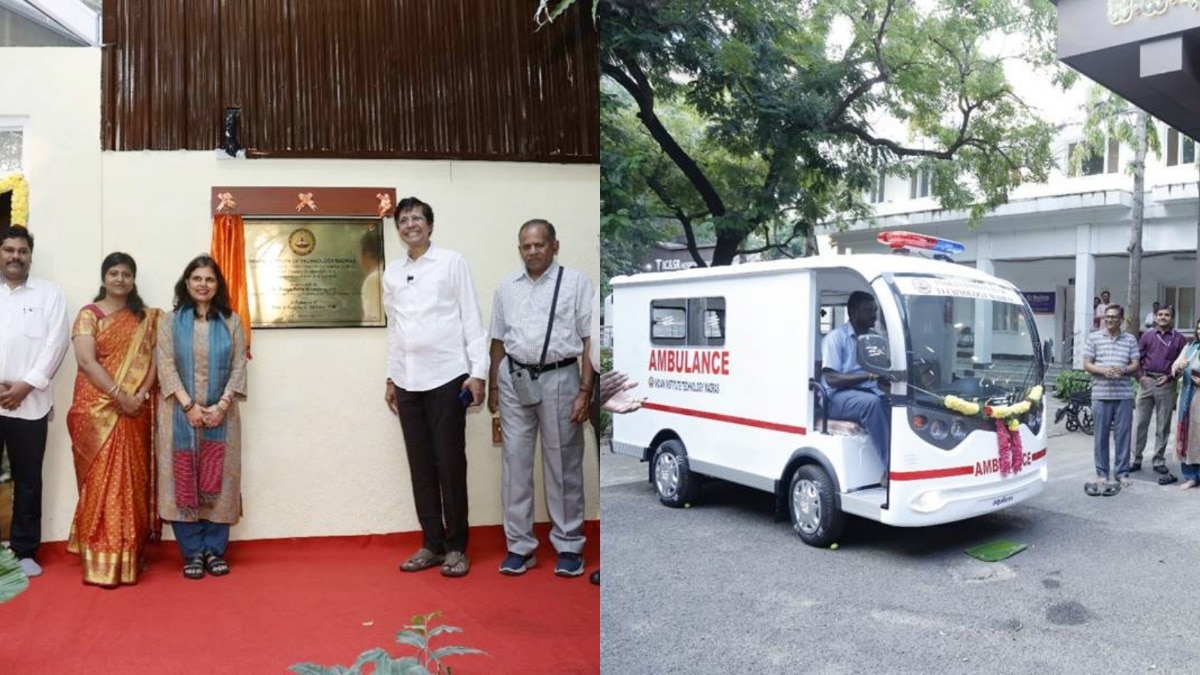
IIT Madras opened a new Sleep Study Facility on November 22 to address growing concerns about student sleep deprivation. Union Health Secretary Punya Salila Srivastava inaugurated the centre, which offers expert consultations and research. The institute hopes these efforts will help students and staff build better, healthier sleep habits.
For students, sleeping late to finish assignments, prepare for examinations or meet academic deadlines can become part of everyday life. But how much sleep are they actually getting, and when does an irregular routine become a health concern?
At the Indian Institute of Technology (IIT) Madras, concerns about sleep deprivation among students and other members of the campus community have prompted the institute to open a dedicated Sleep Study Facility.
The facility was inaugurated by Union Health Secretary Punya Salila Srivastava on November 22, along with an Autism Lab. An electric ambulance service was also launched at the institute's hospital. The initiatives are part of IIT Madras' wider campus wellness programme.
WHY HAS IIT MADRAS SET UP A SLEEP STUDY FACILITY?
The institute said concerns about sleep deprivation were identified through its existing mental health support services, established with assistance from Kauvery Hospitals, Chennai.
These services provide students with access to counsellors, clinical psychologists and psychiatrists. A separate 24-hour counselling facility, operated by Myndwell, Chennai, is also available on campus.
The new facility, located at the Campus Health Centre, will provide specialised assessment, consultation and treatment for sleep-related disorders to students, faculty members, staff and researchers.
Experts associated with Kauvery Hospitals will support these services.
CAN FACILITY HELP ANSWER HOW STUDENTS SLEEP?
Beyond consultations and treatment, the facility will also support research into sleep patterns and different types of sleep disorders.
However, the institute has not announced any figures on how many students are sleep-deprived or how much sleep they get. The proposed research could help build a better understanding of sleep habits and related problems within the campus community.
Such studies will be conducted subject to approval from the Institutional Ethics Committee and informed consent from participants.
IIT Madras' Department of Medical Science and Technology will also explore the development of indigenous and affordable sensors and technologies to monitor and analyse sleep.
These technologies could have applications in healthcare as well as entrepreneurship.
WHAT ELSE IS IIT MADRAS WORKING ON?
The inauguration also included an Autism Lab initiative, which is part of the proposed activities of the Centre for Indian Medical Knowledge at IIT Madras.
The institute plans to collaborate with the Paediatric Neurology team at AIIMS Jodhpur to scientifically evaluate Integrated Varmam Therapy for children with Autism Spectrum Disorder. AIIMS Jodhpur has shared its clinical experience of administering the integrated therapy to more than 800 children.
Researchers also plan to develop indigenous pressure-sensing gloves to measure contact pressure and provide real-time feedback to practitioners. Genetic, molecular and epigenetic studies are also planned, subject to necessary ethical approvals.
The institute has also introduced an electric ambulance to improve emergency response and patient transportation within the campus, particularly for elderly members and patients needing immediate assistance.
For IIT Madras, the new sleep facility brings an important campus health concern into the focus of specialised assessment and research. Whether students are getting enough rest is a question the institute now hopes to examine more closely.