
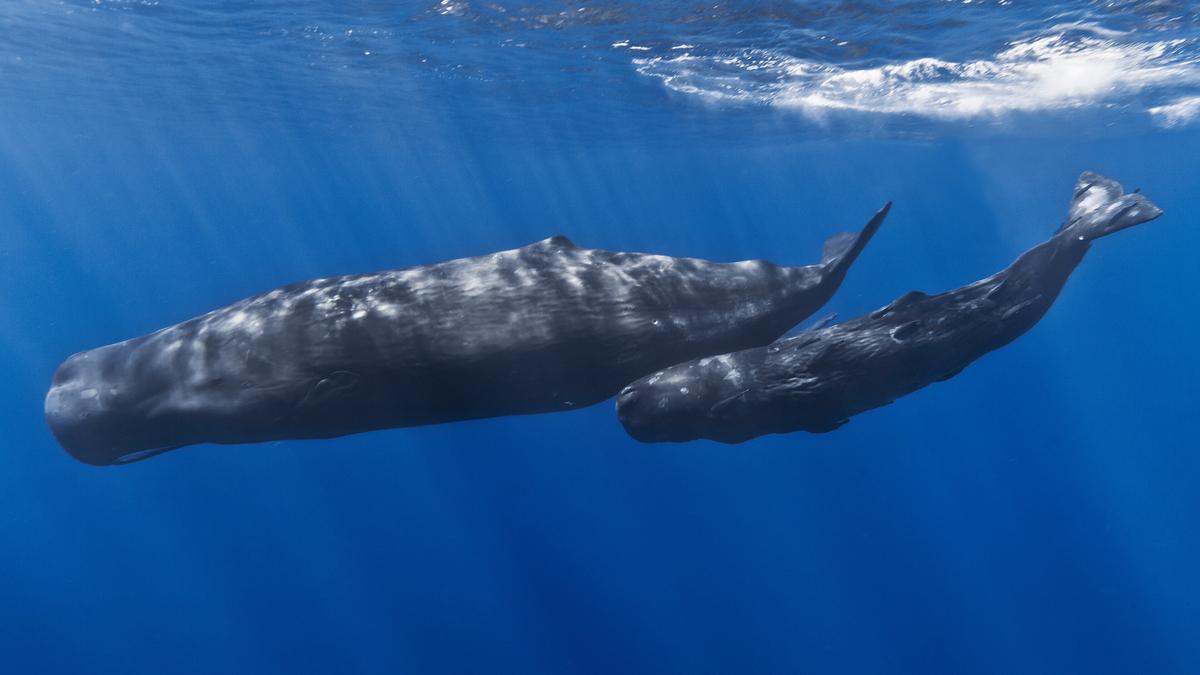
A whale carcass sustains many life forms in the ocean for years after its death. When a whale dies, scavengers feed on its body before it sinks. Deep-sea creatures eat the tissues, while bacteria later grow on the bones. This process helps support ocean life for up to 50 years.
For many years after its death, the whale's carcass sustains a plethora of life forms in the ocean
As we all know, 71 % of the Earth's surface is ocean. That is what makes our planet appear like a pretty blue marble when viewed from outer space. Throughout this ocean is an intricate web of life; even in the Mariana Trench which, in some places, is as deep as 10,994 metres, pitch dark, near-freezing temperatures, and crushing pressure. The food chain -- organisms varying from producers to consumers to decomposers -- helps sustain many amazing life forms.
Beyond this, did you know that one of the biggest sources of food for life in the ocean is the carcass of a whale? When a whale dies, the decomposers start feeding on its flesh and release gases that make the whale's carcass float for some weeks. The surface scavengers, like sea birds and sharks, make the most of the whale's blubber and muscles.
At the bottom
Soon after the gases escape, the whale's body loses its buoyancy and begins sinking deep down into the ocean's abyss. Here, the large deep-sea creatures like the hagfish, sleeper sharks, and crabs home in and relish the soft tissues like muscle and blubber. There is enough food in this 'larder' of sorts to last for as long as two years.
But this is not the end of the great feast. The smaller creatures like worms, crustaceans, and molluscs step in to help themselves to the leftover skeleton and organic fragments. Bone-eating worms secrete acid to dissolve the bones and absorb the soup of mineral; enough to last them for up to 10 years!
No waste
"This would surely be the end of the great feast," you must be thinking. Not at all. Not a cell of the whale's body is wasted. As the bones decompose, they produce hydrogen sulphide. Thick mats of sulphur-oxidising bacteria grow on the scraps of bones. They, in turn, are eaten by clams, snails, and tube worms. This stage may last for up to 50 years!
Indeed, what a whale of a job a whale does to sustain life. While it is alive, the biodiversity of organisms that is spurred by the rich nutrients in its poop helps control climate change. In death too, it sustains millions of ocean organisms for several years.