
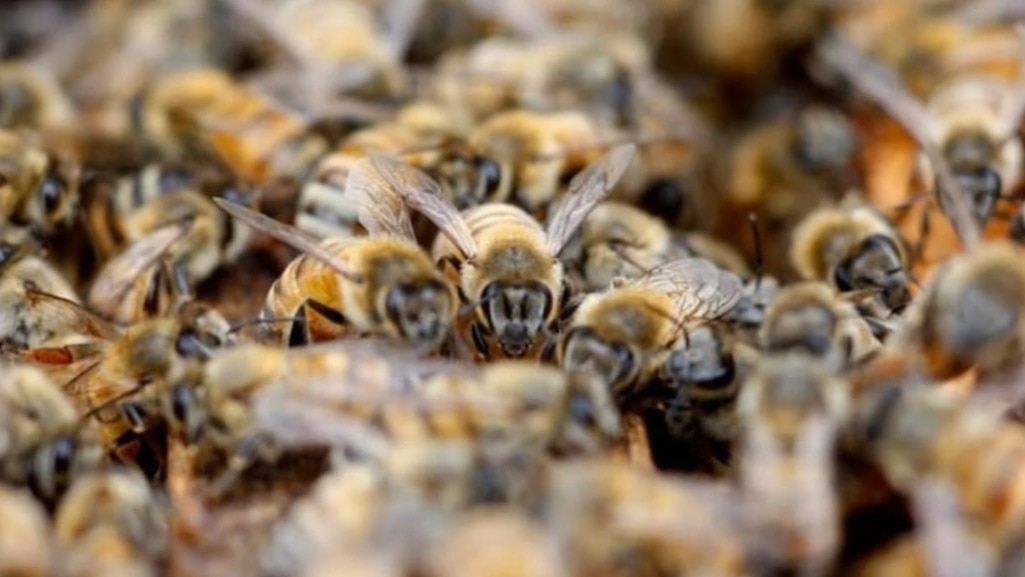
A 2024 review in Cureus shows honey bee venom could help fight breast cancer cells. Scientists found that melittin, a key compound in the venom, triggered cancer cell death in laboratory studies. While these early results look promising, experts said more research is needed to ensure safety for human use.
Breast cancer research is exploring the potential of a surprising substance: honey bee venom. Scientists have found that compounds in the venom can damage breast cancer cells in laboratory experiments, raising hopes for the development of new treatments.
However, the findings are preliminary, and bee venom is not an approved treatment for breast cancer.
WHAT THE RESEARCH FOUND
A 2024 review published in Cureus examined existing research on the potential of bee sting venom as a treatment for breast cancer. The review, titled Bee Sting Venom as a Viable Therapy for Breast Cancer, analysed studies investigating how the venom and its components affect cancer cells, tumour growth and the spread of the disease.
The researchers found that bee venom showed potential in laboratory and animal studies. It could trigger cancer cell death, slow cell growth and interfere with the processes that allow cancer cells to spread to other parts of the body.
The review also discussed research suggesting that bee venom could improve the effectiveness of certain chemotherapy treatments. However, the authors stressed that further research is needed to establish its safety, effectiveness and appropriate dosage in humans.
MELITTIN MAY BE THE KEY COMPOUND
One of the main components of honey bee venom is melittin, a peptide that makes up approximately 40% to 50% of the venom's dry weight.
Melittin has attracted scientific interest because it can damage cell membranes. In laboratory experiments, this action can disrupt cancer cells and trigger cell death, a process known as apoptosis.
Research published in Nature in 2020 examined honey bee venom and melittin in different breast cancer cell types, including triple negative and HER2 enriched breast cancer cells.
The researchers found that both substances could reduce cancer cell viability. Melittin also interferes with the activation of EGFR and HER2, proteins involved in signalling pathways that can support cancer cell growth.
The study further explored ways to improve melittin's ability to target malignant cells while reducing its effects on healthy cells. These findings suggest that the compound could be investigated as a starting point for developing targeted cancer therapies.
DOES BEE VENOM DESTROY CANCER CELLS IN 60 MINUTES
Claims that bee venom destroys 100% of breast cancer cells in less than 60 minutes need careful interpretation.
The 2020 study did examine the effects of bee venom and melittin over a period of up to one hour. Researchers observed changes in cell viability and damage to the membranes of breast cancer cells during laboratory experiments.
However, the study did not establish that bee venom eliminates 100% of breast cancer cells within 60 minutes. In one experiment involving triple negative breast cancer cells treated for 60 minutes, the proportion of cells classified as late apoptotic or necrotic was 8.3% in the bee venom group, compared with 23.6% in the melittin group.
These results show why the distinction between cell damage, reduced cell viability and complete destruction of cancer cells matters. Laboratory findings cannot be directly translated into claims that a treatment can eliminate cancer in a person.
ANIMAL STUDIES SHOW POTENTIAL BENEFITS
The 2024 review also examined animal studies investigating the effects of bee venom on tumour development and cancer spread.
Some studies have reported reduced tumour growth and metastasis, which occurs when cancer spreads from its original location to other parts of the body. Researchers have also explored whether bee venom could enhance the effects of existing cancer treatments.
These findings are encouraging because they provide a basis for further investigation. However, results in animals do not necessarily predict how a treatment will work in humans.
The review noted that evidence from human studies remains limited. More rigorous clinical trials are required to determine whether bee venom can provide meaningful benefits to people with breast cancer.
SAFETY REMAINS A MAJOR CONCERN
Despite its potential, bee venom presents important safety challenges. It can cause allergic reactions ranging from local swelling and pain to severe, life-threatening anaphylaxis.
Another challenge is ensuring that the treatment damages cancer cells without harming healthy tissues. Researchers must also establish the right dosage, delivery method and combination with existing medicines.
The review emphasised that bee venom therapy requires further investigation and should not be considered an established cancer treatment.
WHAT THIS MEANS FOR BREAST CANCER TREATMENT
The findings offer a possible direction for future cancer research, particularly in developing treatments based on melittin and other bioactive compounds.
However, established breast cancer treatments, including surgery, chemotherapy, radiation therapy, hormone therapy and targeted medicines, remain important options depending on the type and stage of the disease.
Patients should not attempt bee stings or use bee venom products to treat cancer. Anyone diagnosed with breast cancer should discuss treatment decisions with their oncology team.
For now, bee venom is a subject of scientific investigation rather than a proven cure. Further clinical research will determine whether its promising laboratory effects can eventually translate into safe and effective treatment for patients.
Honey bee venom shows potential to kill breast cancer cells within 60 minutes in lab study