
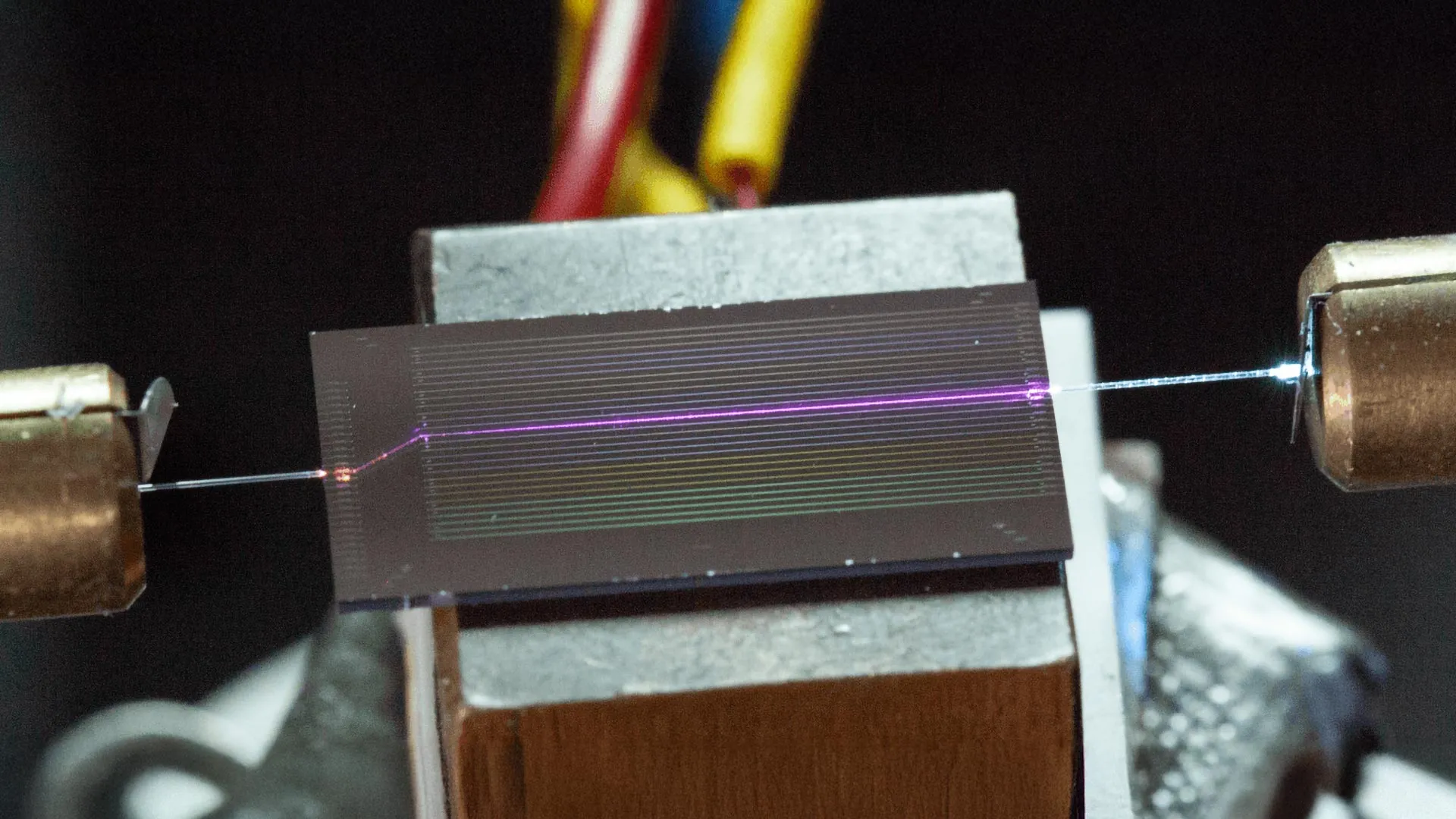
A Harvard-led research team created a microscopic device that produces 120 times more UV power than previous versions. Published in Nature Communications, the study used thin-film lithium niobate to generate UV light from red light. Kees Franken said, "When people think about it, they don't think of it as UV."
However, shrinking UV light sources to fit on a chip has presented a significant engineering challenge. Ultraviolet light rapidly loses power as it travels through optical waveguides, the tiny channels that carry light across a chip. This limitation has made it extremely difficult to develop compact UV sources with enough power for practical applications.