
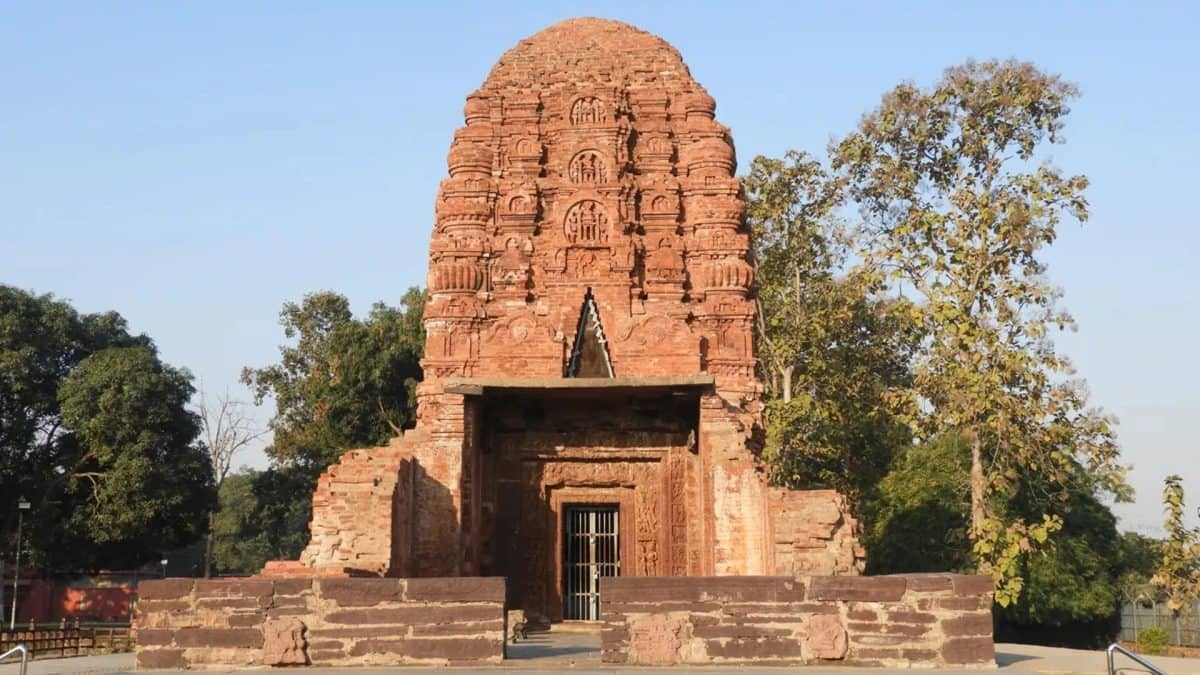
India added three sites to the Unesco Tentative List of World Heritage Sites. These include the Sirpur Cultural and Archaeological Landscape in Chhattisgarh, plus the Baratang Karst-Mud Volcano Complex and Andaman Subduction Volcanoes. These unique locations show India’s rich history and geology, helping the country move toward final global recognition.
India's ancient religious settlements and geological wonders received a fresh global spotlight, with three sites added to Unesco's Tentative List of World Heritage Sites.
The additions include an archaeological landscape in Chhattisgarh and two geological sites in the Andaman and Nicobar Islands.
The latest entries are the Sirpur Cultural and Archaeological Landscape, the Baratang Karst-Mud Volcano Complex and the Andaman Subduction Volcanoes, comprising Narcondam and Barren islands.
The Tentative List is an important preliminary step towards seeking World Heritage status. Inclusion does not guarantee final recognition, but it allows countries to identify sites they may nominate for inscription on Unesco's World Heritage List.
India currently has 45 World Heritage Sites.
Sirpur: Where ancient faiths and trade came together
Located in Mahasamund district, around 78 km from Raipur, Sirpur is an archaeological site on the banks of the Mahanadi River.
Its remains reflect centuries of religious activity, architecture and commerce, with structures dating from the fifth to the 12th century.
According to Unesco's description, Sirpur developed beyond a religious centre into a meeting point for different faiths and commercial communities, reflecting the diversity of ancient Indian society.
The landscape includes Vishnu and Shiva temples, the Rajmahal Complex, Gandheshwar Temple and the Bateshwar group of monuments.
The site also contains remains associated with religious communities and the lives of priests. Sirpur is already a nationally protected monument.
Its significance lies in the way its surviving structures illustrate the coexistence of religious traditions and the growth of an ancient settlement with cultural and economic links.
Andaman's volcanoes offer a window into Earth's geology
The Andaman Subduction Volcanoes entry covers Barren Island and Narcondam Island in the Andaman Sea. Both are protected areas and access requires permission from wildlife authorities.
Barren Island is known for its active volcano, while Narcondam rises steeply from the sea to around 710 metres above sea level. Its forested slopes, rocky coastline and caves form a distinctive landscape.
The proposed Unesco entry highlights the geological importance of these volcanic islands, which are linked to the tectonic processes shaping the region.
Baratang combines limestone caves with mud volcanoes
The Baratang Karst-Mud Volcano Complex covers a 299.57 sq km area on the main Andaman island chain.
Its features include limestone caves and active mud volcanoes, formed through geological processes involving underground gases, sediments and seismic activity.
The limestone caves, locally known as Jalki, are also part of a wider landscape of tropical forests and coastal ecosystems. The Geological Survey of India recognised Baratang's mud volcano as a Geo-Heritage Site in 2025.
The latest additions highlight India's diverse natural and cultural heritage, from ancient multi-religious settlements to geological formations that offer insights into the Earth's evolution.