
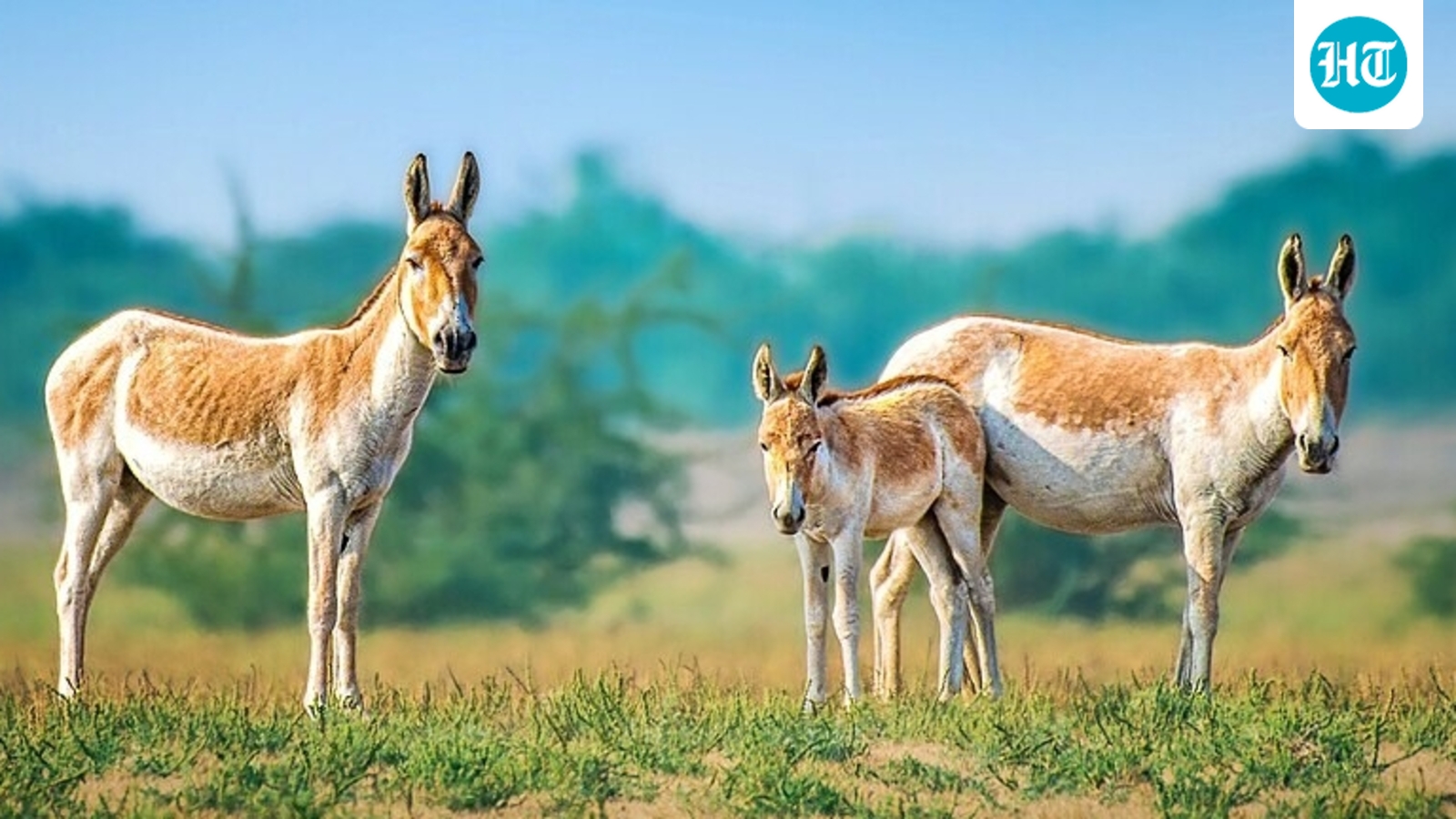
Israel reintroduced 28 Asiatic wild asses to the Negev between 1982 and 1987. After 10 more were released in 1992 and 1993, the herd reached about 250. Researchers used DNA swabs and GPS collars to track the animals. These wild asses now live in the desert, far from human settlements.
Few animals vanish from a desert and then find their way back. The Asiatic wild ass did, with human help. According to a 2018 study in Conservation Biology, 28 wild asses were released into Israel's Negev from a captive herd between 1982 and 1987. Another ten were released in 1992 and 1993. Since then, the herd has grown, which sounds like a clear win. But a growing herd is not always a healthy one.
How the wild ass disappeared and came back
The Asiatic wild ass lived on the desert steppes of Mongolia, Russia, and the Arabian Peninsula. Today it survives in small isolated groups. In the Negev, it was gone by the 1920s, according to a 2013 article from Washington University in St. Louis. Because the animal could not be tamed, the local Bedouin hunted it for its meat. Alan Templeton, an evolutionary biologist, says water and World War I finished it off. In summer, nursing mothers must drink daily, but the displaced people settled near the few permanent sources of water and kept the asses at a distance. Without water, the mothers couldn't raise their foals.
The comeback began with a small herd that survived in the Shah of Iran's zoo. In 1968, animals from that herd were brought to the Hai-Bar Yotvata Reserve in Israel and bred there. The captive group did well. The same article says blood tests showed very high genetic diversity. Shirli Bar David of Ben-Gurion University recognized the parallel to Templeton's work with collared lizards in Missouri. Both species were reintroduced beginning in the early 1980s from small founding populations: 29 lizards and, eventually, 38 wild asses.
Studying a herd that avoids people
By 2005, little was known about how the released animals were faring. They were hard to find, and they stayed away from people. Bar David, Amos Bouskila, and Templeton went to see for themselves. They used methods that disturbed the animals as little as possible. They counted the animals at watering holes during the summer. Many of the animals can be identified by coat markings and battle scars. The count revealed that the herd had increased from 38 to about 250. They also took DNA swabs from dung and put a GPS collar on a dominant male named Tail-less. He spent almost all of his time in a region about two kilometers wide. Every other week, he raced off on an exploratory trip and then returned.
DNA from about 400 dung samples showed that the eastern group was already genetically distinct from the rest. Templeton says the asses avoid steep slopes. So they make long detours around the huge erosion craters of the Negev. Those craters seem to have kept the groups apart.
Why a larger herd isn't always a healthier herd
Numbers are as important as genes. A 2015 study in Molecular Ecology examined the mating habits of asses. Genetic data were collected non-invasively, and computer modeling was used. It found that fewer than 25% of males participate in mating each generation. The 2018 Conservation Biology study then measured the herd's effective population size. This number tells us how fast a group loses genetic diversity by chance. The result was 24.3, far below the herd's total population. Among the factors the team examined, uneven mating had the strongest effect on how fast the herd loses genetic diversity. The authors call the low number a concern, even though the herd keeps growing.
Males set up territories around water sources and typically maintain them through summer, the breeding season. So the authors propose adding more artificial water sources that could allow more males to gain territory and mate. That is a suggestion, not a proven solution. Templeton also notes that the zoo animals were hybrids of two of the five recognized subspecies. There are no more subspecies native to the Negev, so the team accepted that mix. He says the goal is a population that can keep evolving, not just one that survives.