
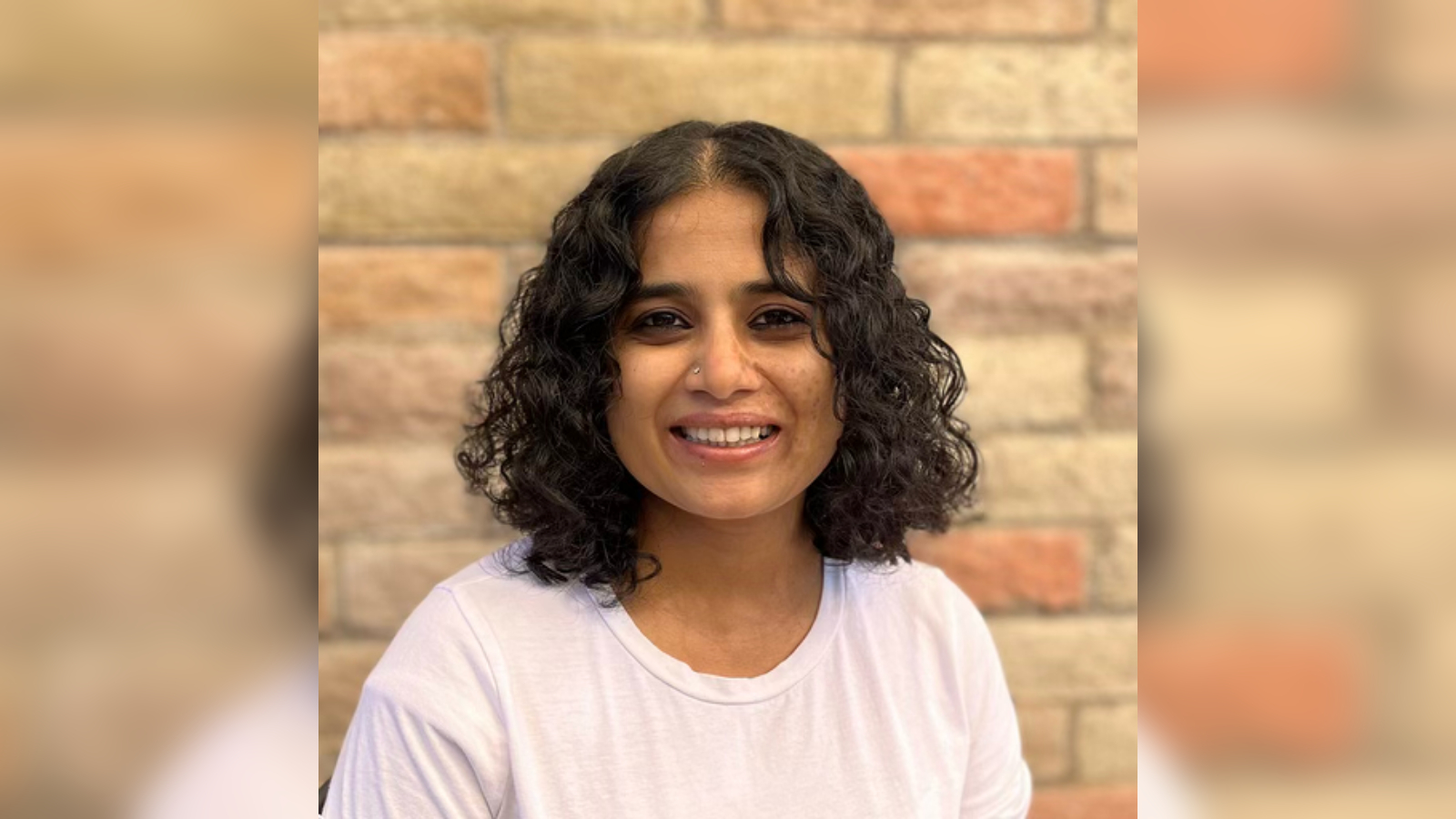
Bengaluru-born astronomer Ramya Manjunath Anche will lead Nasa’s $20-million PUFFINS mission to study interstellar dust. Ramya, who grew up in Devanahalli, got the funding in October. She said, "My interest was always in research, and there was no pressure from my family to get a job then." The mission starts soon.
Bengaluru-born astronomer Ramya Manjunath Anche will lead Nasa's $20-million PUFFINS mission to study tiny interstellar dust grains.
After Kalpana Chawla and six other astronauts died onboard the space shuttle Columbia on 1 February 2003, the world mourned. The tragedy sparked a teenager's quest to understand what lies beyond Earth. Two decades later, she has built a telescope no larger than a dinner plate to study what most telescopes cannot see: tiny grains of dust drifting between stars.
Meet Ramya Manjunath Anche, the astronomer and assistant research professor at the University of Arizona and now the principal investigator of the Polarimetry in the Ultraviolet to Find Features in INterStellar dust (PUFFINS) mission.
Ramya, a student from Bengaluru's Devanahalli, received $20 million in funding from Nasa in October for the mission. By 2030, the tiny telescope is expected to be studying the grains and dust between stars -- the first mission of its kind in the last 50 years.
A curiosity kindled at home
Ramya is the daughter of A Manjunath, a well-known microbiologist who retired from the University of Agricultural Sciences, Bengaluru. She was born into a family where science was always a subject of discussion, with her father engaged in soil research.
Ramya went to Oxford English School, Devanahalli, and MES Vidyasagar Prof. MPL Sastry PU College in Bengaluru before earning a BE in electrical and electronics engineering from Sir M Visvesvaraya Institute of Technology.
It was also the time when the software industry in Bengaluru was booming, and most engineering graduates wanted to join a multinational company with an attractive package. "My interest was always in research, and there was no pressure from my family to get a job then," she says.
Manjunath says, "At an early age, she picked it up. By the time she went to high school, we would discuss science at home, which I believe kindled her curiosity to find answers."
According to Ramya, the 2003 Columbia disaster was one of the triggers for her to study science. "This incident made a huge impact, and I used to wonder why it occurred and how it could have been prevented," she recalls.
A $20-million mission under Astrophysics Pioneers programme
In 2012, Ramya joined the Indian Institute of Astrophysics for an integrated MTech-PhD in astronomical instrumentation, guided by Prof G C Anupama. A postdoctoral fellowship at the Inter-University Centre for Astronomy and Astrophysics (IUCAA), Pune, followed in 2020-21.
Manjunath says, "In fact, I was happier than her when she picked up research rather than just a software job. We never forced any of our children to take specific education or job."
In 2021, Ramya moved to the University of Arizona, where she is now an assistant research professor at Steward Observatory. There, she led the proposal that won Nasa's backing for PUFFINS, a $20-million mission under the space agency's Astrophysics Pioneers programme. She did so while still a postdoctoral researcher.
"PUFFINS will study the smallest grains of dust that exist between the stars: particles roughly the size of a common cold virus. These grains are invisible to most telescopes, yet they play a critical role in how starlight travels through the galaxy and, ultimately, in how new stars and planets form. PUFFINS will observe them using UV spectropolarimetry, a technique that has not been attempted from space in 30 years.
"The data it returns will fill a long-standing gap in our understanding of interstellar dust -- and by extension, how the universe as we know it came to be. PUFFINS is a five-year mission. We just started, and we'll design and build the telescope over the next 4 years, launching in 2030," she says.
"It will be the first instrument I helped design that will actually be built and launched into space," she says.
About 40 scientists, engineers, graduate students, and postdoctoral researchers are working on it, and Ramya is the principal investigator. She says she learns from her colleagues every day, many of them "far more experienced" than her.
Ramya's path was not smooth. Despite coming from a family of academics, she says she was made to feel, at various stages, that she might not be good enough for physics, maths-heavy courses, or engineering projects, owing to stereotypes around STEM.
Ramya says she is building her career through "dedication and perseverance".