
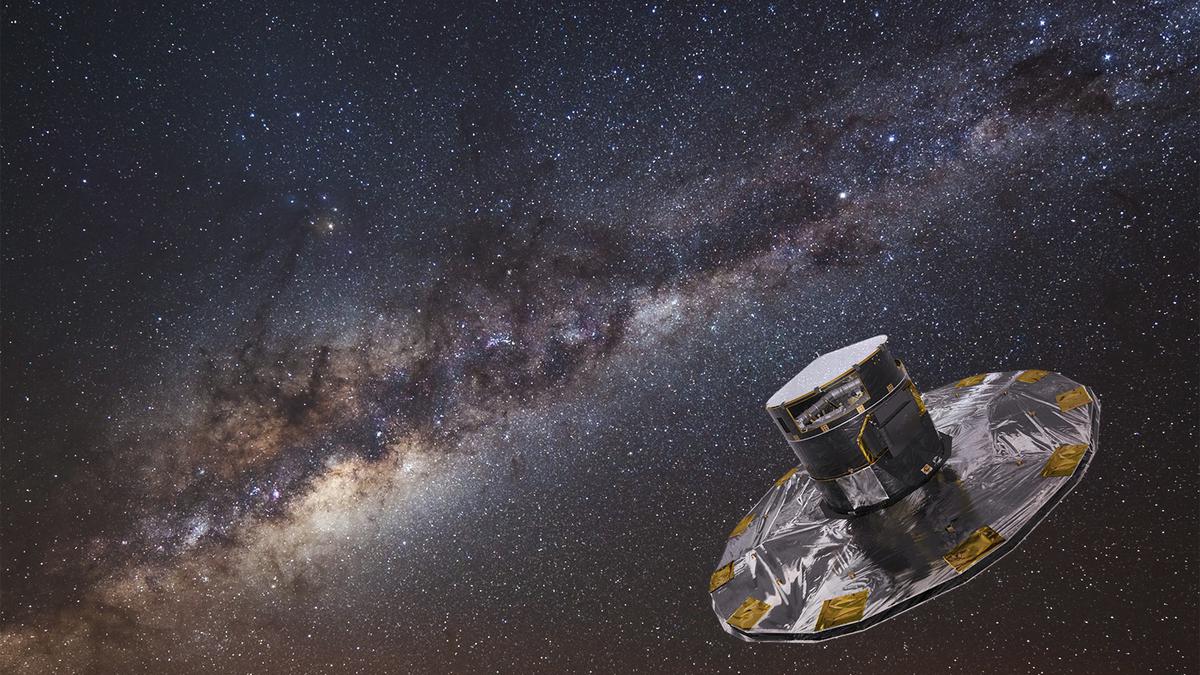
The European Space Agency’s Gaia mission released new data covering almost 1.8 billion stars in the Milky Way. It showed surprise phenomena called starquakes, which are massive movements on star surfaces. This mission also created the largest chemical map of our galaxy, helping experts learn about star age and composition.
The new data released by the European Space Agency's Gaia mission has revealed the surprise phenomena of 'starquakes' -- massive tsunami-like movements on the surface of stars
The story so far: The third dataset released by the European Space Agency's star-mapping Gaia probe, covering almost 1.8 billion stars in the Milky Way galaxy, has revealed an unexpected phenomena called 'starquakes', which are similar to earthquake-like movements but on the surface of stars.
The data has also revealed the largest chemical map of the entire Milky Way, showing the DNA of millions of stars, which includes their age, mass, chemical composition, colour, temperature, and metal content. Besides, the new data has also made discoveries about binary star systems, quasars, asteroids, and exoplanets.