
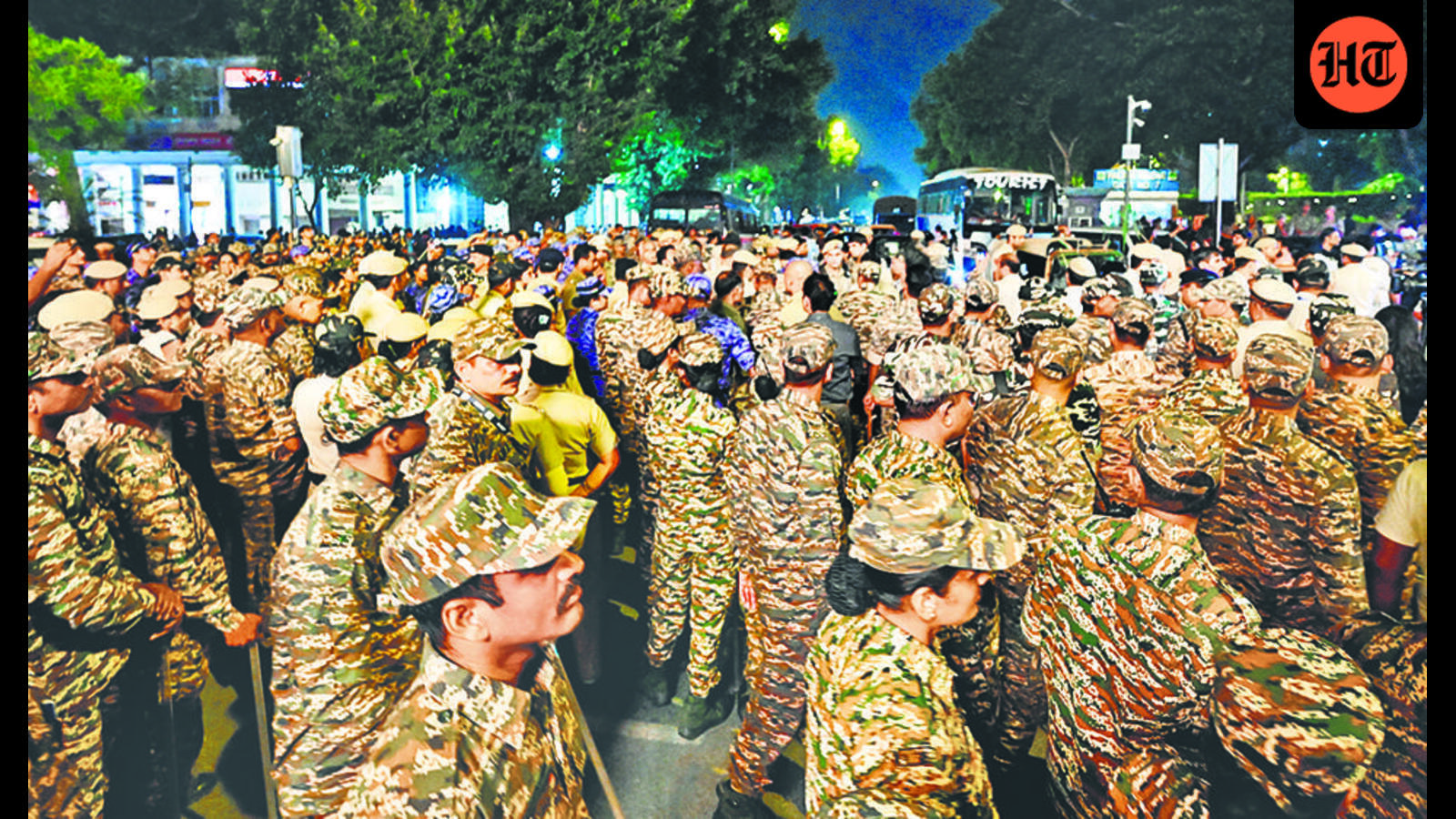
Delhi Police and DRDO are working on stronger body armour for use during riots. Officials said the upgrades aim to strengthen chest and back guards while making gear more ergonomic. The force got 2,400 body protectors in July. This initiative helps personnel perform better while managing crowds and handling confrontations.
The proposed upgrades aim to strengthen chest and back guards, particularly those used by women personnel, while making the protective gear more ergonomic, the officials explained. Stronger polycarbonate and polymer materials are being considered to improve resistance to impacts and sharp weapons, they said.
The exercise is intended to help personnel train more effectively and perform better while managing crowds and handling confrontations, police said. The materials being considered have been approved by the Union home ministry, officers added.
Senior officers stressed that the initiative was part of the force’s regular modernisation and preparedness efforts and was not prompted by the ongoing protests in the Capital.
In July, the Delhi Police ordered 2,400 body protectors after floating a tender in accordance with Centre’s guidelines. The force also procured protective gear for women personnel in July and August. The ongoing exercise with DRDO is aimed at testing newer designs and assessing whether they offer better protection.
To be sure, the force has periodically upgraded its protective equipment over the years. In 2019, DRDO developed gender-specific full-body protectors after women personnel had to use bulky gear designed for men. The ergonomically fitted suits were subsequently rolled out to central paramilitary units, including the Rapid Action Force (RAF), which is often deployed alongside the Delhi Police.
Following the 2020 Northeast Delhi riots, the police upgraded equipment used for crowd control, including tear-gas supplies, helmets and other anti-riot gear.
Another round of upgrades followed ahead of the 2023 G20 summit in Delhi, when the force strengthened its systems for handling high-risk situations. The equipment included advanced tactical jackets combining anti-stab protection with ballistic defence, as well as specialised devices such as Long Range Acoustic Devices (LRAD) and impact-absorbing “Anjali kits”.
The latest initiative will assess whether revised body armour can offer stronger protection without compromising mobility and comfort. Officers said improving the fit is particularly important for women personnel, as protective equipment must accommodate their body contours while allowing them to move efficiently in both training and deployment.