
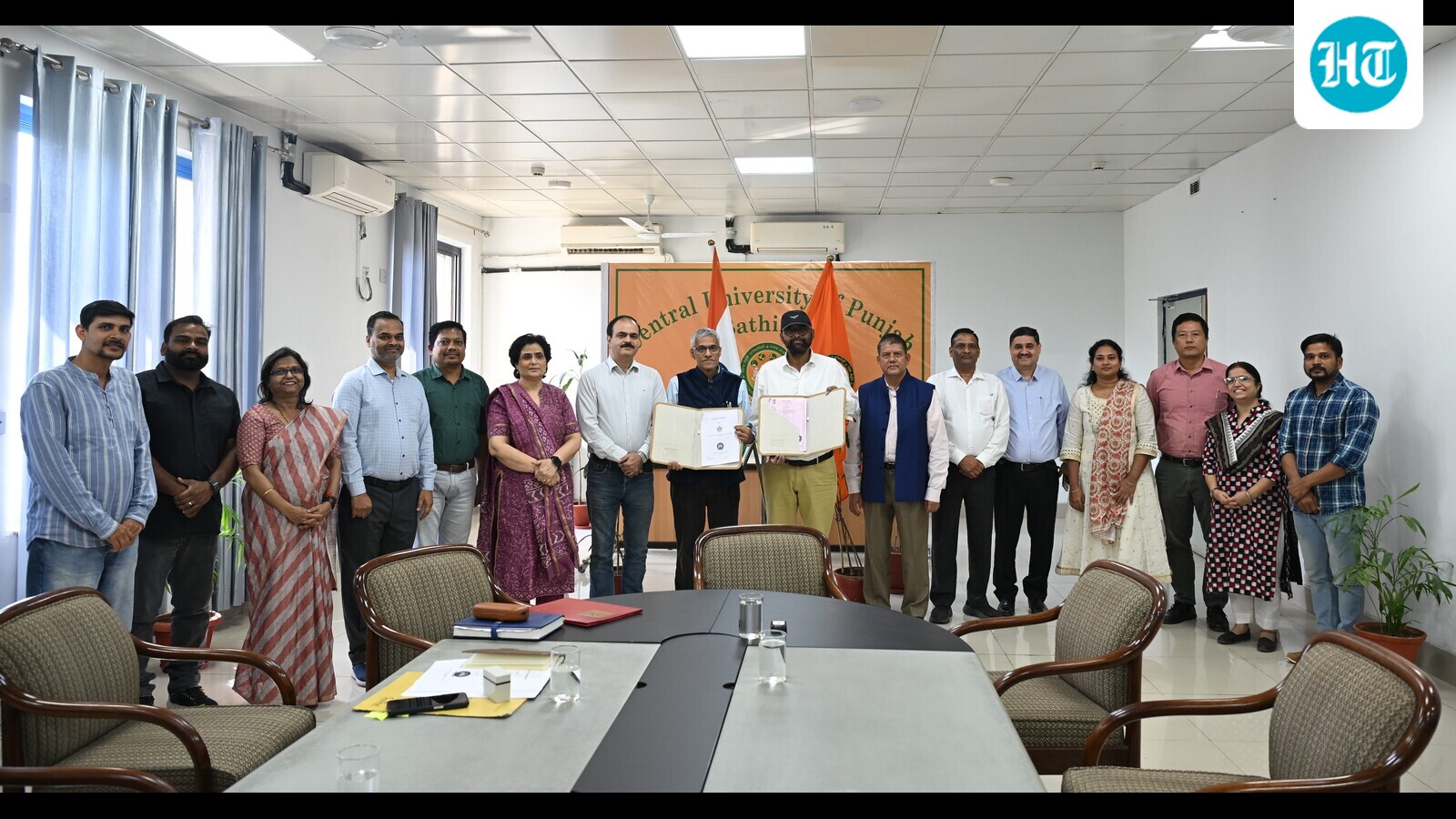
Central University of Punjab and the groundwater board signed a pact on Tuesday to map heavy metal contamination in Bathinda. Acting vice-chancellor Ramakrishna Wusirika said, "The collaboration aims to strengthen groundwater quality investigations and uranium contamination studies." Experts will collect samples to identify risky areas and ensure better water management.
CUP’s acting vice-chancellor Ramakrishna Wusirika said on Tuesday that the collaboration aims to strengthen groundwater quality investigations and uranium contamination studies under the National Aquifer Mapping and Management (NAQUIM) programme.
He said the studies would take place in the revenue blocks of Bathinda and adjoining Goniana.
The partnership will combine CGWB’s technical expertise with the university’s research capabilities to assess groundwater quality, identify contamination-prone areas and develop scientific inputs for sustainable groundwater management.
Under the MoU, the Chandigarh-based northwestern regional directorate of CGWB will collect and analyse groundwater samples during the pre-monsoon and post-monsoon periods.
The analysis will cover uranium, other heavy metals and major chemical components present in groundwater.
The board will also study groundwater quality data, prepare maps showing contaminant distribution, monitor groundwater levels and prepare the final study report with technical inputs from CU Punjab.
CUP said that the study will help identify areas where groundwater quality requires special attention, examine changes in contamination levels and understand the factors affecting the presence and movement of uranium in groundwater.