
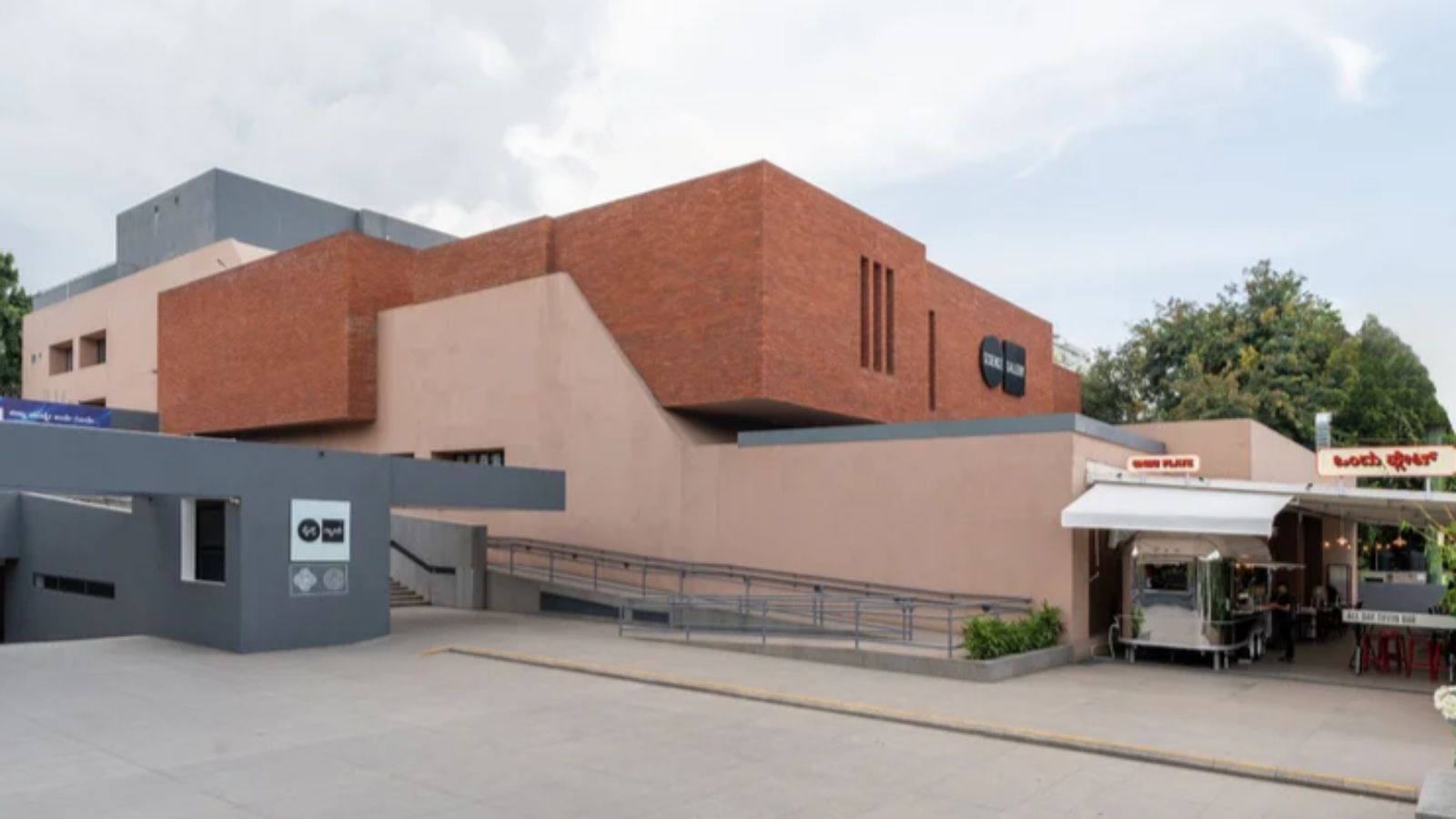
Science Gallery Bengaluru hosted the Namma Oota food festival over the weekend to explore sustainable food chains. Founding Director Jahnavi Phalkey said, "Our exhibitions at the Gallery are only the starting point, and learning does not end with a visit." The event brought together innovators, chefs, and women-led collectives.
Founding Director Jahnavi Phalkey said Science Gallery Bengaluru uses events like the Namma Oota food festival to give young people space to explore issues from health and ecology to culture and innovation.
Alongside its ongoing QUANTUM exhibition, Science Gallery Bengaluru hosted a Namma Oota food festival over the weekend, bringing together regional food producers, women-led collectives, chefs, and innovators to explore sustainable food chains, health, ecology, and culture.
Some attendees had contributed to earlier displays at the Science Gallery. One of these was Nuvedo, a mushroom-centric startup that focuses on items like mushroom-growing kits using ragi stalks as a growth medium and health supplements.
Jashid, a co-founder of the startup, said, "There was not much awareness about mushrooms, so we got into field guides and these kits. Knowledge is something that you learn through experience and not just via reading about it."
Nuvedo previously created a display called a "mycoblock chair", consisting of a chair covered in reishi mushrooms, for the Science Gallery.
Other attendees came from as far as Sikkim, such as Himalco, which sought to highlight the Northeast state's natural products, including its famed chillies, through pickles and other goods.
QUANTUM is the gallery's current series of artistic and scientific exhibits devoted to quantum science.
According to Jahnavi Phalkey, founding director of the Science Gallery, the event sought to build on themes explored in prior exhibitions such as CALORIE.
"The conversation about food, health, ecology and culture that CALORIE opened has not gone anywhere...our exhibitions at the Gallery are only the starting point, and learning does not end with a visit. What the festival floor looks like in the end is a mix of regional food practices, women-led collectives, chefs, and science-led experiments, each with its own way of explaining what it makes," she said.
Explaining the reasoning behind events like the food festival at the Gallery, which combines artistic and scientific themes each year, Phalkey said, "We want to be a public space for young people to come and find their own voices. We are agnostic about the form that engagement takes... food is something everyone has a relationship with so it offers a way into questions about health, ecology, culture and innovation..."
Other events dedicated to the exploration of food as a theme included workshops and quiz programmes. The gallery also hosted a lecture by conservationist and coffee expert Arshiya Bose on the themes of coffee and how it is linked to rural livelihood, as well as a curated co-reading of the anthropological book Metabolic Living by Harris Solomon, focusing on the experiences of housewives in balancing familial food preferences and biomedical or health demands.