
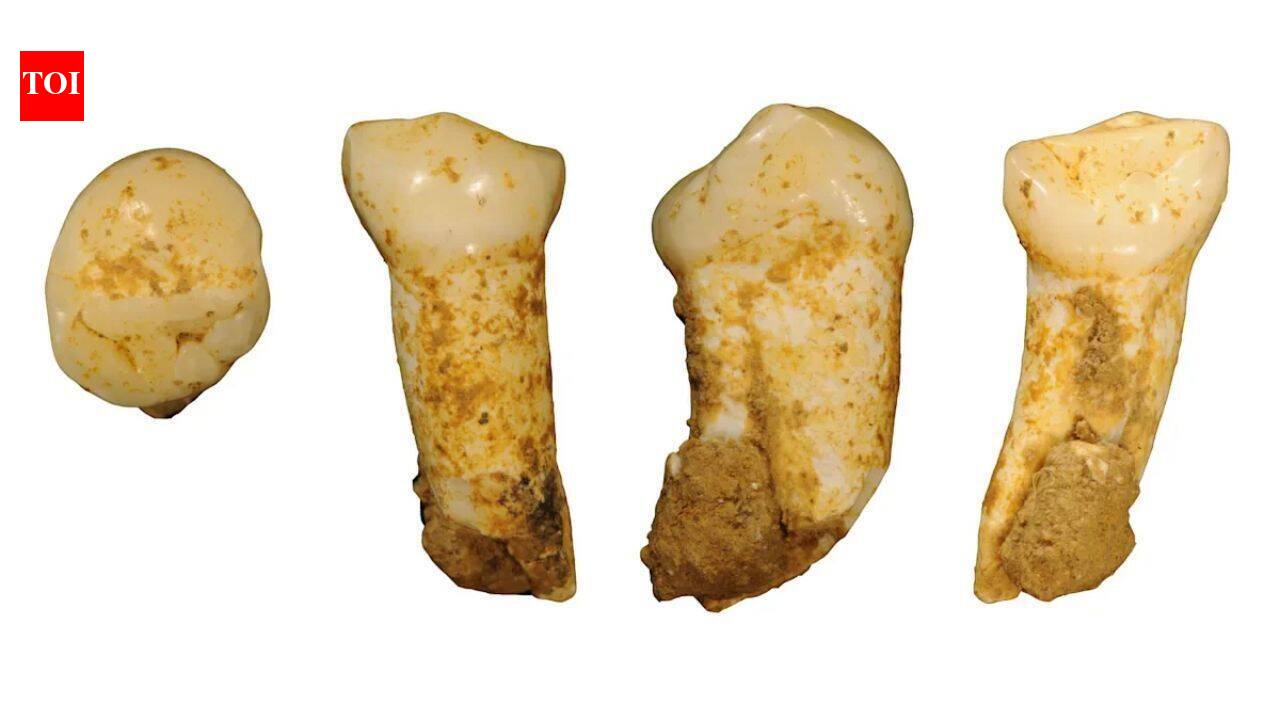
Four ancient teeth found in two Chinese caves suggest two human lineages lived in southern China around 100,000 years ago. Researchers said the findings show that the human family tree in prehistoric China was complex. One group linked to Denisovans, while the other remains an unidentified part of human evolution.
Four ancient human teeth found in two caves in southern China could provide new insight into the diversity of early human populations in Asia. The fossils, dating to about 100,000 years ago, suggest the possible presence of 2 distinct ancient human lineages in the region, including a group related to Denisovans and another whose place in human evolution is uncertain. The findings, published in the journal
Nature, suggest that the human family tree in prehistoric China may have been more complex than previously understood.