
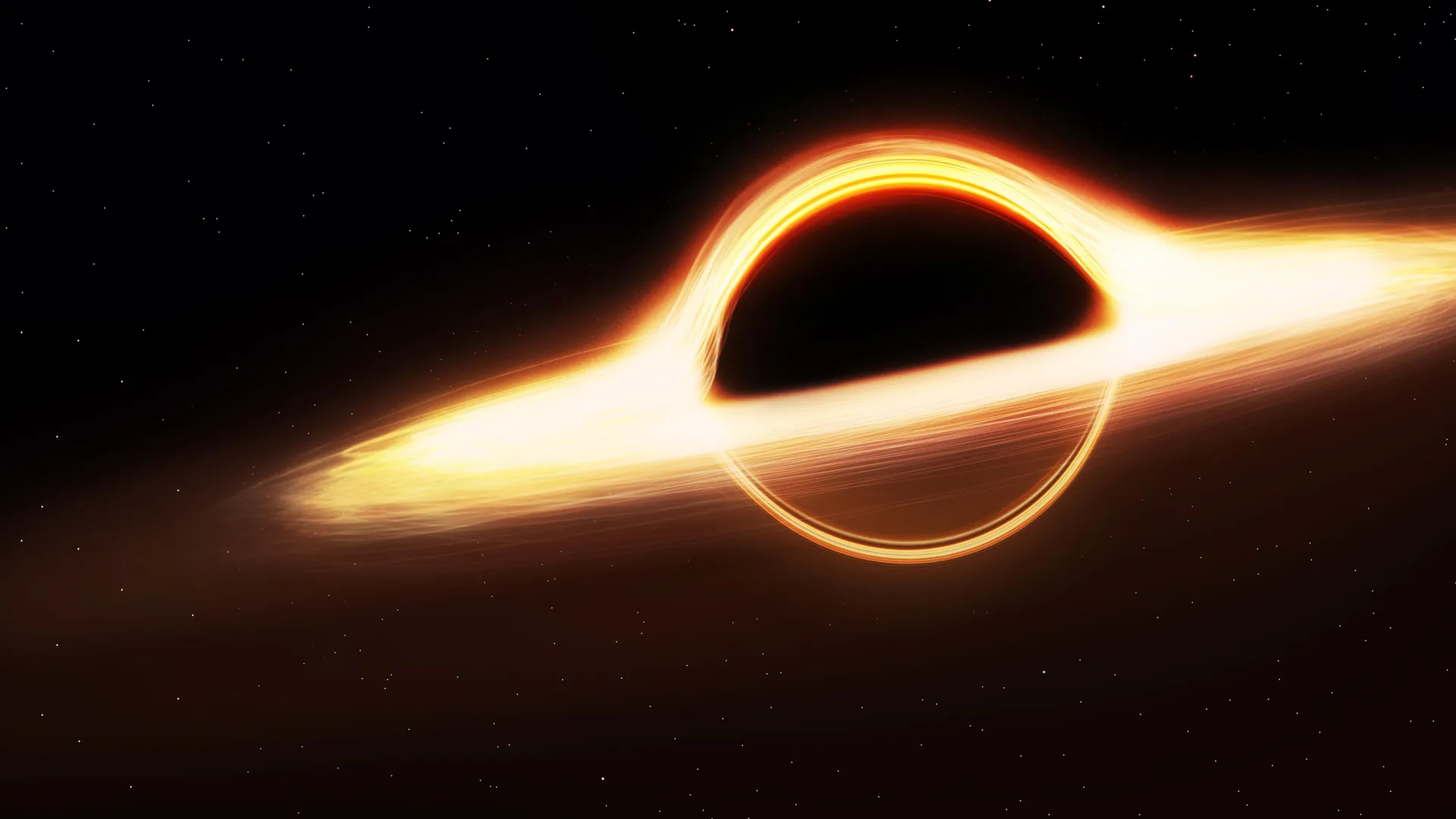
New research led by Caltech suggests many black holes formed from stars that never exploded. Scientists used gravitational wave data to find patterns matching these failed supernovae. Katerina Chatziioannou said, "Our data are showing that this group of black holes may have a common origin—they may be a distinct subpopulation."
New research led by Caltech has uncovered intriguing evidence that this quieter form of stellar death may help explain the origins of many black holes. Using gravitational wave observations from the LIGO, Virgo, and KAGRA detector network, researchers identified patterns suggesting that a distinct population of black holes could have formed from stars that never went supernova. Although the findings do not directly confirm the existence of these failed supernovae, they closely match theoretical predictions about how such black holes should be distributed.
The discoveries build on a decade of gravitational wave astronomy. LIGO, the Laser Interferometer Gravitational-wave Observatory, is funded by the National Science Foundation (NSF) and operates detectors in Louisiana and Washington. In 2015, the observatory made history by directly detecting gravitational waves for the first time. These tiny disturbances in spacetime were generated by two black holes colliding. Since then, LIGO has teamed up with the Virgo observatory in Italy and the Kamioka Gravitational-wave Detector (KAGRA) in Japan. Together, the network has recorded more than 300 black hole collisions.
A Hidden Population of Black Holes
"A vast majority of the merging black holes in the universe are about 10 times the mass of our Sun," says LIGO team member Katerina Chatziioannou, a Caltech physics professor and William H. Hurt Scholar. "Our data are showing that this group of black holes may have a common origin -- they may be a distinct subpopulation that failed to go supernova. These results represent a connection between the gravitational-wave data and underlying astrophysics we are trying to extract."
Chatziioannou led the study, which was published in Physical Review D. The lead author, Isaac Legred (PhD '25), is now a postdoctoral researcher at the University of Illinois Urbana-Champaign and completed the work while at Caltech. Jacob Golomb (PhD '25), a former member of Chatziioannou's research group who now works at Asari AI, also contributed to the research.
Despite decades of investigation, astronomers have yet to confirm a specific case of a failed supernova. The theory, however, has a strong scientific foundation. Researchers have proposed that many merging black holes weighing approximately 10 times as much as the Sun may have originated from stars that collapsed without exploding. In these mergers, either the heavier black hole or both black holes could have formed through this process. The Caltech team set out to determine whether existing gravitational wave observations supported that possibility.
A Mysterious Gap in Black Hole Masses
To investigate, the scientists examined the masses of black holes involved in 257 mergers detected by the LIGO, Virgo, and KAGRA network during the past decade. A striking pattern emerged. Black holes weighing roughly 10 times the mass of the Sun were exceptionally common, appearing in about three-quarters of the merger sample.
Even more surprisingly, the researchers identified a noticeable shortage of black holes weighing between 12 and 16 solar masses. This was the first time such a distinct gap had been found in the mass distribution, raising new questions about what determines the sizes of black holes when they form.
"We see 10 solar-mass black holes merging all the time," Legred says. "But why are, say, 14 solar-mass black holes so rare? The gap we see in the distribution of masses indicates there may be a special cocktail of internal physics that goes into forming the abundance of 10 solar-mass black holes."
The researchers also examined how quickly the black holes rotate, since their spin rates can preserve clues about the conditions under which they formed. They found that black holes near 10 solar masses tended to have spin rates concentrated within a smaller range than those of the broader black hole population (the spins are also influenced by how the black holes formed).
Taken together, the unusual concentration of black hole masses, the scarcity of objects in the 12 to 16 solar mass range, and the similarities in their rotation suggest that these black holes may belong to a distinct population with a shared formation history. One possible explanation is that many originated when massive stars collapsed directly into black holes without producing supernova explosions.
Gravitational Waves Offer Clues to Silent Stellar Deaths
Finding stars that disappear without exploding presents a major challenge for astronomers. Ordinary supernovae produce brilliant flashes that can be detected across enormous cosmic distances. Failed supernovae, by contrast, may leave little visible evidence of what happened, making it difficult to identify them through conventional observations.
"We can look up at the sky and try to study historical records of massive stars that failed to explode, but it's challenging because they just vanish without exploding, leaving a dark patch of sky," Legred says. "With this study, we show the gravitational-wave data are consistent with most binary black holes forming from a very special kind of failed supernova, but more research is needed. Black holes are born in some of the most extreme environments in the universe, so the prospect of better understanding their formation is very exciting."
By studying the gravitational waves released when black holes merge, scientists can investigate the origins of objects whose formation may have produced little or no visible explosion. The new findings provide another piece of evidence that massive stars can follow different paths at the ends of their lives, potentially revealing how a substantial fraction of the universe's black holes came into existence.
The research, titled "Low-mass failed supernovae and the 10 solar-mass peak in the merging black hole mass distribution," received funding from the National Science Foundation, the U.S. Department of Energy, and the Simons Foundation. LIGO is operated by Caltech and MIT.