
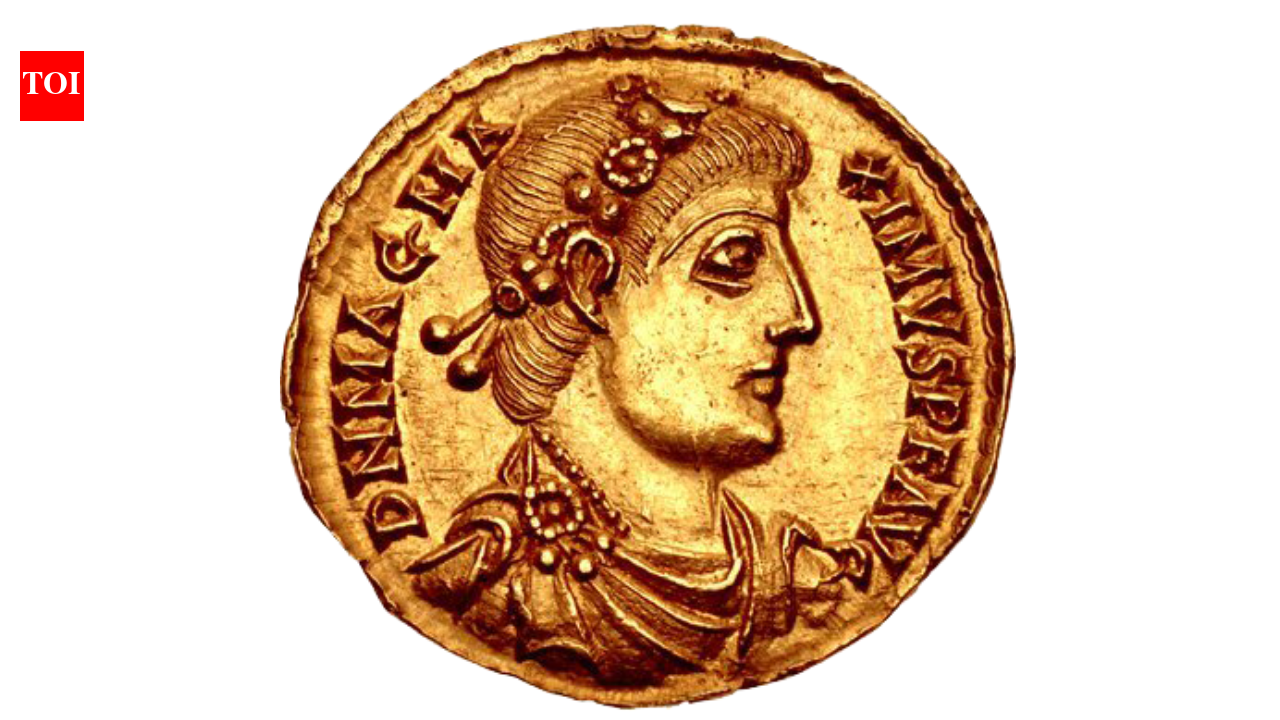
Archaeologist Mark Merrony discovered a Roman fort in Pembrokeshire, Wales, in 2024. The site near Frenni Fawr hill contains fourth-century coins and pottery, suggesting the medieval legend of Emperor Magnus Maximus is true. Merrony said, "If Magnus Maximus was there, there must have been an army there," confirming local history.
For nearly seventeen centuries, a Welsh legend has claimed that a Roman emperor camped beside a hill in Pembrokeshire. Historians could never confirm it, because no Roman military site had been found near the spot. That has now changed. Archaeologists have uncovered a heavily fortified Roman fort in the Preseli Hills, together with fourth-century coins, tiles, pottery and the remains of a headquarters building. The discovery suggests the medieval tale of Macsen Wledig may rest on real history. Here is who found the fort, what the legend says, what the dig revealed, and why it matters for understanding Roman Wales.
How archaeologist Mark Merrony found a hidden Roman fort near Frenni Fawr hill using satellite imagery
The fort was found by Mark Merrony, a leading Roman specialist at the University of Oxford, according to The Guardian. Merrony discovered it in 2024, about two miles, or three and a half kilometres, south-west of the summit of Frenni Fawr hill. Satellite imagery showed a convincing outline in an overgrown field. Shortly after he visited, a Roman tile caught his eye, the first of many. Merrony told The Guardian that the area is remote, yet the legend names the easternmost peak of the Preseli Hills, which is where the site lies. He was excited that this landscape holds the only Roman military site close to where the Mabinogion places the emperor, and "If Magnus Maximus was there, there must have been an army there."
What the medieval Welsh tale of Macsen Wledig says about the Roman emperor Magnus Maximus and his camp
The tale appears in the Mabinogion, a collection of medieval Welsh stories that blend legend, sorcery and marvels, which Merrony described to The Guardian as the Welsh counterpart of the Odyssey. In The Dream of Macsen Wledig, medieval storytellers used the emperor's name in Welsh to recount his rise to power. They described how, during his military manoeuvres, he pitched his camp at Frenni Fawr, which stands 395 metres, about 1,300 feet, high. Magnus Maximus governed Britain in the fourth century and campaigned against the Picts and the Scots, yet the idea that he also set up a camp in Wales had rested on folklore. Merrony told The Guardian that the legend has endured for nearly seventeen centuries.
Why the headquarters building, commander's house and 500-soldier size point to a Roman military fort
The fort measures 180 by 150 metres, sits on a slope with a commanding view, and was probably home to about 500 troops. Merrony told The Guardian that it resembles a playing card, with rounded corners, and has a perpendicular road. A geophysical survey, which maps buried remains without digging, confirmed a rectangular building in the middle of the enclosure and a larger rectangular building immediately to its south. Merrony said this arrangement fits a headquarters building facing east toward the enemy and a commander's house. Extensive compacted clay floors, a common feature of Roman military sites, were also uncovered, and even rut marks left by wagons have been preserved. Together, these features support Merrony's conclusion that this was a genuine Roman military fort.
Which finds from the dig, including two late fourth-century coins, link the site to the legend
Merrony, while going over the time before the dig began, said his brother Nick jokingly asked him to find a couple of coins that would prove the Magnus Maximus theory. Nick then returned with two coins from the late fourth century and asked whether they were any good, which left Merrony astonished. Merrony told The Guardian it is fascinating to consider that the coins may be linked to the tale of Macsen Wledig. Other finds so far include an unusual iron stylus, many pottery shards and large quantities of Roman tiles. The excavation, funded by Oxford University and crowdfunding, was one of several planned and has just finished.
Why the Pembrokeshire discovery challenges assumptions about Roman Wales and what the research will add
Merrony also said that the presence of a heavily fortified Roman auxiliary fort may help unlock the mystery of the legend. The Guardian reports that the discovery overturns assumptions that the area's Indigenous Celtic tribe lived peacefully alongside the Roman invaders. It also builds on Merrony's earlier work, which includes two Roman villas, at Ford in Pembrokeshire and at Cutteslowe in Oxfordshire, and a Roman road along the southern shoulder of the Preseli Hills identified in 2022, which challenged the idea that the Romans did not venture far into Wales. His research will appear in Antiqvvs, a quarterly magazine about archaeology, ancient art and history, and Magnus Maximus will feature in his book Lives of the Roman Emperors, which Taylor and Francis describes as presenting concise biographies of ninety-five rulers.