
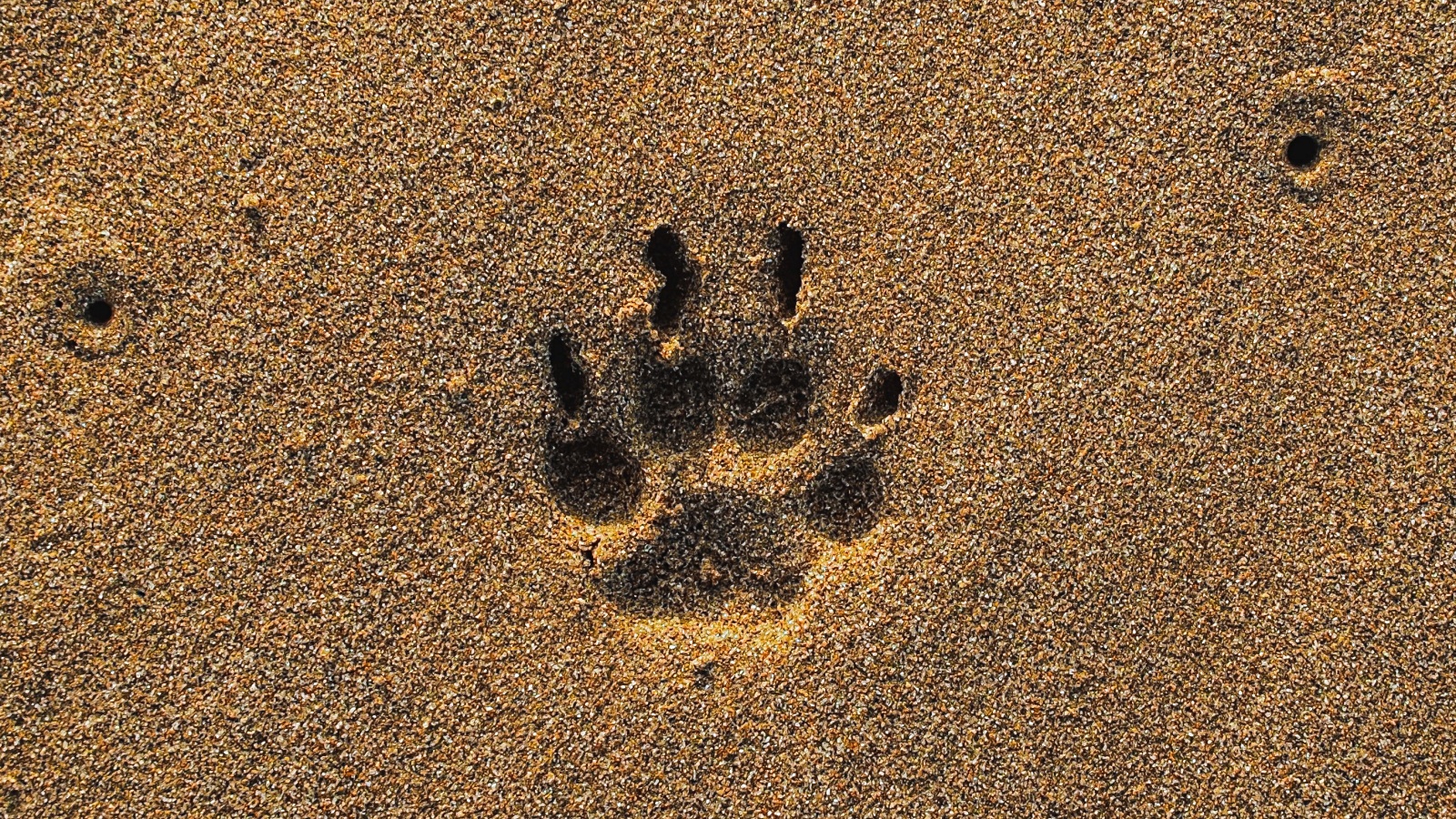
Archaeologists found a 4,000-year-old dog paw print on a mudbrick at the Tavşanlı Höyük settlement in Turkey. The dog stepped on the brick while it was still wet, leaving a mark that survived for centuries. Minister Mehmet Nuri Ersoy shared photos, calling it an unexpected trace of ancient life.
A 4,000-year-old dog paw print has been discovered on an ancient mudbrick at a Bronze Age settlement in Turkey. Researchers believe the dog stepped on the brick while it was still wet.
Dogs may have been leaving their mark on human history for much longer than we realise. Archaeologists in Turkey have discovered what appears to be a 4,000-year-old dog paw print preserved on an ancient mudbrick, offering an unexpected glimpse into the everyday lives of people in the Bronze Age.
Researchers made the discovery at Tavşanlı Höyük, one of the largest Bronze Age settlements in western Anatolia. Türkiye's Minister of Culture and Tourism, Mehmet Nuri Ersoy, shared photographs of the paw prints on social media, describing them as one of the unexpected traces of life uncovered at the archaeological site.
The mudbrick was reportedly recovered from the rubble of a Bronze Age building that collapsed following a fire. Researchers believe a dog stepped on the brick while it was still wet, leaving behind paw impressions that were preserved as it dried. Its age is estimated at around 4,000 years based on the archaeological context.
What do we know about the archaeological site?
The excavation at Tavşanlı Höyük has been underway since 2021, led by archaeologist Erkan Fidan of Bilecik Şeyh Edebali University.
The settlement covers approximately 45 hectares and has yielded evidence of human occupation dating back several millennia. Earlier archaeological investigations have uncovered ceramics, bones, burnt wood, flint and other materials, helping researchers understand how people lived in the region.
A study published earlier this year in the Coğrafya Dergisi Journal of Geography also documented evidence of ancient construction activities, fires and materials deliberately placed by humans between natural deposits.
Radiocarbon analysis of samples from the site has also been cited as evidence of human occupation dating back approximately 8,000 years, highlighting its significance for understanding the region's ancient history.
Have animals left similar marks in history?
This isn't the first time an animal has accidentally left a trace of its presence in an ancient object.
In 2013, a researcher identified ink smudges resembling cat paw prints across the pages of a medieval manuscript. Another reported discovery involved a cat that apparently walked across wet roof tiles being prepared by Roman builders around 2,000 years ago.
Like these findings, the paw print in Turkey offers a small but valuable glimpse into the relationship between humans and animals in the past.
While archaeologists may never know exactly what happened when the dog stepped on the wet mudbrick, the discovery reminds us that ancient history isn't just about monumental buildings, tools, and artefacts. Sometimes, even an accidental paw print can tell us something about the ordinary lives unfolding thousands of years ago.
Explore more captivating stories about pets and animals here, and make us your daily stop for the latest from the animal kingdom.