
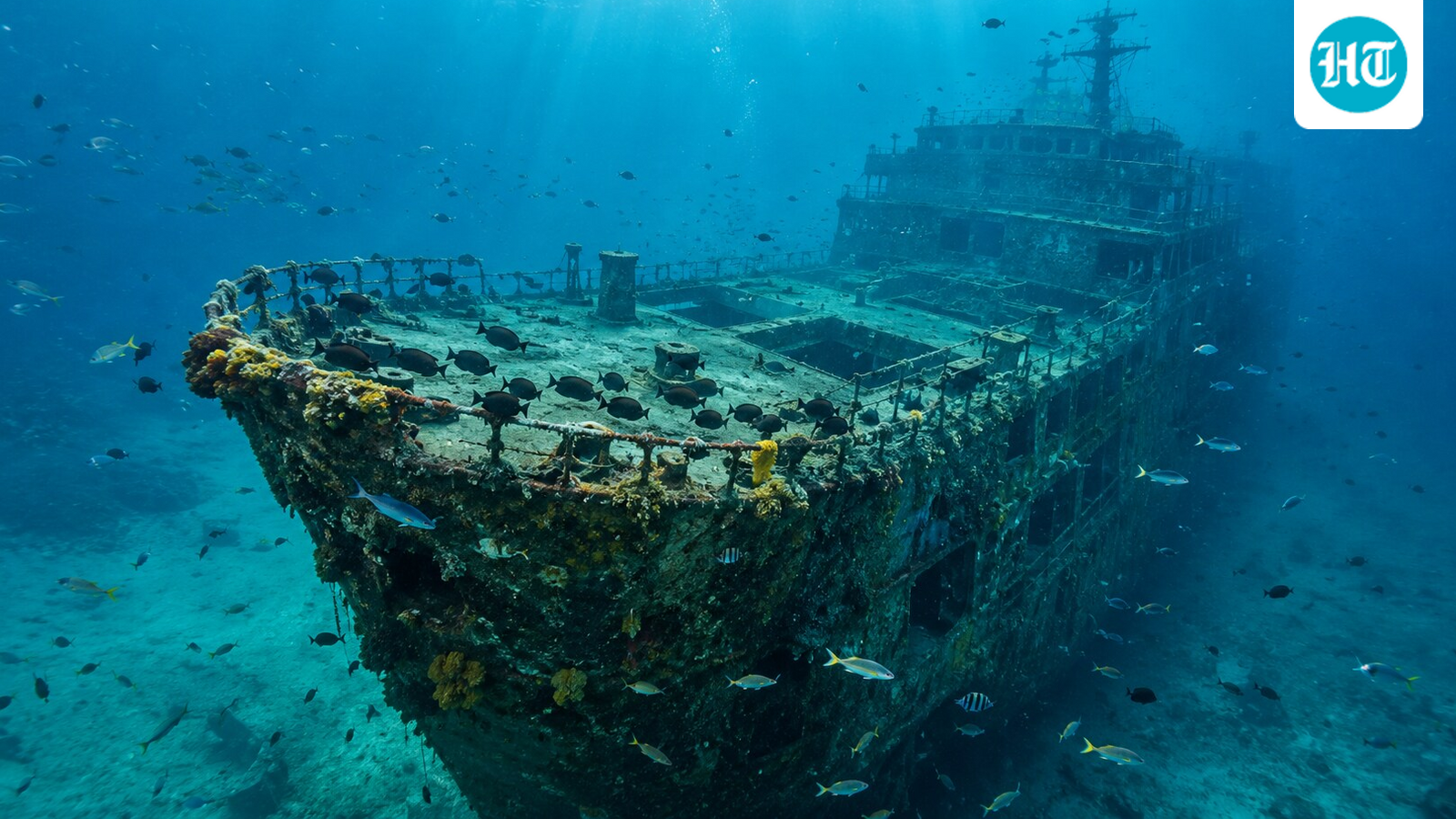
In 1991, New Jersey sank the 460-foot USS Algol off Shark River to create an artificial reef. The former Navy attack transport became the largest ship in the state’s program. Many experienced divers now use the deep site for training, as the massive steel structure provides a home for sea life.
What happens to a giant Navy ship when its job is done? Most of them end up as scrap metal. The USS Algol got a different ending. According to the New Jersey Division of Fish and Wildlife's A Guide to Fishing and Diving New Jersey Reefs, the state's reef program has used vessels ranging from 32-foot Coast Guard crew boats to the 460-foot Algol. The Navy ship was purpose-sunk off Shark River in New Jersey in 1991, and it became the largest ship in the state's reef program at that time.
A long Navy career
The Algol was an attack cargo ship, a kind of Navy ship designed to carry troops and supplies for landings from the sea. It was launched in 1943 as the James Barnes, but soon renamed Algol, after a star in the constellation of Perseus. It served in the Pacific during World War II and remained a commissioned Navy ship for more than 22 years. Then the ship sat in storage for years.
Then New Jersey's reef program gave it a whole new purpose. That's a pretty drastic career change for a ship built to support landings. The guide lists Federal Aid to Sportfish Restoration as the sponsor of the Algol. That money comes from taxes on fishing gear and boat fuels, so the project was funded by a fund related to fishing.
Sinking it on purpose
Transforming a ship into a reef requires some planning. A lot of work and effort went into cleaning the Algol and preparing it for the sinking process. It was then deliberately sunk to form a reef at Shark River Reef, almost 15 nautical miles away from the shore. Most of the material on that reef is rock, but the site also contains subway cars.
Shark River Reef is also one of the deepest artificial reef locations in New Jersey, with an average depth of about 125 feet. Since there are multiple levels of the Algol ship, it has been used as a training ground for experienced divers. The huge size of the ship and the deep water mean that this is a dive for experienced divers and not for beginners.
Why wrecks matter
Ships do more than just sit on the bottom. The guide described the sea floor of New Jersey as a sandy plain, mostly flat and bare, with a few ridges. A big steel ship gives a place a hard surface and some height. A 2000 review in Marine Fisheries Review provides more context.
Authors Frank Steimle and Christine Zetlin report that metal wrecks are often covered with anemones, barnacles, blue mussels, stone coral, and other small animals. Lobsters and crabs inhabit these reefs, and fish reported on reefs in the New York Bight, the offshore waters between New Jersey and Long Island that include Shark River Reef, include black sea bass, tautog, scup, and red hake. Wrecks can also provide fish refuge from trawl nets. Few studies, Steimle and Zetlin note, have examined the small animals that live on wrecks on the deeper shelf. As of that review, how much artificial reefs contribute to fish numbers was still debated. So it is safer to say a wreck like the Algol can help marine life than to say it always increases fish populations.
A record that ended
The Algol did not stay the biggest forever. Two decades later, its place was taken by the 563-foot-long USS Arthur W. Radford, a former Navy destroyer, which was sunk in Del-Jersey-Land Reef in August 2011. The reef was a joint project of the states of New Jersey, Delaware, and Maryland. New Jersey officials called the sinking a historic achievement.
The Algol is no longer the largest ship affiliated with the state's reef program. But it still matters. In 1991, it was the largest ship the program had ever sent down, and it turned a retired Navy attack cargo ship into a permanent underwater site. In the decades since, it has been a favorite stop-off for divers off the New Jersey coast. It is a story of a second life, showing how an old ship can still be useful and support marine life.