
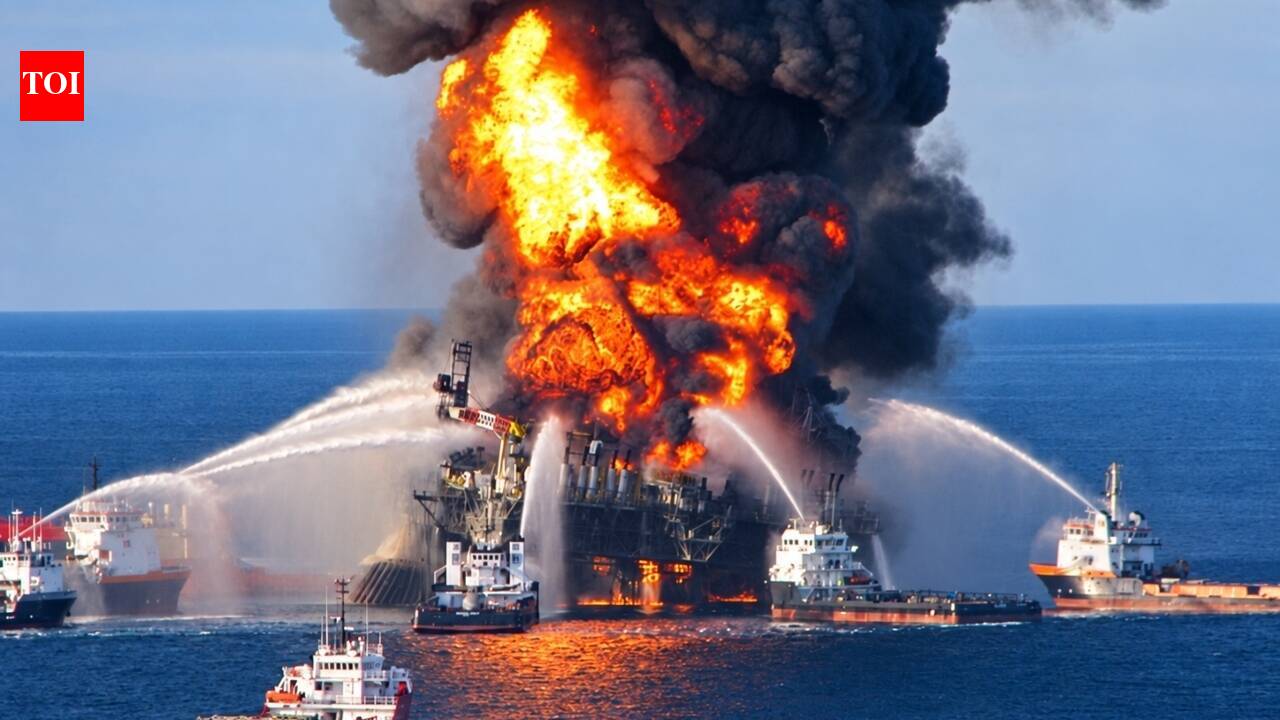
In April 2010, the Deepwater Horizon rig spilled 134 million gallons of oil into the Gulf of Mexico. A study showed deep-sea animal numbers fell 60-85% by 2023. Researchers said, "A decade of surveys revealed a sustained decline." These creatures remain vital to the food chain, yet recovery stayed elusive.
In April 2010, an explosion aboard the Deepwater Horizon drilling rig triggered an oil spill which released approximately 134 million gallons of oil into the Gulf of Mexico over 87 days. A long-term study published in the
Proceedings of the National Academy of Sciences (PNAS) revealed that populations of several groups of animals living in the waterbody's deep ocean remained substantially below levels recorded in 2011. A reduction of 60-85% was found by the study, with little evidence of recovery in later surveys through 2023. While researchers have identified the disaster as the most plausible explanation for the decline, their study does not necessarily establish the exact contribution of the spill to every population change.A decade of surveys revealed a sustained declineThe research was conducted by scientists associated with the Deep-Pelagic Nekton Dynamics of the Gulf of Mexico (DEEPEND) consortium. The team examined pelagic nekton, animals that swim in the water column instead of remaining permanently on the seabed. Fish, crustaceans and cephalopods such as squid and octopuses are all included in the pelagic nekton. Although many of these animals are relatively small, they occupy an important position in the marine food chain, transferring energy from smaller organisms to larger predators.
The researchers established their initial benchmark through intensive sampling that was conducted over around nine months in 2011, about a year following the spill. They compared those observations with nine subsequent surveys conducted between 2015 and 2023. During this period, abundance declined sharply in several major groups. Fish numbers reportedly fell by 63.5%, large crustaceans by 62% and cephalopods by 59.7%. Several other groups experienced severe reductions: krill declined by approximately 72%, while lanternfish also suffered substantial losses. Overall, the reported declines ranged from 60% to 85%, depending on the taxonomic group examined.An important limitation is that the initial sampling took place in 2011, after the disaster. The team thus uses a post-spill baseline to compare subsequent populations to, rather than using baseline data before the April 2010 spill incident. This shows a considerable reduction from the baseline to subsequent years, implying that there is a gradual ecosystem collapse over time. However, they do not quantify the total difference between pre-spill and subsequent population data.Independent measurements strengthened the findingsAcoustic surveys were also used by the researchers to check the results from net sampling. Scientific echosounders sent sound waves through water and measured the signals reflected by marine organisms. This gave an independent indicator of animal abundance and biomass. Additionally, the acoustic data showed a decline, with total backscatter, a measure of reflected sound used as a proxy for biomass, falling by nearly 40% in the upper ocean layer during nighttime observations.Furthermore, the study identified reductions in genetic diversity among important groups, including lanternfish. Genetic diversity can influence how populations respond to environmental changes, diseases and other pressures. Therefore, its decline could complicate recovery. Together, the population and genetic findings suggest that the changes extend beyond a temporary fluctuation in the number of animals caught during surveys.Why scientists suspect the oil spill as the cause of declineThe researchers investigated whether other environmental factors could explain the declines. They analysed the variables including temperatures, oxygen availability and food supply but found no naturally occurring factor that consistently corresponded with the observed changes. As the reductions began following the Deepwater Horizon disaster, the authors identified the spill as the most plausible reason. The disaster released oil from the Macondo well into deep water, thus exposing marine organisms and habitats to petroleum compounds and associated contaminants.The latest surveys examined in the study extend through 2023, and the results suggest that several deep-pelagic animal groups remained below their 2011 levels. Therefore, the study provides evidence of a decline that persisted for more than a decade after the disaster. The findings underscore the vulnerability of deep-ocean ecosystems, which can be difficult to monitor despite their importance to marine food webs and ocean processes.