
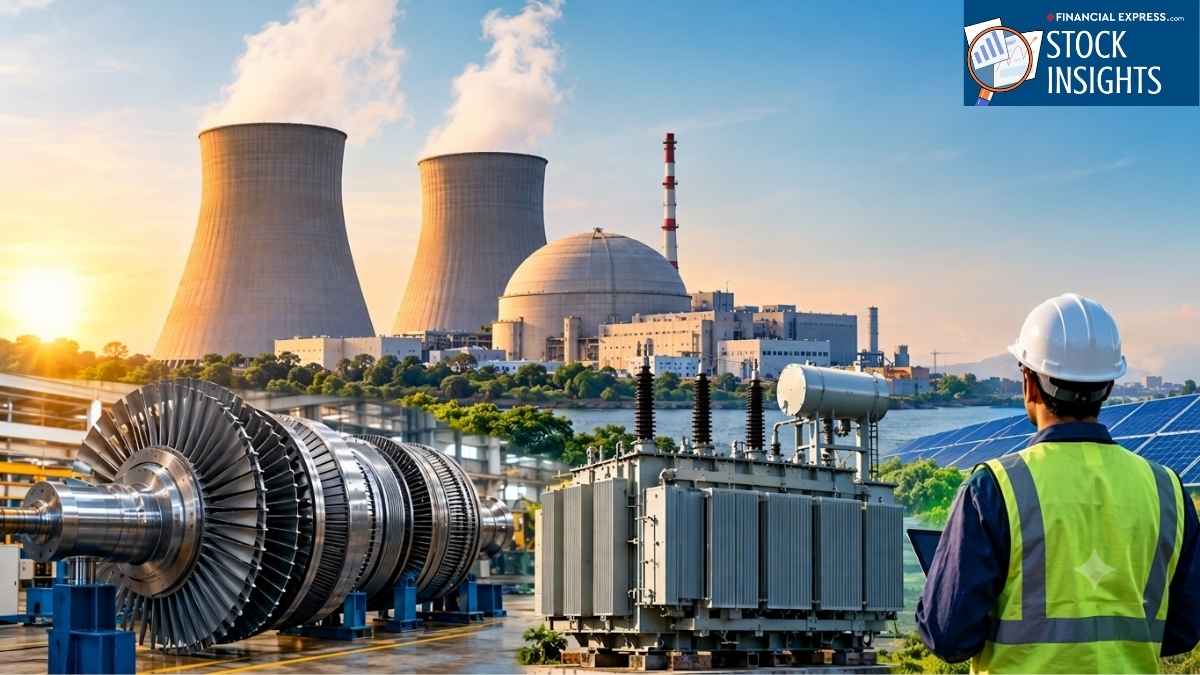
India aims for 100 GW of nuclear capacity by 2047 to power its growing data centers. The government said, "Nuclear power is a baseload source of electricity available round the clock." With data center capacity set to reach 12 GW by 2030, nuclear energy offers a reliable, clean power solution.
India is leading a rapid data center boom -- with capacity projected to reach 12 GW by 2030. The expansion comes in tandem with surging energy demand and growing water and land pressures. Nuclear energy may provide a potential solution as the Indian government eyes a target of 100 GW capacity by 2047.
"India's energy demands are growing rapidly and its clean energy commitments are firm. Nuclear power is a baseload source of electricity available round the clock with lifecycle emissions comparable to renewables such as hydro and wind. It is uniquely placed to meet the always-on power needs of data centers, advanced industries, and emerging technologies," PIB wrote in a recent release.
The country presently operates 24 nuclear power reactors with a total installed capacity of 8.78 GW. Nine additional reactor units with a combined capacity of 7.5 GW remain under construction. The Government has also approved 10 indigenous Pressurized Heavy Water Reactors in fleet mode and pre-project activities for two 500 MW Fast Breeder Reactors.
$6.8 billion data center market with 12 GW capacity
The India Data Center Colocation Report 2026 estimates that the market is expanding by 25.5% annually to reach $7.31 billion in 2026. A KPMG report estimated in July that the market size would increase from approximately $1.7 billion in FY26 to $6.8 billion by FY30 -- more than double its current market share of 2-3% in FY26 to reach about 5% by FY30.
According to a recent Wood Mackenzie report, the country will see its operational data centre capacity increase from 2.2 GW in 2025 to 12 GW by 2030 at a compound annual growth rate of approximately 40%. The global research and data analytics firm noted that "convergence of hyperscale capital, AI workload growth and a decade of policy support" had created the conditions for India to rival any market in Asia-Pacific. A separate discussion paper by the Policy Consensus Centre outlined a somewhat more modest growth rate -- estimating that capacity could rise to 4.5-9 GW by 2030.
Modern data centers generate massive amounts of heat and require complex cooling systems that often consume nearly as much electricity and water as the computers themselves. AI has made the problem significantly worse with higher resource consumption per square foot and a constant strain on resources. According to an analysis published by the International Energy Agency, a typical AI-focused data center "consumes as much electricity as 100,000 households". The IEA warned that the largest data centers now under construction would "consume 20 times as much".
The 'India's Data Centre Landscape: Powering the Digital Economy' report published by WoodMac predicted that data centre electricity demand would also grow 20-fold by 2040 -- from 10 TWh in 2025. It is expected to account for 7% of the total electricity demand. The report added that states with "liberalised open-access frameworks and competitive intra-state transmission charges" were now positioning themselves as preferred hubs for new capacity, as power procurement strategy increasingly determines site selection.
Iran war and data center boom
The narrow waterway between Iran and Oman has become the biggest energy pressure point of 2026 amid continued conflict in West Asia. Disruptions around the Strait of Hormuz expose a structural vulnerability that has persisted despite diversification efforts and multi-country negotiations. India imports nearly 90% of its crude and about 60% of its LPG requirements. A vast majority of these energy resources move through the Strait of Hormuz -- with any strain on the route increasing freight cost, putting the rupee under pressure, and escalating inflation risks.
"The digital technology companies are signing several PPAs with major nuclear power companies and are even restarting mothballed nuclear power plants for their surge electricity needs," a KPMG report outlined in March.
The growth of AI and cloud computing has also created an unprecedented demand for electricity this year. According to 2026 predictions shared by Deloitte, the Indian data center sector will see electricity demand rise to approximately 57 TWh by FY2030. It also projects that data centers' share of global electricity consumption will rise from approximately 0.8% to around 2.5% to 3%. KPMG noted that major tech firms had responded by turning to nuclear energy as a clean, reliable, and scalable solution to power their operations.
"The energy density of nuclear power, the prospect of clean and emission-free power, and the most crucial advantage offered by the baseload characteristics have prompted several major AI and digital technology organizations (like Google, Meta, and Amazon) to turn towards nuclear power to power their expanding fleet of data centers," the report added.
Nuclear as a crucial alternative
Nuclear power offers a lucrative alternative to traditional energy sources and even renewables. It typically operates at capacity factors above 85% and a nuclear megawatt can deliver several times the annual electricity generated by a solar megawatt. It also requires far less land for production and operates for up to 80 years -- as compared against 25 years for most renewable assets and even shorter lifespans for batteries. It can also strengthen grid stability by providing firm power and system inertia as India eyes 500 GW by 2030 and net zero emissions by 2070.
According to a KPMG paper published in mid-May, achieving 100 GW of nuclear capacity by 2047 would require annual additions of roughly 4 GW to 5 GW from today's base. That scale-up will also require accelerated fuel expansion, a broader uranium supply strategy, commercial progress on the fast breeder reactor to program and stage 3 reactor pathways, as well as a major expansion of India's nuclear workforce. The report titled 'Atoms for net-zero: A 100 GW bet on India's nuclear expansion' outlined a strategic roadmap that would see India scale its nuclear power to 22 GW by 2032 and 100 GW by 2047 -- offering a firm, reliable, low-carbon electricity option.
India holds one of the largest thorium reserves in the world alongside limited uranium reserves. Nuclear power has consistently accounted for around 3% of total electricity generation -- with power plants generating 56,681 million units of electricity in 2024-25. According to an official release, capacity is set to increase nearly 3x in the coming years. Installed capacity is projected to reach 22.38 GW by FY32 as indigenous 700 MW and 1,000 MW reactors are developed through international cooperation. New Delhi has also signed inter-governmental agreements on Civil Nuclear Cooperation for peaceful purposes with 18 countries.
The government announced the nuclear energy mission in FY26 with an allocation of Rs 20,000 crore towards design, development, and deployment of small module reactors. At least five indigenously designed SMRs are to be operational by 2033 while the Bhabha Atomic Research Centre leads the development of next-generation reactor designs. This includes the 200 MWe Bharat Small Modular Reactor, the 55 MWe SMR-55, and a high-temperature gas-cooled reactor of up to 5 MWth (megawatt thermal) designed for hydrogen generation.
The Sustainable Harnessing and Advancement of Nuclear Energy for Transforming India (SHANTI) Act was passed earlier this year to consolidate and modernise the nuclear legal framework. It also enables limited private participation in the nuclear sector under regulatory oversight.
High cost and supply chain bottlenecks
According to a blog post by KPMG, nuclear power is a long-life asset class that comes with significant capital requirements ranging from $2 billion to $6 billion per gigawatt. The Indian nuclear energy mission had earmarked ₹20,000 crore for the development of five indigenous small module reactors. The sector was also opened to private participation in 2025 -- Considered essential for capital mobilisation and rapid expansion. Private entities are also needed to accelerate commercialisation, technology transfer and supply chain readiness for India to scale up its energy capacity.
The possibility of regulatory and licensing delays adds a secondary challenge to expansion. The SHANTI Act introduced a single composite license that covers building, owning, operating, and decommissioning of nuclear plants. No nuclear licenses have been granted so far as the government continues to finalise the operational rules and enforcement codes.
The KPMG report also flagged the possibility of fuel supply constraints and the need for investment in enrichment and precision-engineered fuel fabrication for future reactor classes. It warned that long-term dependence on imported fuels for advanced reactors would be "strategically unwise". Another point of concern was the lack of a fully standardised long-term national framework for spent fuel management, high-level radioactive waste handling, and deep geological storage stewardship.