
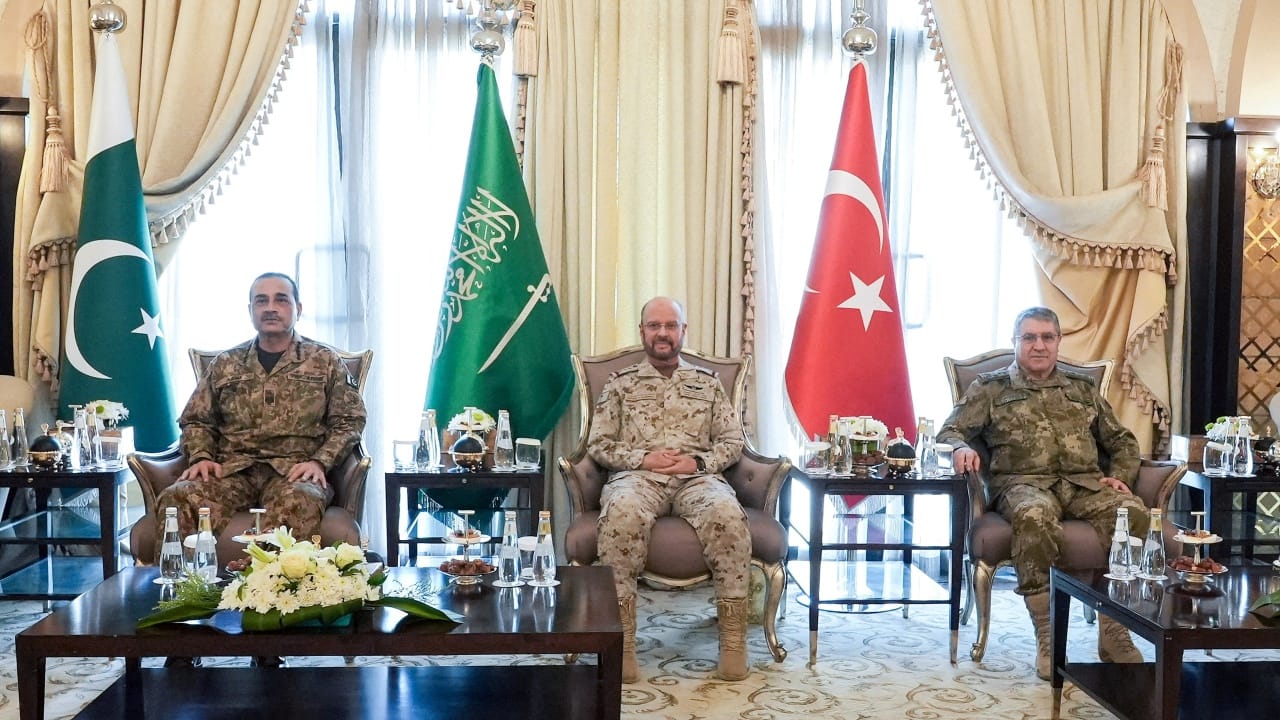
Pakistan’s military promised Saudi Arabia "whatever support is needed" as Houthi attacks intensify. Army spokesperson Lt Gen Ahmed Sharif Chaudhry said Saudi security is paramount. However, Interior Minister Mohsin Naqvi described the August 7 Makkah Joint Defence Agreement as a tool for peace, leaving Islamabad’s actual military commitment unclear to many.
Pakistan's military is promising Saudi Arabia "whatever support is needed" as Houthi attacks intensify, warning that a collective response could follow if deterrence fails. But Interior Minister Mohsin Naqvi is simultaneously projecting the Makkah defence agreement as an instrument of peace, not war, exposing a difficult question for Islamabad: how far is it actually prepared to go to defend its Gulf ally? The contrasting messages come at a sensitive time for Pakistan, Saudi Arabia and Turkey, which signed the Makkah Joint Defence Agreement on August 7. Under the pact, an armed attack against one member is to be treated as an attack against all three. Yet as the agreement faces a real regional security test, Islamabad's public messaging appears caught between threatening collective military action and reassuring the region that the alliance is not intended to fuel another conflict. 'Whatever support is needed': Pakistan Army signals readiness Pakistan Army spokesperson Lt Gen Ahmed Sharif Chaudhry said Saudi Arabia's sovereignty, territorial integrity and the security of the Two Holy Mosques were "paramount" and "non-negotiable" for Pakistan. In an interview with Independent Arabia on Sunday, he said Islamabad was already providing assistance and would continue to do so, without specifying the nature or extent of the support. "So whatever support is needed to do that is being provided and will be provided," Chaudhry said. He described Pakistan's reaction to the Houthi attacks as one of "anger" and insisted there could be no "ifs and buts" over Saudi Arabia's security. Citing Article 51 of the UN Charter, which recognises the right to individual and collective self-defence, he warned that the alliance could respond collectively if a member came under attack. "If that deterrence doesn't work, then that deterrence has to be re-established by all means that are available to the three countries," the military spokesperson said. The language is forceful, but the operational details remain undisclosed. Chaudhry did not clarify what support Pakistan was providing, what would trigger a direct military response or what form that response could take if attacks continued. Mohsin Naqvi's 'peace, not war' message complicates the picture On the same day, Interior Minister Mohsin Naqvi offered a more conciliatory description of the agreement while addressing the Global Security Forum in Doha. Naqvi said Pakistan had made every possible effort to bring the United States and Iran to the negotiating table and remained committed to preventing further escalation. He praised Qatar's mediation efforts and highlighted the need for sustained diplomatic engagement. "Peace cannot be achieved in a single meeting. It requires patience, trust and continuous efforts," Naqvi said. Describing the Makkah defence agreement, he presented it as evidence of Islamabad's commitment to regional security and stressed that it was aimed at promoting peace rather than war. The contrast with Chaudhry's warning is striking. While the military spokesperson invoked a response "by all means" if deterrence failed, Naqvi emphasised dialogue, restraint and the prevention of escalation. The two positions are not necessarily incompatible, since a defence pact can seek to deter attacks while leaving room for diplomacy. But Pakistan has not publicly explained how its readiness for a collective response would operate alongside its efforts to prevent a wider conflict. A defence pact under pressure before its limits are clear The Makkah agreement commits Pakistan, Saudi Arabia and Turkey to collective defence against an armed attack on any one of them. Pakistan has repeatedly described the pact as defensive and not directed at any specific country. The immediate challenge is whether the arrangement can provide a credible security guarantee without dragging its members into a broader regional confrontation. Chaudhry said Pakistan was engaging with all parties, including Iran, to exercise restraint and reduce tensions. He also argued that widening the conflict would benefit those seeking instability. Yet the military's warning that deterrence would have to be restored "by all means" leaves open the possibility of a more forceful response if diplomacy fails. Without greater clarity on the threshold for intervention, the scope of military assistance and the decision-making process among the three members, the pact's practical limits remain uncertain. Islamabad wants to be both security guarantor and peace broker Pakistan's position reflects two ambitions that could become difficult to balance: presenting itself as a dependable military partner for Saudi Arabia while retaining a diplomatic role in efforts to contain regional tensions. Naqvi highlighted Pakistan's attempts to facilitate talks between Washington and Tehran, including efforts involving Field Marshal Asim Munir and Qatar's prime minister during earlier negotiations. Chaudhry, meanwhile, said Pakistan was sending "very strong signals" that collective deterrence was already in play. The test for Islamabad will come if Saudi Arabia faces further attacks and expects more than assurances. A pact that promises collective defence but leaves the nature of that commitment unclear risks raising expectations that its members may later struggle to meet. For now, Pakistan is projecting both military resolve and diplomatic restraint. What remains unanswered is how the Makkah alliance would reconcile those positions if the conflict escalates and Saudi Arabia seeks a concrete response rather than another promise of support.