
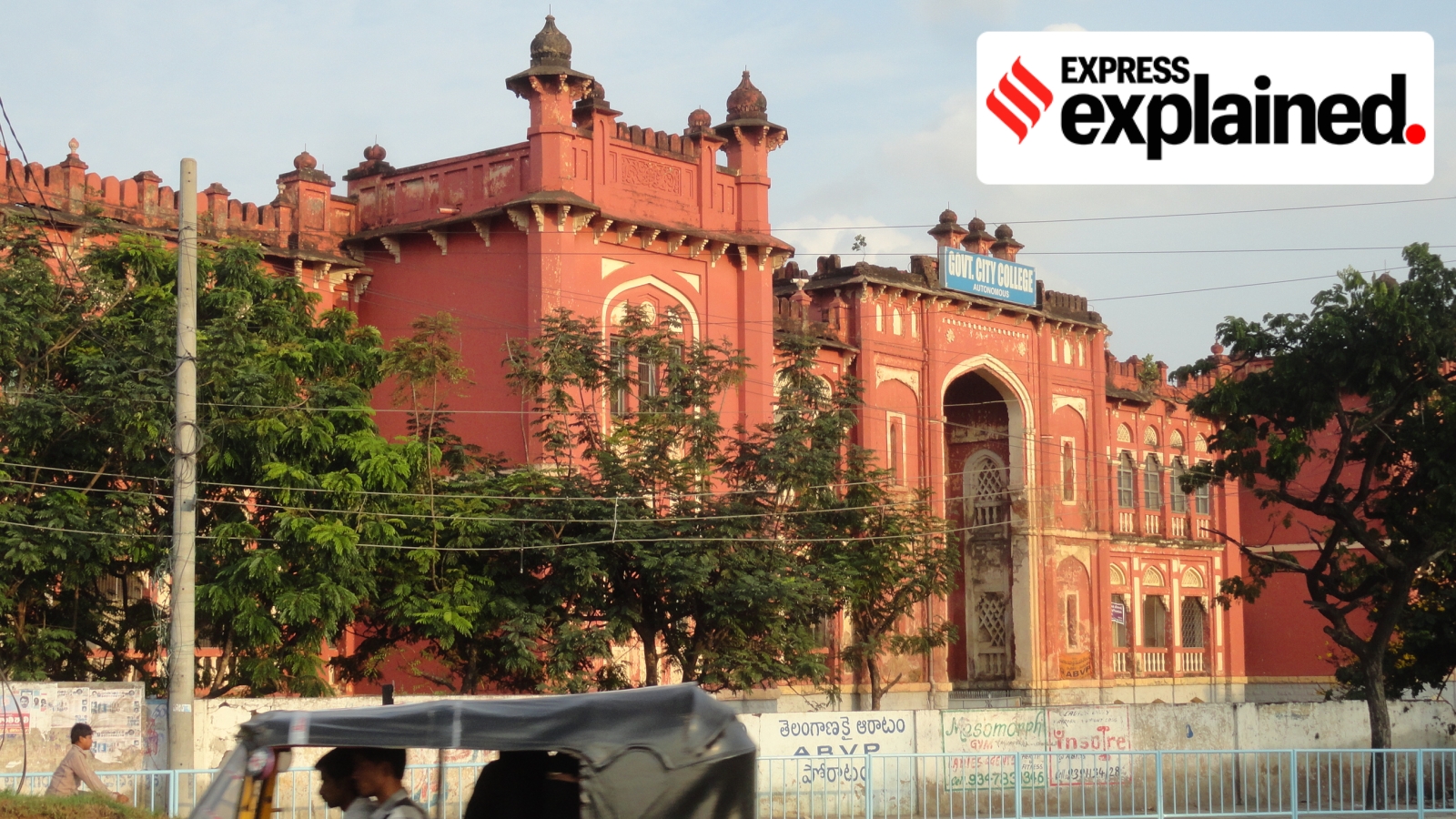
The Telangana government will scrap intermediate colleges starting from the 2027-28 academic year. Classes 11 and 12 will now merge into the school system. Chief Minister A Revanth Reddy said, "One big reason for this is that intermediate colleges are often located far away." This move aims to reduce dropouts.
From the 2027-28 academic year, the state's intermediate or junior colleges will cease to exist, with Classes 11 and 12 integrated into the school system. We explain the decision and how it will be implemented.
The Telangana government recently decided to do away with intermediate colleges -- also known as junior colleges -- and replace them with Classes 11 and 12. From the next academic year (2027-28), the two grades will be integrated into the school system, with existing schools with grades up to Class 10 adding two more and conducting classes.
We explain the rationale behind the state government's decision and how it will be implemented on the ground.
Why did the Telangana government decide to scrap Intermediate colleges?
A number of students, especially girls, drop out of the education system after passing Class 10. Students, including a majority of those hailing from socially and economically backward communities, complain of the hassle of approaching different junior colleges to get admissions.
The present system takes students through the rules and regulations of two separate education boards: School Education and Intermediate. School education up to Class 10 is managed by the School Education Department and culminates in the Secondary School Certificate (SSC) public examination conducted by the Board of Secondary Education, whereas Intermediate education is governed by the Telangana Board of Intermediate Education. Right to Education and academic activists note that the transition for students to a different type of institution after their Class 10 board exams is difficult and tiresome.
A few days after his government scrapped the Intermediate system, Chief Minister A Revanth Reddy, who holds the Education portfolio, said that the high dropout rate after the 10th grade was a big worrying factor. "One big reason for this is that intermediate colleges are often located far away,'' he said. Many students from vulnerable communities who cannot afford travel and other expenses associated with attending junior colleges located far away simply discontinue education.
According to the government, about 40% of students -- mostly girls and those from Dalit, tribal, and minority groups -- leave school after Class 10. The dropout rates are significantly lower in institutions like Kendriya Vidyalayas, Navodaya Vidyalayas, and Kasturba Gandhi Balika Vidyalayas, which offer continuous education up to the 12th grade, the government said.
How will the decision be executed at the ground level?
In the 2025-26 batch, over 10 lakh students had enrolled in approximately 1,750 junior colleges. All the classrooms in these junior colleges will be converted and will be known as Class 11 and 12. The transition from Intermediate to School Education will affect around 11 lakh students starting next year.
As the Telangana Board of Intermediate Education will be merged with the School Education Board, the junior colleges will be used to conduct classes for 11th and 12th grades wherever possible. Schools which don't have enough infrastructure to add more classrooms for two more grades can conduct them under the school's name in former junior colleges located nearby. Students who pass Class 10 from a school can get admission in the same school for Classes 11 and 12 instead of searching for junior colleges.
The school education system will be divided into primary education (kindergarten to Class 4), secondary education (Classes 5-8), and senior secondary education (Classes 9-12).
Teachers and lecturers who are currently teaching in junior colleges will take classes for 11th and 12th grades from the next academic year. As per state Education Secretary Dr Yogita Rana, there are no changes in the syllabus, and streams like BiPC (Biology, Physics, Chemistry), MPC (Maths, Physics, Chemistry), MEC (Maths, Economics, Commerce) and CEC (Civics, Economics, Commerce) will continue. This also ensures that teachers and lecturers in junior colleges smoothly fill into roles in Classes 11 and 12, and no separate training or recruitment of new teaching staff is needed.
What does the government aim to achieve?
The main objective of the reforms, according to the government, is to prevent students from dropping out and ensure continuity. Students passing Class 10 often have to go through a tiring process of enrolling in junior colleges, which upsets their flow and often leaves them disoriented with the education system.
Without the hassle of seeking admissions after Class 10, students can concentrate on preparing for various competitive exams such as the National Eligibility cum Entrance Test (NEET, a pre-medical test), the Joint Entrance Examination (JEE, for admission to top engineering colleges), etc.
The quality of education also changes many times when students shift from schools to junior colleges. The scrapping of Intermediate also aims to provide quality education from the nursery level through to the university stage and prepare students to compete in the modern world and grab opportunities.