
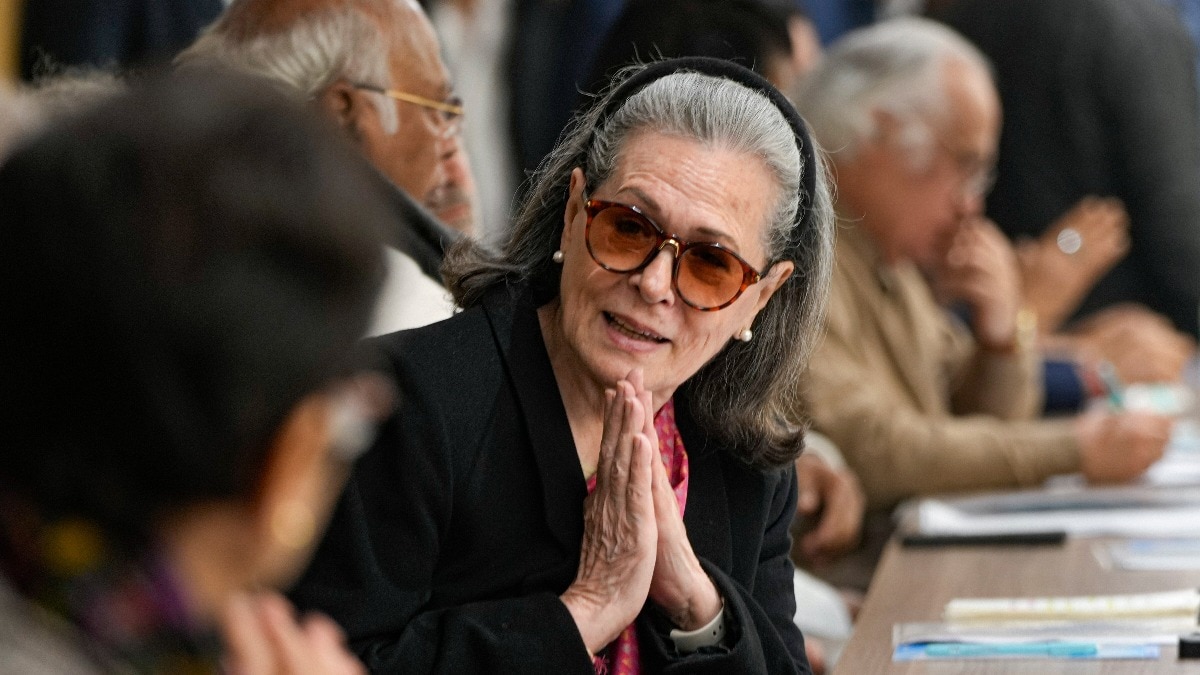
Delhi traders appealed to Sonia Gandhi on Friday to postpone the November 1 INDIA bloc rally. They fear the protest will disrupt Diwali business worth Rs 10,000-12,000 crore. After Rahul Gandhi did not respond to three letters, the Chamber of Trade and Industry hopes Sonia will intervene in this matter.
Delhi traders have turned to Sonia Gandhi after failing to get Rahul Gandhi to reconsider the INDIA bloc's November 1 rally, fearing major festive-season business losses. Does Sonia's accommodative approach make her more receptive to their calls?
Traders know who to do business with. When they find one door shut, they knock on another. Delhi's trading community, fearing a major disruption to Diwali business due to the Rahul Gandhi-led INDIA bloc's November 1 rally, on Friday appealed to Congress Parliamentary Party Chairperson Sonia Gandhi to get the protest march postponed. Behind the appeal is there a perception that Sonia Gandhi is more accommodative and flexible than the Congress's new-gen leadership, who are seen as more assertive and clinical?
After writing three letters to Rahul Gandhi didn't elicit a favourable response, the Chamber of Trade and Industry (CTI) has now approached Sonia Gandhi, the Congress matriarch, requesting her to intervene. The traders want the rally at Ramlila Maidan postponed until after Diwali, warning that it could disrupt business worth Rs 10,000-12,000 crore across nearly 20 major markets in Delhi.
The Congress-led INDIA bloc's march on November 1 is an attempt to intensify its campaign against the alleged "vote theft" and the way the Special Intensive Revision (SIR) of electoral rolls is being conducted, while demanding the resignation of Chief Election Commissioner Gyanesh Kumar.
The choice of Sonia is interesting because she has gradually moved away from the party's day-to-day functioning, leaving Rahul Gandhi and Congress MP Priyanka Gadhi Vadra to take a more active role in political and organisational matters. Yet, for the Delhi traders, approaching the former Congress president appears to be an attempt to reach someone they believe might consider the economic consequences of a large political mobilisation.
Senior journalist and political commentator Rasheed Kidwai told India Today Digital that the decision to approach Sonia was largely symbolic.
"Rahul is an active player while she [Sonia Gandhi] is a matriarch," Kidwai said, suggesting that the move by traders could have been encouraged by senior Delhi Congress leaders, including JP Aggarwal.
"Aggarwal is a respected old Delhi politician whose influence cuts across party lines," Kidwai, who has authored multiple books on the Congress, told India Today Digital.
Kidwai added that Sonia generally does not interfere in the Congress's day-to-day functioning or Rahul's political decisions. Instead, she actively encourages party leaders and others to approach Rahul.
"Now that Sonia Gandhi has chosen to meet Delhi traders, it might imply some token, symbolic acknowledgement, such as making it short, reducing the hours of protest or wrapping it up in the first half of the day," he said.
So, will Sonia intervene in any manner in the Rahul-led INDIA bloc march, and what is the history of her pragmatic leadership that led the Delhi traders to approach her?
WHAT ARE THE PRECEDENTS OF SONIA GANDHI'S PRAGMATIC POLITICS?
The contrast between the two leadership styles of Rahul Gandhi and Sonia Gandhi could also explain why the traders chose to approach the former Congress president after their repeated attempts to reach the Lok Sabha Leader of Opposition failed. It could have to do with the perception of how the two leaders approach decision-making.
"Sonia Gandhi is a consensus-builder who follows a Japanese-style method of consultation, bringing people together before arriving at a decision. Rahul Gandhi, on the other hand, is more of a leader in the conventional sense. He is decisive, businesslike and clinical in his approach," Rasheed Kidwai told India Today Digital.
Sonia's political career offers several instances when she has preferred a cautious, pragmatic approach over a more aggressive political course. Her decisions have often reflected an assessment of the larger political consequences rather than the immediate demands of party leaders.
May 2004 episode is the most striking example of this. When the Congress-led UPA defeated the BJP-led NDA in the Lok Sabha elections, Sonia was the obvious choice for the PM post, and several Congress leaders wanted her to take over the government.
She declined the position, famously invoking her "inner voice". The then-Congress president backed Manmohan Singh for the post, allowing the Congress-led coalition to form a government while she remained at the centre of the party's political decision-making.
The decision came amid a political campaign by the BJP and other opponents questioning her foreign origin. Sonia's choice helped avoid making her prime ministership the central point of political confrontation.
Since then, there have been several instances in the Congress where Sonia Gandhi and Rahul Gandhi were reportedly seen to have differing approaches to political decisions.
In Punjab, Sonia was said to be more accommodating towards Captain Amarinder Singh, while Rahul pushed for a leadership change that eventually led to Amarinder's exit in 2021.
Similarly, Himanta Biswa Sarma has claimed that Sonia was willing to consider him for the Assam chief minister's post in 2014, but Rahul opposed the move.
There have also been instances where Sonia stepped in to resolve factional disputes and bring warring leaders together. These examples underscore a political style that has often favoured caution, negotiation and damage control over confrontation.
This is not to criticise the assertive style of the young leadership. What it shows is that the Congress houses a top leadership with varying approaches to decision-making and problem-solving. Delhi traders, having found one door shut, are knocking on the other.
The traders estimate that nearly 20 major wholesale and retail markets within a five-km radius of Ramlila Maidan could be affected due to the November 1 rally. These include Chandni Chowk, Sadar Bazar, Khari Baoli, Bhagirath Palace, Chawri Bazar and Karol Bagh.
The festive week includes Dhan Teras on November 6, when people shop for utensils and precious metals, leading up to Diwali on November 8.
The traders claim that around 5,000 trucks and tempos bring goods into these markets daily, while another 3,000 vehicles transport goods to destinations across the National Capital Region and other states. They fear that traffic restrictions and security arrangements could disrupt this supply chain.
The decision by Delhi traders to urge Sonia Gandhi is significant due to these political precedents. Will Sonia use this opportunity to facilitate a compromise or simply acknowledge their concerns and let the new leadership take a call remains to be seen.