
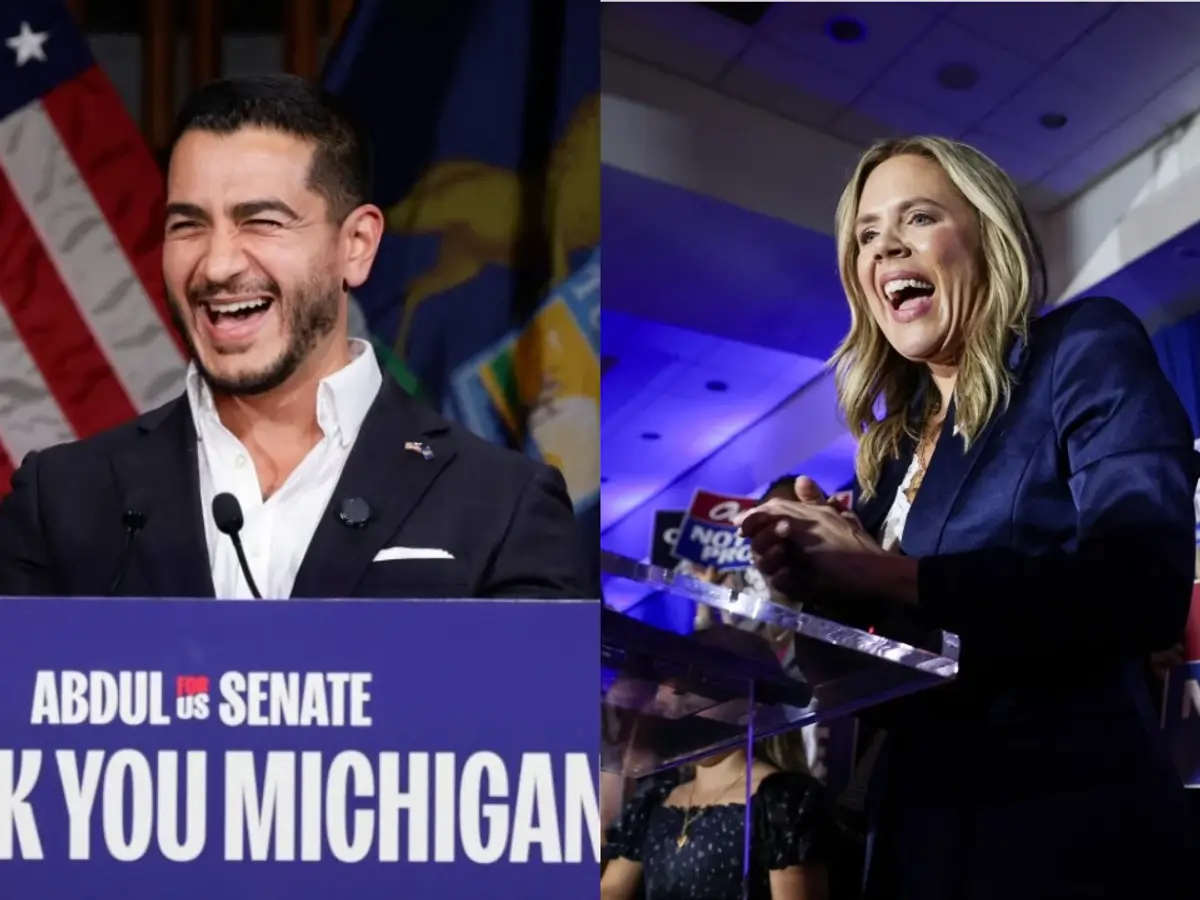
Democratic doctors and nurses flipped several Republican seats in Tuesday’s election. These candidates made health policy and opposition to Robert F. Kennedy Jr.’s agenda central to their campaigns. Erik Polyak said, "This election cycle, R.F.K. Jr. was hands down our no. 1 recruitment and fund-raising tool." Their medical credentials clearly resonated.
Democratic doctors and nurses flip Republican seats, making health care and opposition to RFK Jr.'s agenda central to their congressional campaigns
About half a dozen Democrats who flipped Republican-held congressional seats are doctors and nurses who made health policy and their opposition to Health Secretary Robert F. Kennedy Jr.'s agenda central themes of their campaigns. Among them is Senator-elect Annie Andrews of South Carolina, a pediatrician who repeatedly referred to Kennedy as her 'archnemesis'. Along with Senator-elect Abdul El-Sayed of Michigan, she appears to be among the first Democratic doctors elected to the Senate in approximately 60 years.
In California, Representative-elect Richard Pan, a pediatrician and former state legislator who worked to tighten vaccine exemptions, defeated incumbent Kevin Kiley, a former Republican who ran as an independent this year. "This election cycle, R.F.K. Jr. was hands down our no. 1 recruitment and fund-raising tool," said Erik Polyak, executive director of 314 Action, an organization that spent $30 million supporting Democratic scientists and health care professionals.
Other health care professionals who won Republican-held House districts include Kristina Knickerbocker, an oncology nurse practitioner in Ohio, and Mitchell Berman, a former Veterans Affairs nurse in Wisconsin. Amish Shah, an emergency room physician, appears to be on track to win in a competitive Arizona district, while Adam Hamawy, a plastic surgeon, won a safe Democratic seat in New Jersey.
Their victories partly reflect the broader momentum Democrats experienced in Tuesday's election. "It was a good thing to be a Democrat last night," said Kristoffer Shields, director of the Eagleton Science and Politics Program at Rutgers-New Brunswick. However, these candidates also campaigned on their professional medical credentials, a strategy that appears to have resonated with voters."They ran, at least in part, on their credibility as medical professionals, and it clearly seems to have worked," he said.
The newly elected lawmakers will join several Democratic medical professionals who have entered Congress since 2018, when a smaller wave of doctors and scientists ran in opposition to President Trump's first administration.
"You could see a doctors' caucus here in the Democratic Party," Dr. Shields said. He added that the candidates' medical backgrounds could also strengthen their standing among fellow lawmakers once they take office.
Just as voters viewed them as credible voices on health care, "they're going to be credible to other senators, or other representatives, once they get into Congress," he said. Dr. Shields expects their key priorities to include making Affordable Care Act coverage more affordable, potentially by restoring the subsidies that expired last year, and simplifying insurance processes to improve patient benefits.