
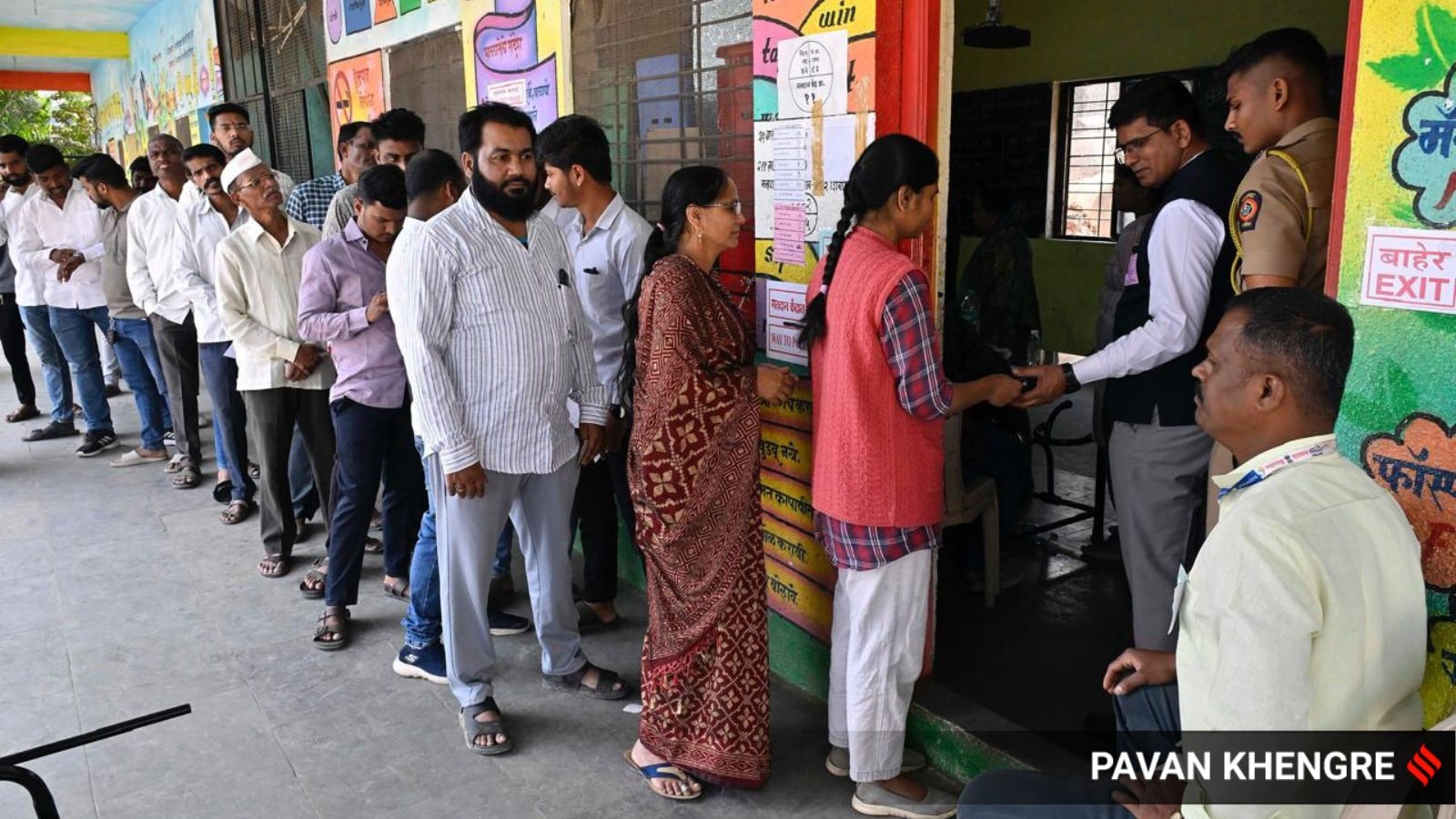
Maharashtra recently used the Single Transferable Vote system for five Teachers and Graduates Constituency seats. Unlike the common First Past The Post method, this system lets voters rank candidates by preference. It follows Article 171 of the Constitution, ensuring proportional representation, though counting these votes takes much longer than usual.
The Teachers and Graduates Constituency elections recently undertaken for five seats in Maharashtra used a Single Transferable Vote (STV) system instead of the usual First Past The Post (FPTP) system used in Lok Sabha and Vidhan Sabha elections.
Teachers and Graduates Constituencies exist in states with a bicameral legislature like Maharashtra with a Legislative Assembly and Legislative Council. According to Article 171 of the Constitution of India, various elections to Legislative Councils including Teachers and Graduates are to be conducted in accordance with the system of proportional representation through STV.
How are normal elections conducted in India?
In the FPTP system used for Lok Sabha or Legislative Assembly elections, a voter can cast her vote for a single candidate. During counting, all votes are counted, and the candidate with the highest number of votes wins the election. Almost all such elections in India are held using Electronic Voting Machines (EVMs).
Consider this example: an election with 100 voters has three candidates A, B, and C. A gets 35 votes, B gets 25 votes, and C gets 40 votes. C is declared the winner of the election.
However, A and B are ideologically similar to each other. Those who voted for A prefer B over C, and those who votes for B prefer A over C. Therefore, even though C got just 40 of 100 votes, she was declared the winner. 60 of 100 voters prefered either A or B, but neither of these two won the election.
This is considered a major flaw of the FPTP system, where A can accuse B of 'cutting votes'. A can argue that if B had decided not to contest, A would have received 60 votes and won the election. Such allegations of 'vote cutting' are common in Indian politics. The FPTP system is used in elections in the UK and USA as well.
Single Transferable Vote System
In contrast, the STV system works on a completely different principle. In Indian STV elections, according to the Conduct of Election Rules 1961, voters are given a list of candidates running in the elections at the voting centre. The voter can write '1' against the name of the candidate for whom she wishes to vote. Further, the voter may also write '2', '3', and '4' and so on against the names of candidates who are her second, third, and fourth preference.
Unlike FPTP, a candidate in an STV system needs to garner more than 50% of the total valid votes to win the election. In the first round of counting, all first preference votes are counted. If a candidate gets more than 50% of total votes in this round, she is declared the winner. If no candidate is able to garner over 50% of the total votes in the first round, the candidate with the lowest number of first preference votes is eliminated from the counting. The second preference votes from the eliminated candidate's ballots are then transferred to those candidates. Another round of counting is then undertaken accounting for these transferred votes. Elimination rounds continue till a candidate gets more than 50% of the total votes.
Conducting the election from our earlier scenario using STV: A gets 35 first preference votes, B gets 25 first preference votes, and C gets 40 first preference votes. All 25 people who voted for B as first preference marked A as their second preference and vice-versa. Those who voted for C did not mark anyone as their second preference.
In the first round of counting, A will emerge as the candidate with the highest number of votes but will not be declared winner as he has only 40 votes, not the 51 votes required for victory. Therefore, the candidate with the lowest first preference votes (B) is eliminated after this round of counting. The second preference votes from B's ballots are transferred to the candidate marked as second preference, in this case A.
Now, a second round of voting is conducted. A garners 35 + 25 (transferred from B) = 60 votes while C remains with 40 votes. A is declared the winner as she has passed the quota of 51 votes.
Is Singe Transferable Vote better?
STV system of voting is more complicated, but is considered to be much fairer as the elected candidate has actually garnered the support of the majority of the voting population. Here, A and B can both contest the election without any issues like 'vote cutting'. Countries like Australia use the STV system for their elections.
If an STV election is meant to choose only one winning candidate like in the above case, the system is globally known as Instant-Runoff Voting.
Due to STV's complexity and it being conducted on ballot paper and not EVMs, the counting takes a lot longer.
In 2017, the Parliamentary Standing Committee on Personnel, Public Grievances, Law and Justice had cited apprehensions that the FPTP system might not be the best suited system due to its unfair nature. The Standing Committee had said that it was exploring various other systems like the list system (open list and closed system), proportional representation, ranked or preferential voting, and mixed systems.